
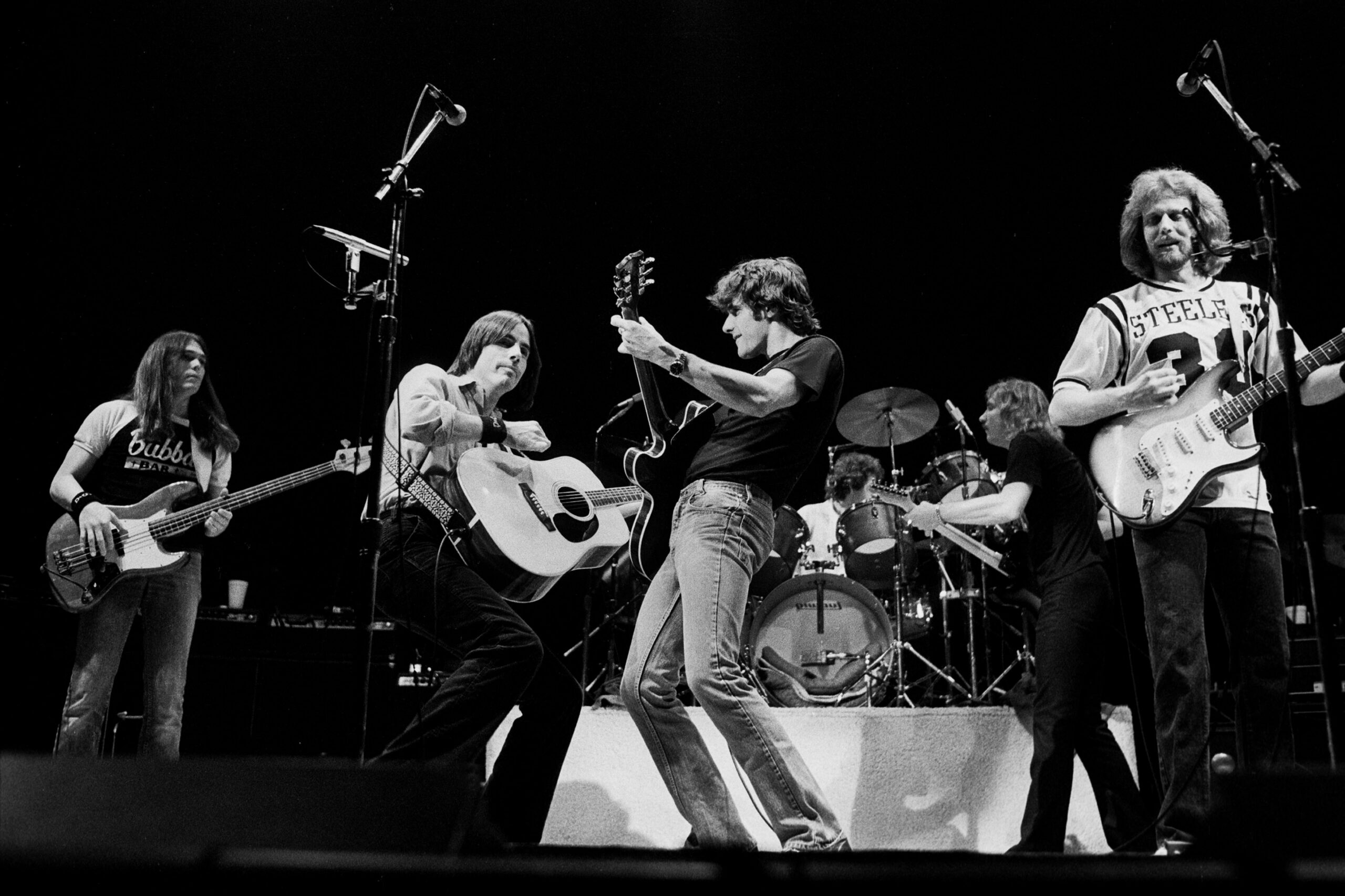
American rock group the Eagles, with special guest Jackson Browne (second left), perform onstage at the Chicago Stadium, Chicago, Illinois, October 22, 1979. Pictured are, from left, Timothy B Schmit, Jackson Browne, Glenn Frey, Don Henley (behind drums), Don Felder, and Joe Walsh. Photo: Paul Natkin/Getty Images
The Eagles occupy that very strange but sweet spot, amalgamating folk, country, blues and rock. Their sound cannot be strictly considered folk rock or country rock, but California rock is one way of putting it. Either way, there is something so hypnotic about their music that it seems to have been crafted straight out of the cauldron of a “Witchy Woman.” Perhaps that’s why we can never quite get the tunes out of our heads years after listening to them.
These days, where attention spans are cut down to half a minute and a generation that is chasing trends and viral audio tracks, it’s hard to sustain a spot at the top, when something you hear today is forgotten tomorrow. But the Eagles have seemingly done the impossible.
They are the first band to earn Quadruple Diamond certification by the Recording Industry Association of America (RIAA). Their 1976 album Their Greatest Hits (1971-1975) has sold more than 40 million and earned them the certification.
To put 40 million LPs into better perspective, that’s about 12190.78 km if they’re laid side by side. So, if one were to stack them up vertically straight up, they would end up breaching the exosphere, the outermost layer of the Earth’s surface. Clearly, these Eagles are soaring higher than their avian counterparts!
Not one, but two of their albums have breached Platinum. In first place, Their Greatest Hits (1971-1975) and Hotel California (also released in 1976), which is third place, selling more than 28 million units.
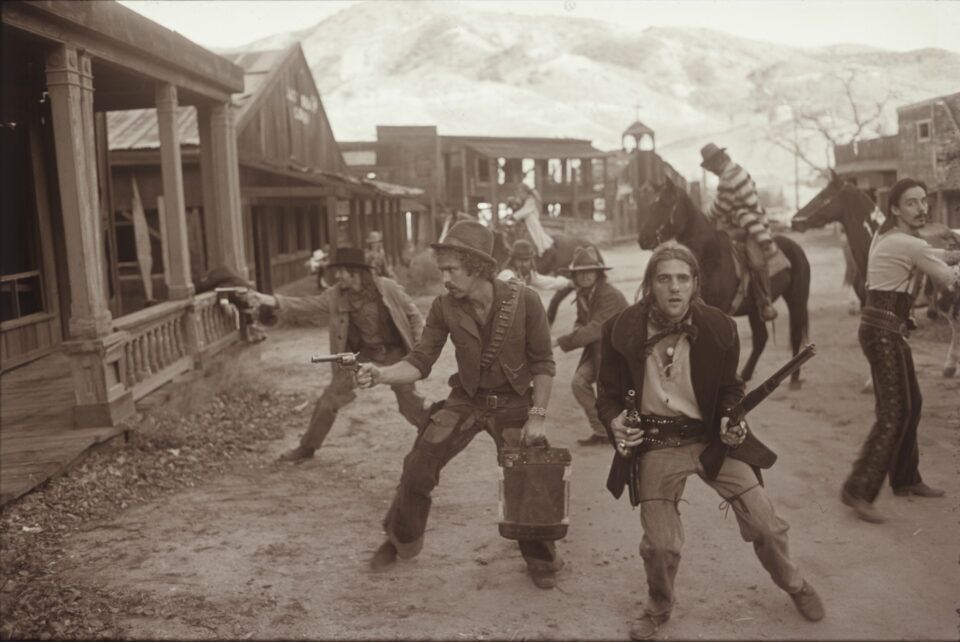

Compiling a list of just ten songs from both albums is a near-impossible task, which just goes to show that picking your favorite Eagles song is akin to playing the “Hotel California” solo on the guitar blindfolded. Listed below in the same order of the original track listing are ten best songs from both albums.
Their Greatest Hits (1971-1975): This was the Eagles’ fifth album and one the band had no say in releasing. The compilation album contained the nine highest charting singles (with the exception of “Desperado,” which had never been released as a single). Don Henley was displeased that the songs “Desperado” and “Tequila Sunrise” were taken out of the concept album Desperado (1973), believing that the meaning of the songs would be tarnished.
“Take it Easy”
This debut single comes with valuable advice written on the tin. In 1971 Jackson Browne found himself struggling to finish a song he was working on for his own debut album. When his upstairs neighbour Glenn Frey heard the unfinished second verse of “Well, I’m a-standin’ on a corner in Winslow, Arizona…” he finished it off with “Such a fine sight to see. It’s a girl, my lord, in a flatbed Ford, slowin’ down to take a look at me.” And that’s how easily “Take it Easy” was born. Set in the key of G, it’s the easiest Eagles song to play on the guitar with its straightforward chord progression. What really sets it apart is the stacked vocal harmonizing that blends to create that iconic sound. Incidentally, the second verse was inspired by Browne having car troubles in Winslow, Arizona. The song catapulted not just the Eagles but also Winslow into the limelight so much so that there’s even a statue ‘Standin on a Corner Park’ to celebrate the song.
“Lyin’ Eyes”
This second single from One of These Nights (1975) won a Grammy for Best Pop Vocal Performance. “Lyin’ Eyes” came into existence at Dan Tana’s in L.A. one evening while Glenn Frey and Don Henley were dining there. They spotted a pretty young woman having a meal with a fat wealthy older man. “Look at her,” Frey said, “She can’t even hide those lyin eyes!” What began as lines written on cocktail napkins evolved into a six minute 22 second track. But for a song that came to them easy, recording it was an intense meticulous process. Frey was particular about how he wanted the word ‘City’ to sound in the opening line “City girls just seem to find out early.” Sometimes the ‘ty’ sounded too sharp or he would be coming in too late or too early. Over the course of four days and six takes they pulled the ‘Ci’ and ‘ty’ from different takes to get the sound just right. It just goes to show sometimes sweating the small stuff makes all the difference.
“Desperado”
“Desperado” begins softly, slowly on the keys and it was the song that began Henley and Frey’s song writing partnership. Henley had begun writing it in 1968 under a different name, written for a friend, Leo. It went like this: “Leo, my God, why don’t you come to your senses. You’ve been out ridin’ fences for so long now.” Henley had started “Desperado” along the styles of Stephen Foster and Ray Charles, initially Southern Gothic, Browne suggested they make it sound more Western. The idea of doing an album with an anti-hero/outlaw theme arose from a jam session among Frey, Henley, Browne and J.D. Souther. Deciding that they should do a song on James Dean, another on the Doolin-Dalton Gang, “Leo” transformed into “Desperado.” The string arrangement for “Desperado” was done by Jim Ed Norman, who also conducted the London Philharmonic Orchestra for the orchestral parts of the song. Recorded at Island Studios, London, they were given about five takes to record the song. Intimidated by the orchestra and minimal takes left Henley feeling as though he didn’t give his best while recording. Bossier City, Louisiana was their last stop on the History of the Eagles tour, July 29, 2015 and “Desperado” was their closing song. The last song Frey played in concert with the Eagles before his passing.
“One of These Nights”
The title track of their 1975 album of the same name, “One of These Nights” was written during what Henley referred to as the Eagles’ “satanic country-rock period.” Things were dark in the post-Watergate era and disco music was increasing in popularity. The Eagles’ answer to keeping with the times while incorporating the signature rock guitar came in the form of “One of These Nights.” Being huge fans of Al Green and the Spinners, they wanted to capture that R&B soulful sound, which they did thanks to Henley’s voice. Coincidentally, the Eagles were recording the album in the same Miami studio as the Bee Gees at the time. Frey began composing the song in E minor on the piano, Henley started on the lyrics, their newest guitarist Don Felder created the iconic bassline which starts the song, set to the tempo of a four-on-the-floor drum beat. The song is an excellent example of high harmony, both on the guitar and the vocals, making it a difficult track to perform live. It was also Frey’s favorite Eagles song, perfect for listening on those crazy nights where you’re feeling particularly lost and lonely.
“Tequila Sunrise”
This song shares its name with a drink that was very popular in the Seventies.The Tequila Sunrise consists of a combination of tequila and orange juice with a layer of grenadine at the bottom, mimicking the red-orange hue of the sky at sunrise. The song isn’t strictly about the drink itself but rather watching the sun come up after a night of drinking tequila straight. “Take another shot of courage” in the bridge signifies the instant courage that comes with downing a shot. Conceptualized and written in the same week as “Desperado,” “Tequila Sunrise” is another one of those songs that came to them effortlessly.
“Best of My Love”
There must be something in the food at Dan Tana’s restaurant, because that’s where this country rock ballad came into existence. Most of the lyrics were written in the Eagles’ favorite booth at the restaurant and the maître d’ Guido is even thanked in the liner notes of the album On the Border (1974) and the bridge was written in London by J.D. Souther. One afternoon in Laurel Canyon, Frey was trying to figure out a tuning Joni Mitchel had shown him on his acoustic. Instead, he ended up creating the tuning for “Best of My Love,” capo on the third fret of a double-tracked 12-string acoustic guitar. On the Border wasn’t initially as successful as the Eagles had hoped, and they were reluctant to release “Best of My Love” as a single, so they began working on their next album. But Michigan radio DJ Jim Higgs broadcasted it on WKMI-AM in Kalamazoo. It then went on to become their first Billboard Hot 100 number 1 single in March 1975.
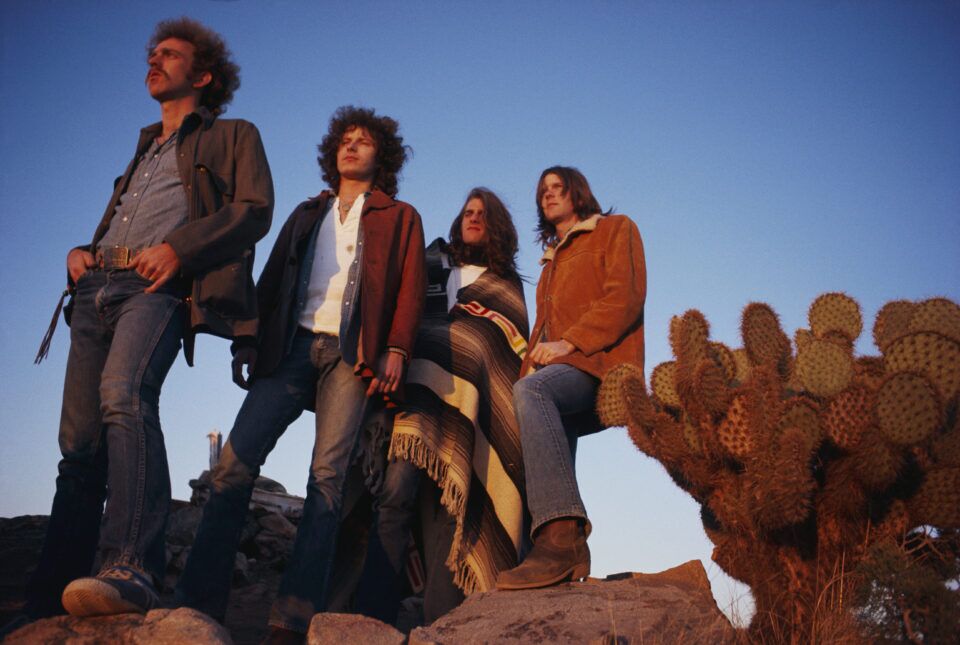
Hotel California (1976) : This concept album evolved from its title track. It wasn’t the first concept album the Eagles had put out. The word California itself has such a lot of connotations rooted as it is in the minds of everyone everywhere as the cultural zeitgeist for films, T.V. and music. The Eagles were all transplants to L.A. ergo, the album views California from an outsider’s perspective, the darker side of paradise. It starts off with evoking the image of L.A. by night: the city lights that go out for miles, the palm trees, the neon signs. That’s “Hotel California,” signalling your arrival in L.A. where you’re the “New Kid in Town.” Getting used to the glitz and the glamor, you enjoy “Life in the Fast Lane” until you end up counting the bars of your cell, lamenting your “Wasted Time.”
“Hotel California”
Even those who do not know the Eagles, recognize “Hotel California” instantly. “Hotel California” was originally nowhere near the state of California at all. It was titled “Mexican Reggae,” part of an instrumental demo tape that Don Felder had submitted when he joined the group. Felder’s four-track recording consisted of arpeggiated guitar chords and sustained notes set to a 4/4 time signature with a drum beat. Adapting it to a cinematic score echoing that of The Twilight Zone, Henley and Frey crafted lyrics with vivid descriptions in Felliniesque style. There’s even a nod to Steely Dan (“They stab it with their steely knives but they just can’t kill the beast”). Steely Dan was a band known for songs that tell strange stories, the Eagles wanting to try creating a track along the same lines slipped in a nod to them. Steely Dan had already referenced the Eagles before in their song “Everything You Did” in the line “Turn up the Eagles, the neighbors are listening.” Being the perfectionists the Eagles were, it took quite a few takes to get it right. The problem was that the key was too high for Henley’s vocals prompting them to make the switch to B minor from the original E minor key. In the end, six of the best takes were chosen and a grand total of 33 edits were spliced together for the final recording. The layered sound during the guitar solo comes from Don Felder (on a Gibson Les Paul) and Joe Walsh (on a Fender Telecaster) playing together simultaneously. It took them three days to get it just right. Gibson named two guitar reissues after Felder and the song in 2010, the Don Felder Hotel California 1959 Les Paul and the Don Felder Hotel California EDS-1275.
“New Kid in Town”
This song is about the capricious emotion known as love and the equally fickle nature of the music industry. It’s a song about replacing and replacements. You replace someone as the “New Kid in Town,” fresh-faced and wildly popular until the next new kid wanders in taking the title and the attention away. J.D. Souther was a frequent collaborator of the Eagles; “The Best of My Love,” “The Sad Cafe” and “Heartache Tonight” are some of the songs he’d helped write. For “New Kid in Town,” he had written the chorus and showed it to Henley and Frey while they were working on the Hotel California album, prompting the three of them to finish the song. It’s a complicated song to play because of the modulation but the Eagles make it sound so effortless as they breeze through the key changes. “New Kid in Town” won them a Grammy for Best Vocal Arrangement, 1978.
“Life in the Fast Lane”
Inspiration comes from the strangest of places, one of those places was a Corvette on the freeway riding shotgun with a drug dealer enroute to a game of poker. Frey recalled in the liner notes of The Very Best Of (2003): “I was riding in a car with a drug dealer — a guy we used to call ‘The Count,’ because his count was never very good [laughs]. We were driving out to an Eagles poker game. I was in the passenger seat. He moved over to the left lane and started driving 75-80 miles per hour. I said, ‘Hey, man, slow down.’ He goes, ‘Hey, man, it’s life in the fast lane.’ And I thought, ‘Oh, my God, what a title.’ I didn’t write it down. I didn’t have to.’”
The iconic opening riff came from Joe Walsh warming up with a practice riff which was a coordination exercise between the right and left hand, when Frey realized he had found a melody to go with the title. “Life in the Fast Lane” is a cautionary tale, that doesn’t celebrate the hedonistic lifestyle portrayed in it. Rather, it paints a picture of the repercussions. Frey was the first to realize the gravity of what he’d described in the song. He could hardly listen to “Life in the Fast Lane” as it hit uncomfortably close to home, prompting him to do a complete 180 on his lifestyle. Moral of the story – maybe the fast lane isn’t for you and don’t neglect coordination exercises, you never know where that riff might take you.
“The Last Resort”
The closing track on Hotel California, Frey regarded “The Last Resort” as “Henley’s opus.” Frey helped with the narrative description and arrangement, but Henley was responsible for the lyrics and chord progression. They had started working on the song when they began the album, but it took them seven months to finish it. Unlike the other tracks on the album, “The Last Resort” is a bleak treatise on environmental ruin that comes as an inevitable consequence of industrialization and commercialization. Henley had envisioned it as a saga covering generations of the chaos wrought by civilization as they made space for themselves destroying the natural world. In the end Henley was never completely satisfied with the finished product. The Eagles were recording Hotel California in Miami’s Criteria Studios at the same time Black Sabbath was recording Technical Ecstasy (1976) in the room next door. Being a heavy metal band, unsurprisingly their sound was heard above the quiet ballad that is “The Last Resort,” leading the Eagles to re-record it multiple times.