
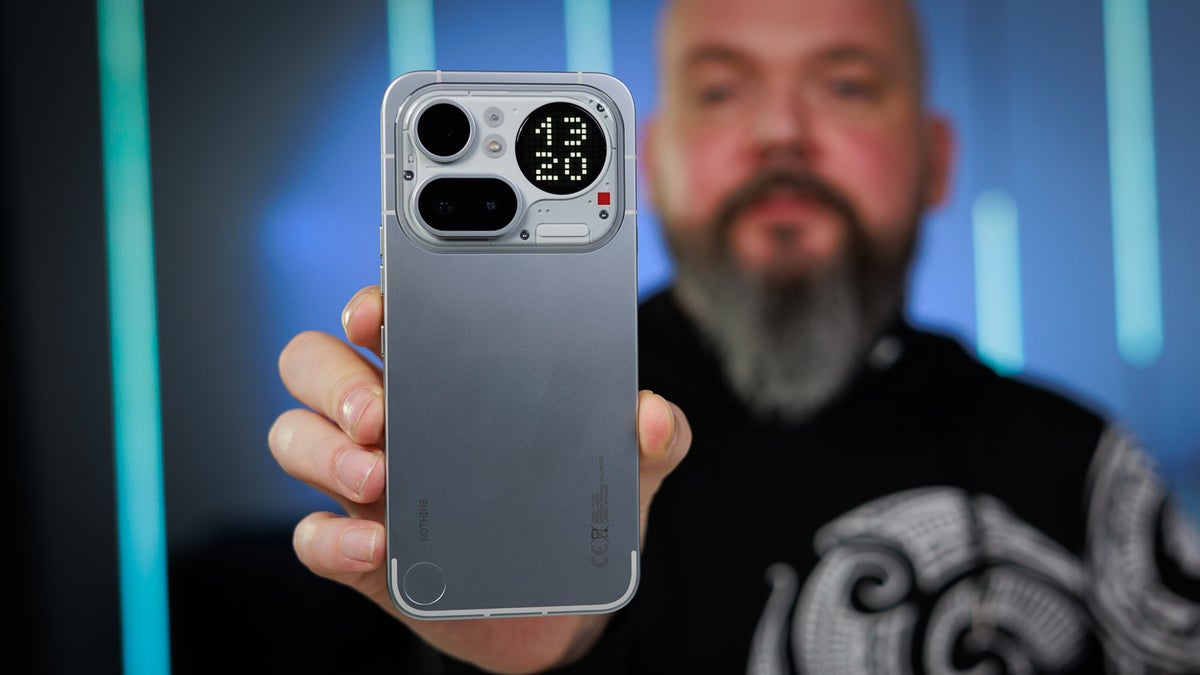
Nothing seems to have another midrange winner on its hands. It takes a quick look at the Nothing Phone (4a) Pro to find that it looks more appealing, iconic, positively geeky — everything that we expect a Nothing Phone to be.
It’s not all sunshine and rainbows as the current realities of the tech world have caught up with nothing. That is to say, its price is increased slightly, compared to the Phone (3a) Pro — up to $499 and €479. Though, depending where you live, pre-ordering from Nothing’s website right now can net you a small discount to bring it down to the price of its predecessor.
Even so, it’s a much more affordable alternative to the flagship Phone (3) at $799. And, Nothing has proudly stated that the “a” series is well-received and carries their brand very well. So, does the Phone (4a) Pro have the chops to pick up that torch?
Explain the review rating scores. Highlight which areas it excels in and which are its weak sides.
Table of Contents:
Nothing Phone (4a) Pro Specs
Pro in name and spirit
|
|
| Nothing Phone (4a) Pro | Nothing Phone (3) |
| Dimensions | |
|---|---|
| 163.6 x 76.6 x 7.9 mm | 160.6 x 75.6 x 9 mm |
| Weight | |
| 210.0 g | 218.0 g |
| Size | |
|---|---|
| 6.8-inch | 6.7-inch |
| Type | |
| AMOLED, 144Hz | OLED, 120Hz |
| System chip | |
|---|---|
| Snapdragon 7 Gen 4 SM7750-AB (4 nm) | Snapdragon 8s Gen 4 SM8650-AB (4 nm) |
| Memory | |
| 8GB (LPDDR5X)/128GB (UFS 3.1) 12GB/256GB |
12GB/256GB (UFS 4.0) |
| Type | |
|---|---|
| 5080 mAh | 5150 mAh |
| Charge speed | |
| Wired: 50.0W | Wired: 65.0W Wireless: 15.0W |
| Main camera | |
|---|---|
| 50 MP (OIS, Autofocus, PDAF) Sensor name: Sony LYT-710 Aperture size: F1.9 Focal length: 24 mm Sensor size: 1/1.56″ Pixel size: 1 μm |
50 MP (OIS, PDAF) Aperture size: F1.7 Focal length: 24 mm Sensor size: 1/1.3″ |
| Second camera | |
| 8 MP (Ultra-wide) Aperture size: F2.2 Focal Length: 15 mm Sensor size: 1/4″ Pixel size: 1.12 μm |
50 MP (Ultra-wide) Aperture size: F2.2 Sensor size: 1/2.76″ |
| Third camera | |
| 50 MP (Telephoto, Periscope, OIS, Autofocus, PDAF) Optical zoom: 3.5x Aperture size: F2.9 Focal Length: 80 mm Sensor size: 1/2.75″ Pixel size: 0.64 μm |
50 MP (Telephoto, Periscope, OIS, PDAF) Optical zoom: 3.0x Aperture size: F2.7 |
| Front | |
| 32 MP | 50 MP |
Nothing Phone (4a) Pro vs Nothing Phone (3) specs comparison
or compare them to other phones using our
Phone Comparison tool
Nothing Phone (4a) Pro Design and Display
The return of aluminum unibody
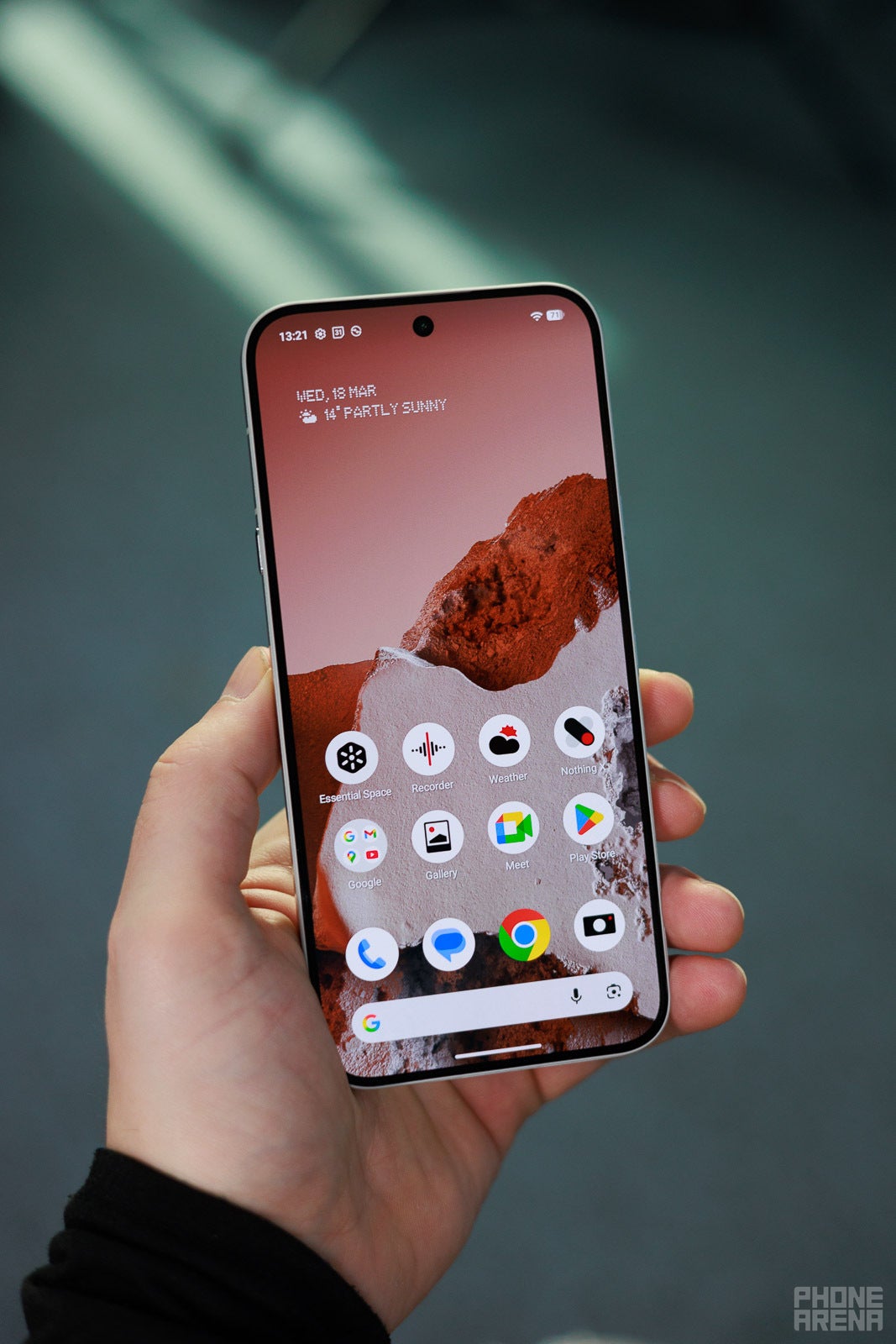
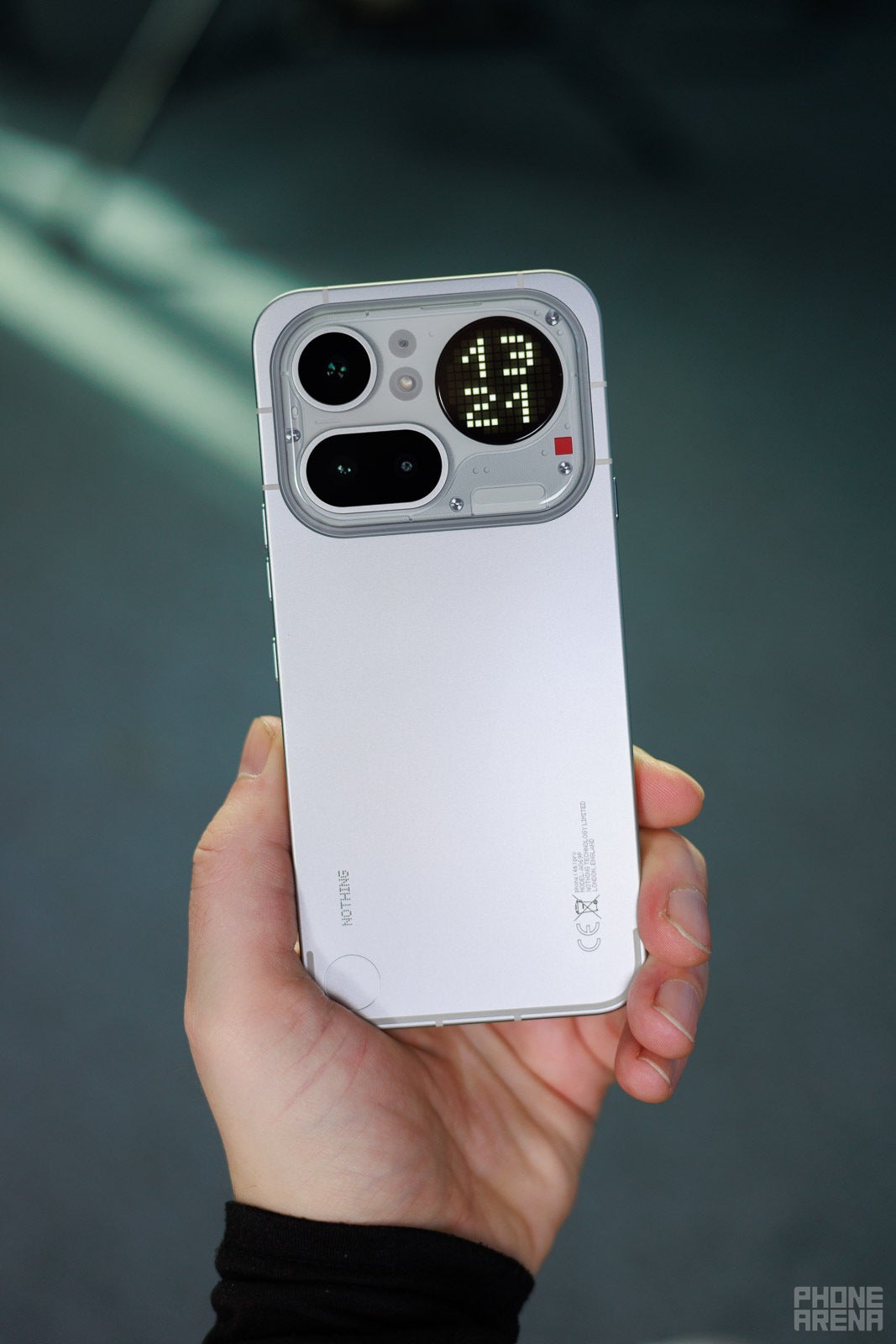
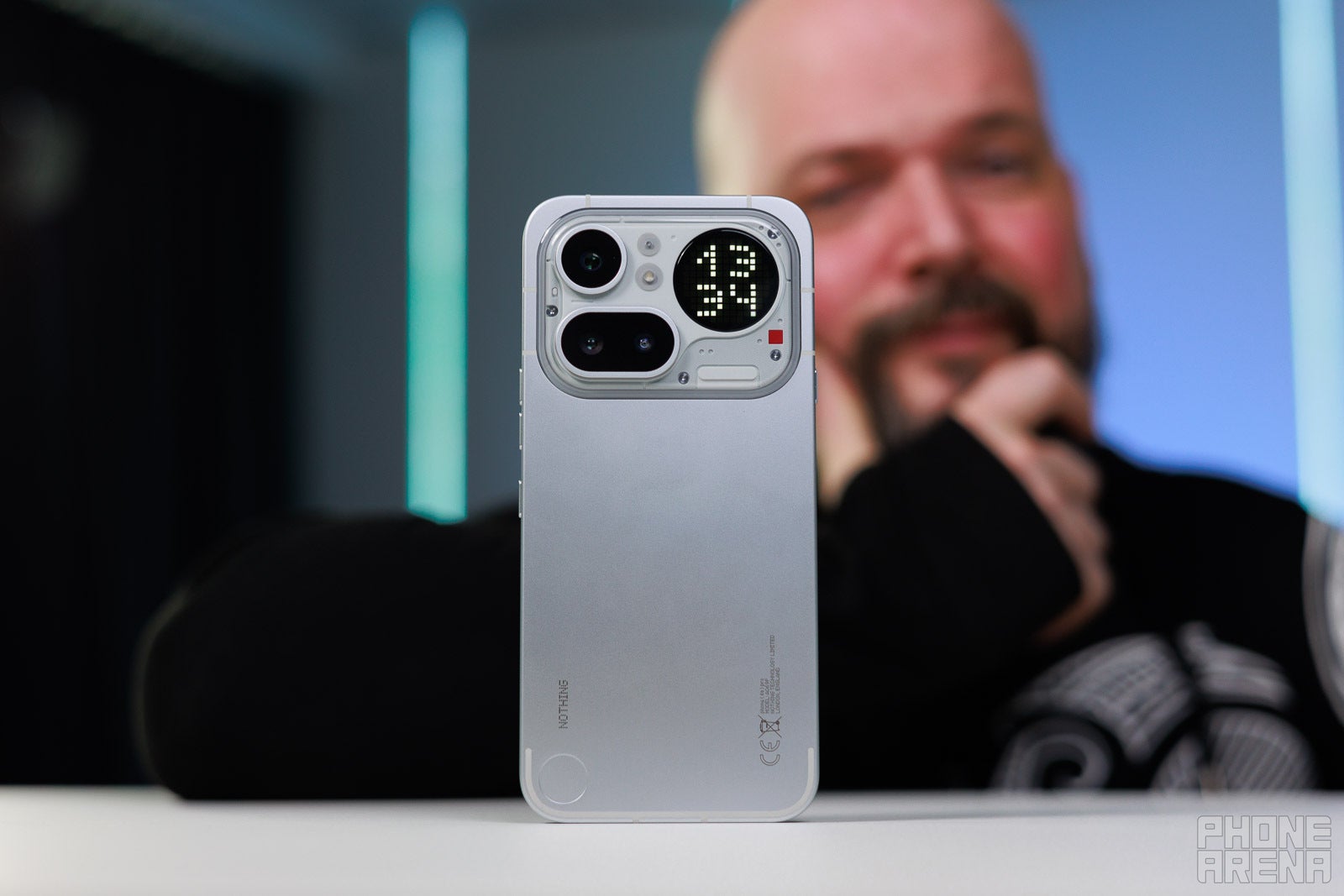
Unlike its a-series predecessors, the Phone (4a) Pro has a full aluminum body. The downside is that it can’t support wireless charging this way, but the upside is that I got to hold a fully metal smartphone — something I’ve definitely been missing for some years now. It also feels light and balanced, and generally a pleasure to handle.
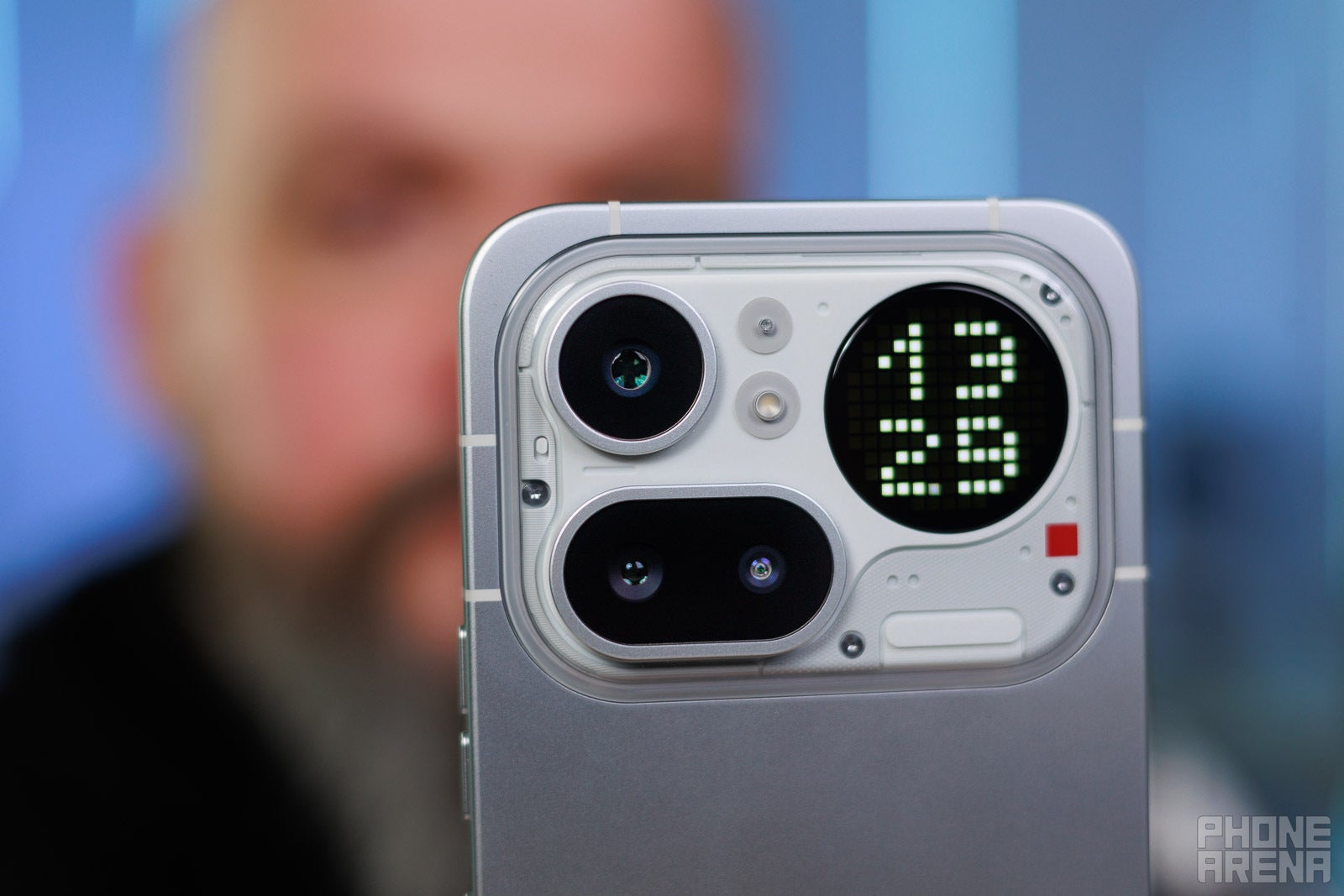
The back still has a signature transparent element, but it’s just the camera island, which is covered in acrylic. That’s a bit bittersweet. While the phone’s unibody generally feels nice in the hand, the reduction of the transparent elements definitely makes it feel like Nothing is trying to conform more instead of going full-out on their original concept. Plus, I am slightly concerned about that plastic bump accumulating scratches over time, but we’ll see.
I’d categorize it as a thin phone, though it houses a 6.9-inch screen, so it’s definitely a sizeable “two-hand-phone” type of deal. Still, it’s easy to wield thanks to its weight distribution.
We still have the Essential button, which Nothing keeps banking on. If you are unaware — the Essential Space is Nothing’s take on “lite AI”. It’s kind of like Google’s Screenshots app on steroids. You can take a screenshot, a photo, or a voice note, and send it straight into Essential Space. On-device AI will analyze it and tag it appropriately, so you can later find it easier.
Hence why you have an Essential button — it’s there to more easily get you in your library, take said screenshot, or initiate an audio recording. I view it as a neat, signature feature of current Nothing Phones, not exactly a main seller though.
On the other end, we have the clicky volume and power buttons. Not too wobbly, not too shallow — just right.
This Glyph Matrix has a lot less functions to it. While the Phone (3) had various “Glyph Toys”, the Phone (4a) Pro can only do three things. Show you the time, a timer, show you progress towards a calendar event, or notification icons. Plus, you can set it up to visually show you the volume setting. No “spin the bottle” no “ask the 8-ball”.
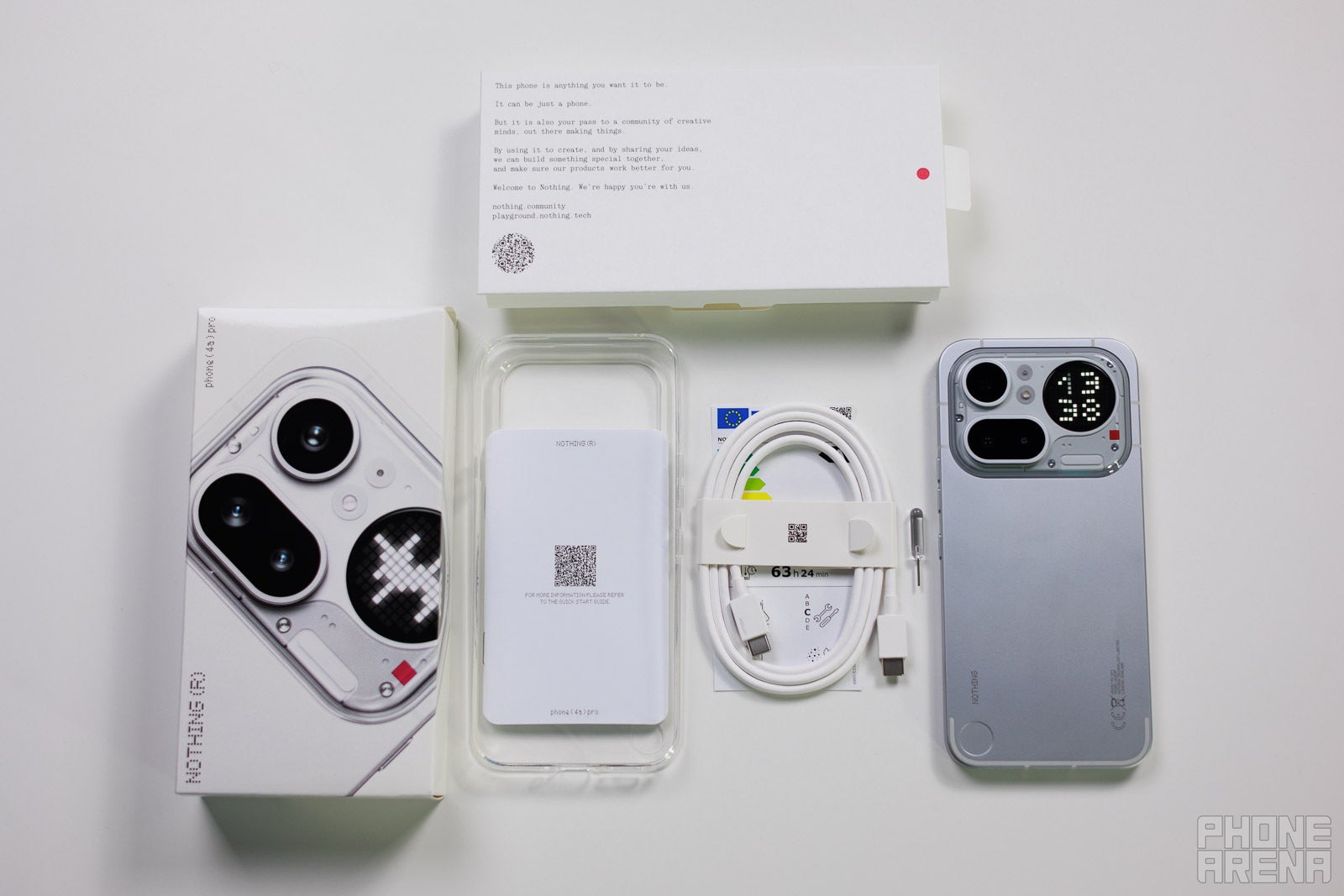
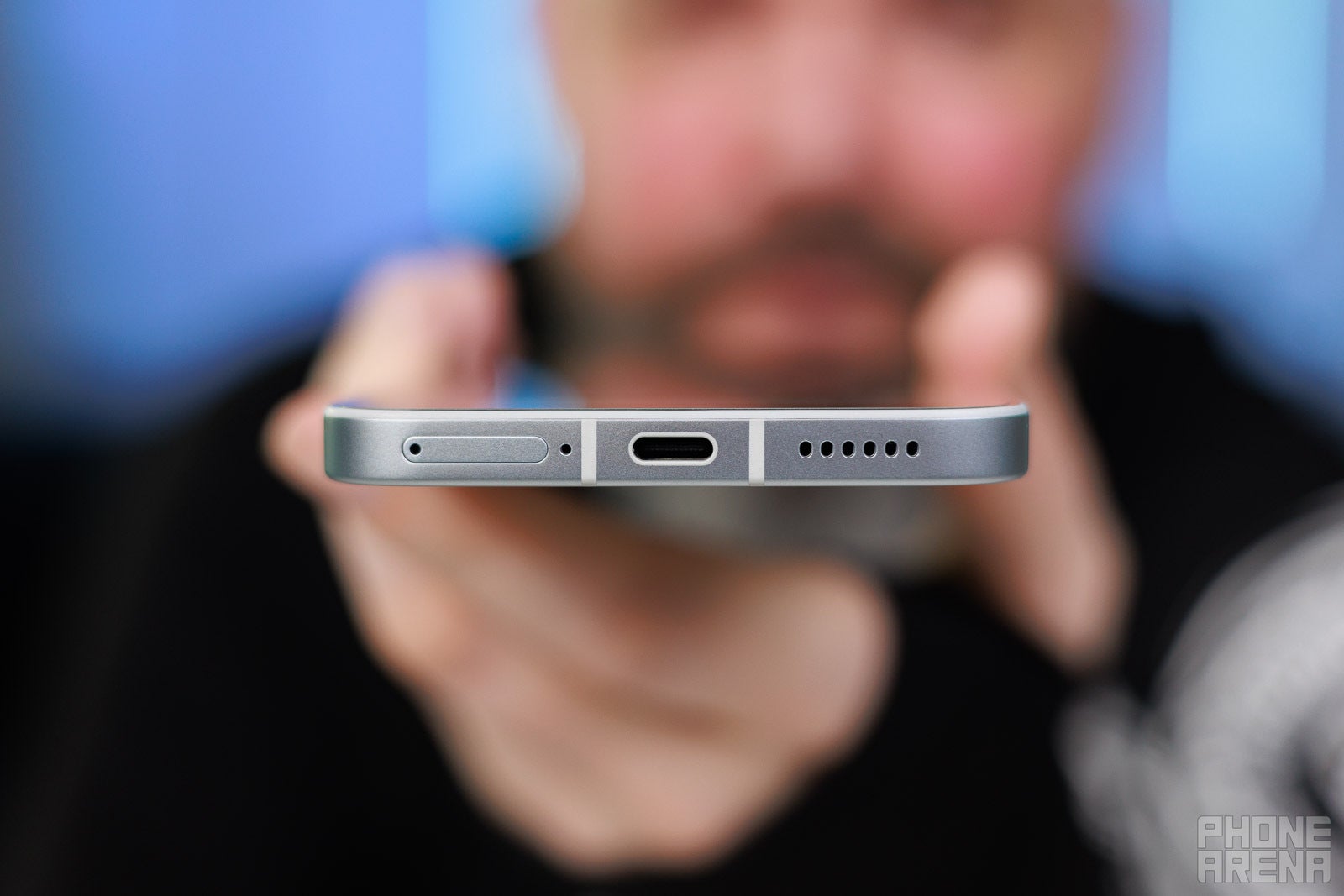
The box of the Nothing Phone (4a) Pro doesn’t contain absolutely nothing. You get the phone, a nice transparent case to put it in, and a USB C cable that’s not stylized with transparent ends like it used to be. Instead, it’s blocky.
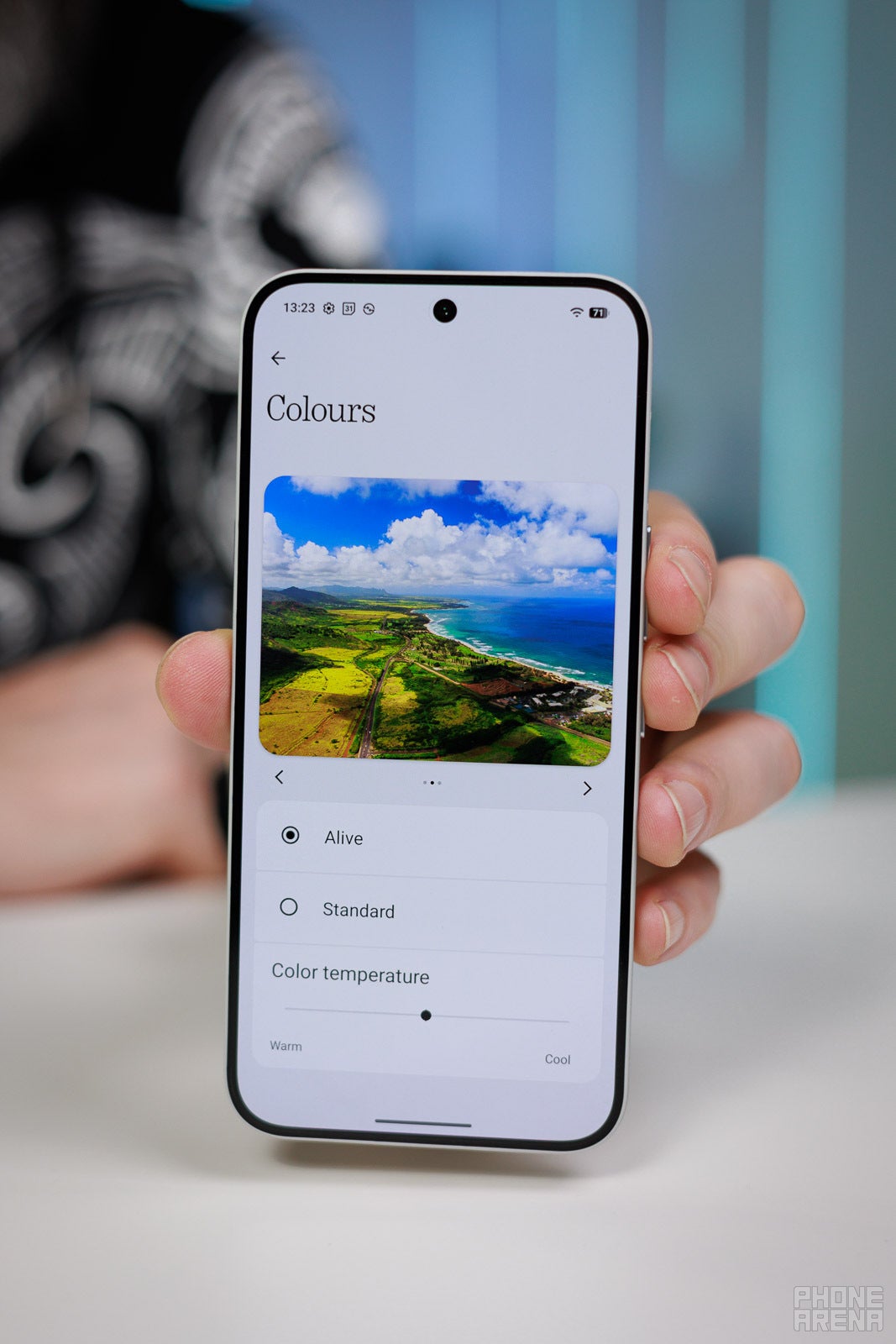
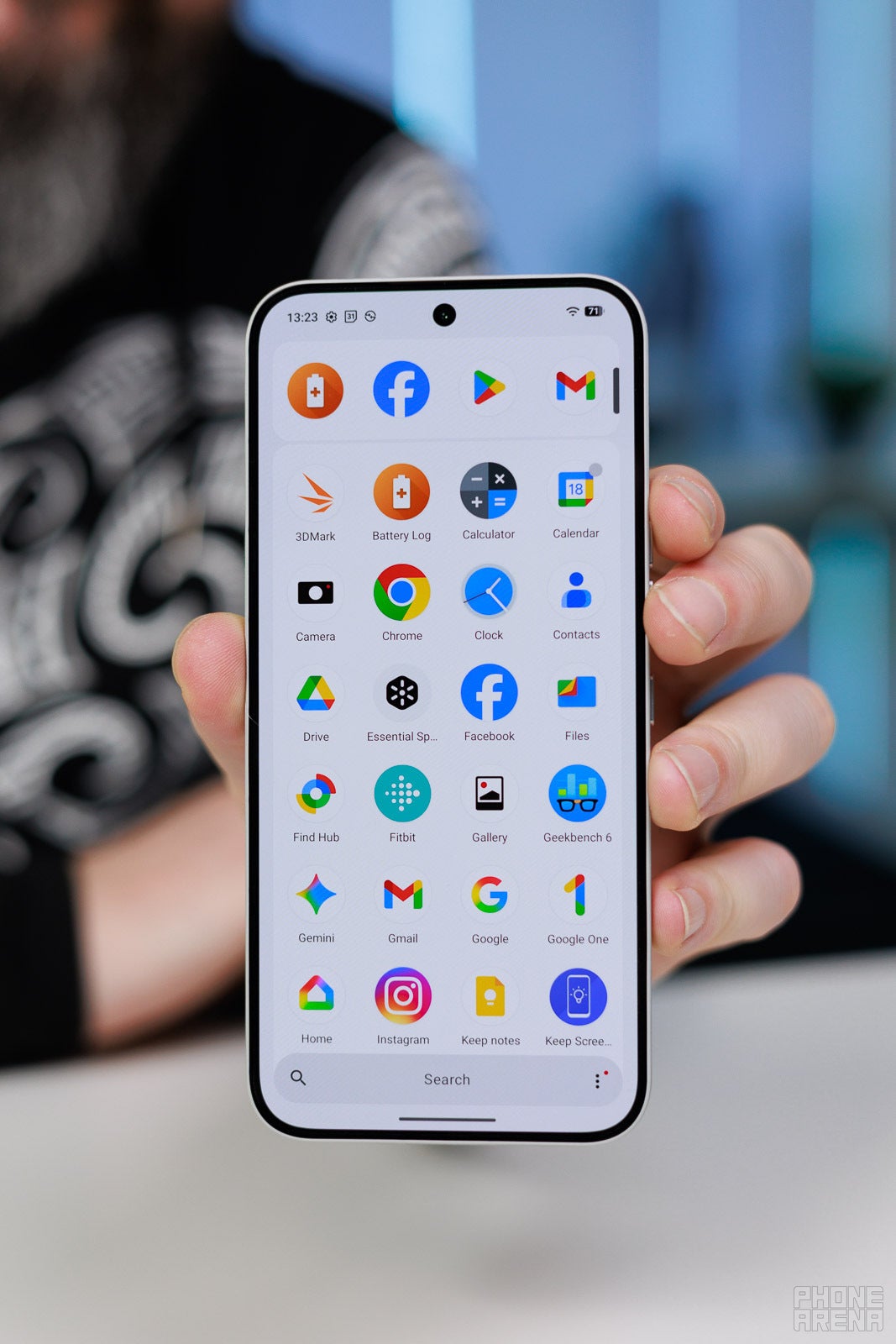
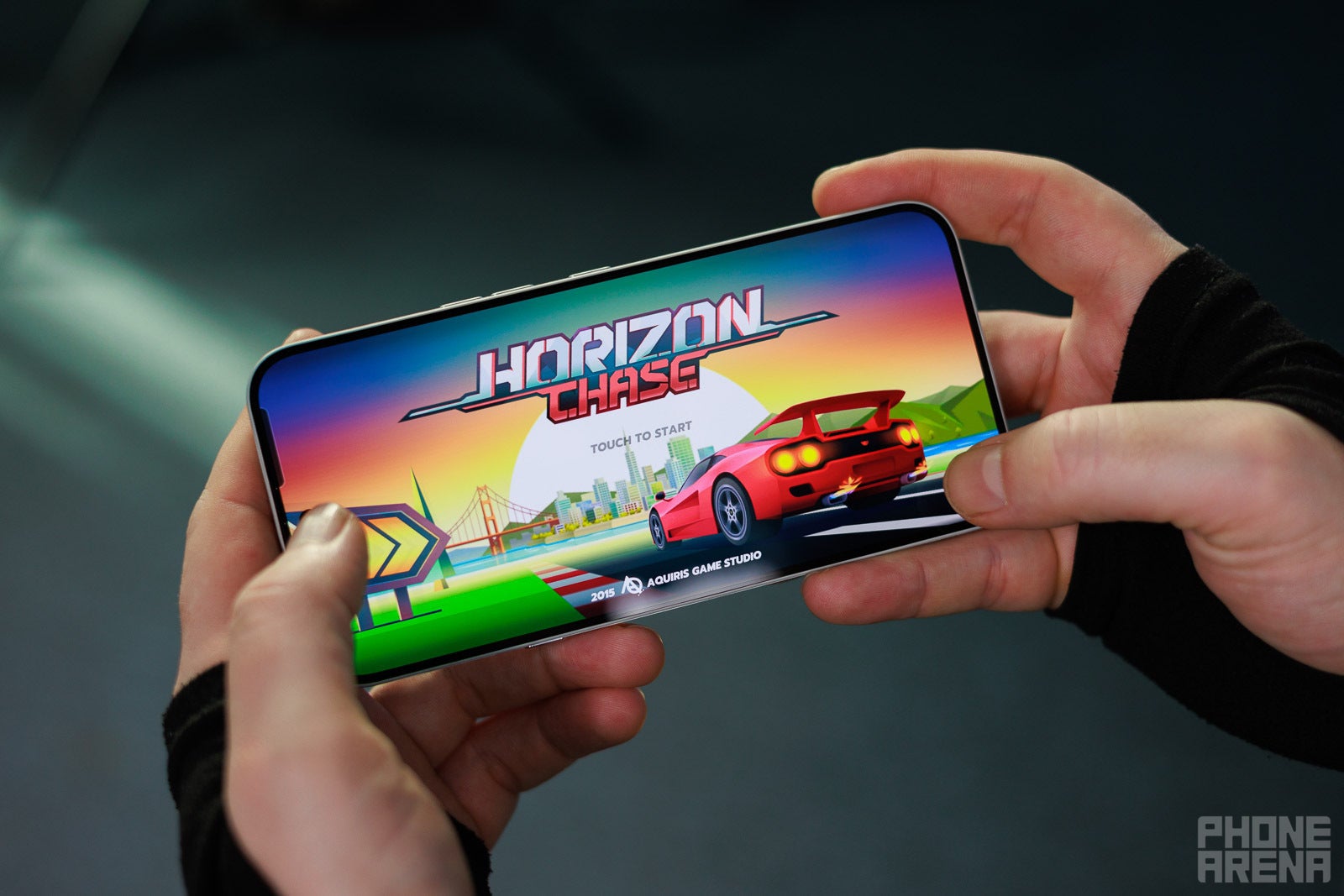
The display on the Nothing Phone (4a) Pro is a bit overkill. An AMOLED panel with a 1260 x 2800 resolution for a 440 pixels per inch density, a refresh rate of 144 Hz, which is even higher than the flagship Phone (3)’s 120 Hz, and a 5,000 nit peak brightness.
The screen looks very sharp and punchy, and you can subdue it a bit with the natural color profile, which is my preference.
Under that screen panel, there’s an optical fingerprint scanner, which is pretty quick and accurate. You can also set up a Face Unlock, but it only uses the selfie camera, so it’s not super secure and won’t work in dark conditions.
Nothing Phone (4a) Pro Camera
Almost as good?
The next hurdle for smartphone cameras is to make their photos look “not phone-y”. As a midranger, the Nothing Phone (4a) Pro is definitely not there. Its dynamic range leaves a lot to be desired, and the color calibration between the main, ultra-wide, and zoom camera isn’t really a match. All the while, you can see the algorithm’s fingerprints on oversharpening and noise-reduction artifacts.
In some photos, the reds get too saturated; in others, the exposure isn’t right, or the color cast is too blue. In general, it is certainly usable if you want to rely on it for memorabilia, but not so much for breathtaking photography. I wouldn’t venture past the 3.5x magnification of its zoom lens, as it starts to wash out details quickly. But, at that length, it’s good enough for portraits.
Video Quality

The video also comes out overexposed and overlsaturated. You will also see that we found our first bug — when you start recording and choose to zoom in later, the camera does not auto-focus after switching lenses. Though, I am confident that Nothing will patch this up, as they generally release multiple camera improvements via software updates during their phones’ lifecycles.
Nothing Phone (4a) Pro Performance & Benchmarks
Snapdragon, but a 7
We have the Qualcomm Snapdragon 7 Gen 4 platform here. Though, you’d be excused if this means absolutely nothing to you, Qualcomm’s naming scheme hasn’t been the best in recent years.
The “7” denominates that it’s a step below the flagship “Snapdragon 8” line. The question is — how far behind? To put it into perspective, its CPU is about as powerful as a Snapdragon 8 Gen 1 from late 2022 (technically, December 2021). Its GPU is a few steps above that.
CPU Performance Benchmarks:
So, when we put flagships aside, we can see that the Nothing Phone (4a) Pro is pretty close to its $500 contemporaries in terms of CPU speed. Now, if the iPhone 17e was in this comparison, it’d blow everyone away with its Apple A19 with one less GPU core. If raw power is what you are after, maybe consider that $100 extra.
GPU Performance
For storage options, you can choose between 128 GB and 256 GB with 8 GB and 12 GB RAM respectively. The latter will cost you $100 extra, which again, takes you into iPhone 17e territory.
Nothing Phone (4a) Pro Software
Out of the box, you get Android 16 with Nothing OS 4.1 on top of it. Nothing’s reskin is among my favorite — it’s simple, it’s functional, it’s flat and snappy. And the monochrome icon pack is sublime for those that are looking for some detox minimalism in their life.
Nothing promises 3 major Android updates and 4 years of security patches. This should make the Phone (4a) Pro last you well until 2030, if everything else holds up.
Nothing Phone (4a) Pro Battery
Everyday marathon runner
The Phone (4a) Pro has a 5,080 mAh battery inside it and a processor that’s not a power hog. That’s a recipe for longevity right there, and it didn’t disappoint with 16 hours on our browsing test and 12 hours of video binging.
PhoneArena Battery Test Results:
It does take a nose dive when attempting to game on the device — midrange chips just need to huff and puff a lot more to push those pixels onto the screen. Still, a few years ago, 6 hours of gaming was still a stellar result. For a $500 phone today, this is not a bad result, but we can see that its contemporaries are beating it definitively.
You can charge the Nothing Phone (4a) Pro with a 50 W brick — either one bought from the Nothing store, or a compatible 3rd-party one. It goes up to about 67% from 0% in 30 minutes. Not phenomenal like other super-fast charging speeds we’ve seen, but definitely workable. 67% should take you through a day if you forgot to charge last night.
There’s no wireless charging support — the aluminum body wouldn’t allow for it, and Nothing’s midrange “a” series typically don’t have that feature.
Nothing Phone (4a) Pro Audio Quality and Haptics
The stereo speakers here are OK. Not deep or solid — they can sound kind of tinny. But they are loud enough, and the system sounds have been tuned well enough to sound good. You can also watch talking head YouTube videos. But I wouldn’t rely on them for music enjoyment. No 3.5 mm headphone jack, too, in case you were wondering.
The haptics, on the other hand, are fantastic. Nothing really relies on that mechanical clicking and clacking to go with the interface, and it shows. Again, the Phone (4a) Pro feels good, haptics included.
Should you buy it?
The Nothing Phone (4a) Pro certainly is a “statement” device. It says that you are into the tech, that you don’t want to conform by holding yet another Galaxy or another iPhone. It is pleasant to hold and operate, its display is pretty, and its performance is on par with the $500 competition. Its UI is minimalist, and it may not have countless extra features, but what I enjoy about them is that they are usually well fleshed-out with a nice flair of “out-of-the-box thinking”.