

India stands at a critical crossroads between climate vulnerability and economic opportunity. As a fast-developing as well as populous country, it must balance ambitious growth with the urgent need for environmental sustainability. Its participation in multilateral climate negotiations reflects both its exposure to climate risks and its increasing assertiveness in shaping global climate governance.
Since the 1972 Stockholm Declaration, India has consistently engaged in international climate diplomacy. At the heart of its stance is the recognition that mitigation efforts cannot be divorced from questions of equity and financial justice. Persistent shortfalls in climate finance, limited technology transfer, and unpredictable global cooperation have prompted India to develop its own policy and financial instruments to meet its Nationally Determined Contributions (NDCs). This essay examines India’s trajectory across various fora, policies, and instruments and argues that its evolving strategy represents not only national priorities but a broader push for climate justice on behalf of the Global South.
A history of participation
As one of the world’s largest and most climate-vulnerable countries, India plays a critical role in the global response to climate change. With a growing economy and developmental priorities, it faces the dual challenge of ensuring sustainability while meeting the needs of its population. India has played a pivotal and often balancing role in international climate negotiations. Table 1 outlines its participation in key environmental treaties, including those predating the formation of the United Nations Framework Convention on Climate Change (UNFCCC) in 1992.
Table 1: Footprint of India’s involvement in global environmental treaties
| Year | Treaty/Agreement | Focus area |
| 1972 | Stockholm Declaration | Environment and development |
| 1985 | Vienna Convention | Ozone layer protection |
| 1987 | Montreal Protocol | Ozone layer (specific substances) |
| 1992 | United Nations Framework Convention on Climate Change (UNFCCC) | Climate change framework |
| 1994 | United Nations Convention to Combat Desertification (UNCCD) | Combating desertification |
| 1997 | Kyoto Protocol | Binding targets for developed countries |
| 2015 | Paris Agreement | Global climate action |
| 2016 | Kigali Amendment | Hydrofluorocarbon phase-down |
| 2021 | Glasgow Pact (Panchamrit Commitments) | Net-zero target |
| 2022 | Sharm el-Sheikh Plan (Loss and Damage Fund) | Climate finance |
The Kyoto Protocol and the Paris Agreement paved the way for global climate negotiations. India, an early signatory to the Kyoto Protocol, was exempt from binding emission targets because of its ‘developing country’ status but became a major participant in the Clean Development Mechanism. While intended to attract mitigation investments and enable technology transfer from developed countries, the mechanism fell short: only a small share of India’s projects included technology transfer, and low-cost mitigation options were largely exhausted by wealthier nations, leaving costlier efforts to developing countries.
After the failure of the Kyoto Protocol, the Paris Agreement adopted a different approach by requiring all signatories — both developed and developing countries — to commit to Nationally Determined Contributions (NDCs) but allowed for flexibility in stringency and timelines, according to the principle of Common but Differentiated Responsibilities and Respective Capabilities (CBDR-RC). India’s initial NDCs in 2022 included the following:
1. Reduce the emissions intensity of the gross domestic product by 33-35% by 2030 compared to 2005 levels.
2. Achieve about 40% of cumulative electric power installed capacity from non-fossil fuel-based energy sources by 2030 (contingent on receiving financial assistance from developed countries).
3. Create an additional carbon sink of 2.5-3 billion tonnes of carbon dioxide equivalent by expanding forest and tree cover by 2030.
These NDCs were subsequently updated at the 26th UN Climate Change Conference of the Parties to the UNFCCC (COP26) held in 2021, where India also announced its net-zero target for 2070.
India’s stance on climate finance
Despite iterative progress across mitigation, adaptation, and loss and damage frameworks, climate negotiations remain fundamentally constrained by unresolved financial challenges. For India as well as the Global South, the central argument has been that climate mitigation cannot be decoupled from development needs. Equity principles dictate that developed economies — having contributed disproportionately to historical emissions — must enable mitigation and adaptation efforts through planned and adequate financial flows.
In 2009, developed countries pledged $100 billion per year towards climate finance to support both mitigation and adaptation in developing countries. This goal was originally due by 2020 but was only met in 2022. Even so, it remains far below the actual financial requirement, estimated to be over $100 billion a year for India alone.
The Global South is more vulnerable to the consequences of climate change, including in the form of extreme weather and rising sea levels. Consequently, India voiced its support in favour of creating a ‘Loss and Damage’ fund at COP27 to help vulnerable countries deal with both economic and non-economic losses caused by climate change. India continues to push for not only more funding but also easier access to it, most notably and emphatically at COP29 in November 2024.
Meanwhile, developed countries have been attempting to broaden the definition of ‘climate finance’ to shift away from grants — which are preferred by developing country recipients — and include more loans, private capital, and, most recently, contributions from developing countries themselves.

Fair funding: India engaged actively with the demand for a ‘Loss and Damage’ fund at the COP27 talks.
| Photo Credit:
AP
The persistent shortfall in actual disbursements, lack of transparency in accounting, and the widening gap between pledges and needs highlight the uncertainty of relying on international climate finance alone. Given the volatility of global political priorities, including circumstances like the US’ withdrawal from the Paris Agreement, waiting for external finance could exacerbate the risks of over-relying on international commitments for a country with vast development needs.
Thus, while India must continue to assert its claim to climate finance to uphold climate justice for the Global South, it must also sustain domestic mechanisms to scale climate action. A meaningful assessment of negotiation dynamics therefore necessitates a focused examination of local climate action and the uncertainty around climate finance mobilisation and deployment.
Local climate action in India
India has implemented numerous policies in different sectors to accelerate the clean energy transition and achieve its NDCs. These initiatives are often supported by budgetary allocations and market-based instruments announced in the Union Budgets, demonstrating India’s intent to integrate climate action with fiscal policy in line with their interlinks.
Some major policy initiatives have been undertaken in the transport sector to reduce emissions. For example, the Faster Adoption and Manufacture of Electric Vehicles (FAME) scheme offered subsidies to lower electric vehicle (EV) purchase costs and capital subsidies to oil marketing companies for setting up EV charging stations; schemes for domestic EV and battery manufacturing; and reduced Goods and Services Tax (GST) rates on EVs and chargers.
The Perform, Achieve and Trade scheme sets efficiency targets for energy-intensive industries and allows the trading of ‘Energy Saving Certificates’ for overperformance. The Renewable Purchase Obligation mandates that a growing share of electricity be sourced from renewables, with compliance facilitated through Renewable Energy Certificates. The 2025-26 Union Budget announced a nuclear energy mission for developing small modular reactors to help build 100 GW of nuclear power generation capacity by 2047.
These actions signal India’s growing ability to design and implement climate-aligned policies. However, global cooperation can help scale up these efforts, particularly by leapfrogging technology.
Despite technology transfer being a recurring item on the COP agenda, progress has been minimal. While India has outlined its technology priorities in its NDCs and Biennial Update Reports, there is a need for prioritisation and value chain assessments. A strategic push is needed to map available technologies, evaluate domestic value chains, and scrutinise the intellectual property rights regime through a sustainability lens. This will enable India to identify its leverage points and press for more structured, transparent, and outcome-oriented technology partnerships in international negotiations.
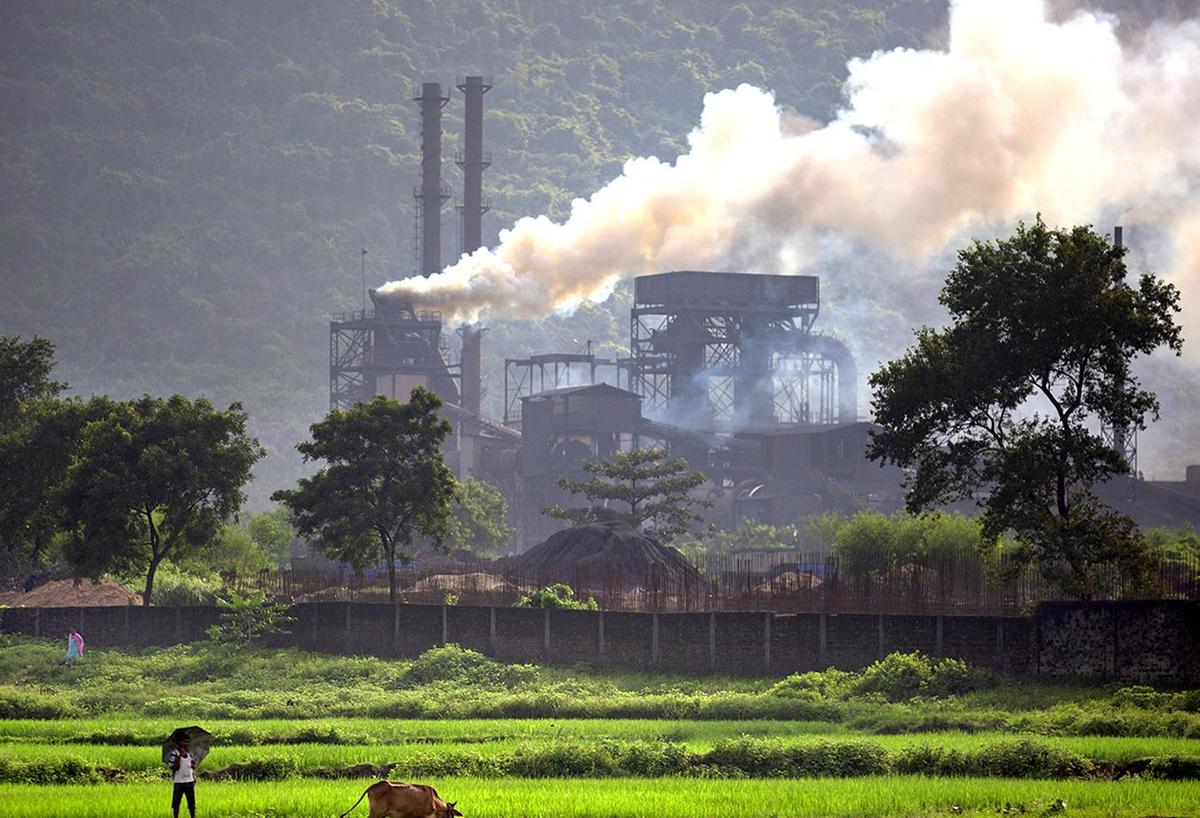
Rising fumes: Smoke rises from a coal-powered steel plant at Hehal village near Ranchi, in Jharkhand.
| Photo Credit:
AP
Mobilising domestic climate finance
Following the announcement of India’s updated NDCs at COP26, Finance Minister Nirmala Sitharaman announced the issuance of sovereign green bonds and thematic funds for blended finance, both of which direct money towards clean, sustainable activities and aim to make investment in these projects less risky.
Although green projects are required to ensure India achieves its development goals in addition to its climate goals, they induce less investment from the private sector owing to their lower rate of return. By absorbing part of the perceived risk and funding part of the project costs, public sector involvement through blended finance instruments in climate is essential for plugging the climate finance gap in India.
Further, despite having a coal-dependent power grid, India has been implementing a cess on coal since 2010, the proceeds of which accrue to a ‘National Clean Energy Fund’ designated for clean-energy initiatives. The cess had increased to ₹400 per tonne by 2016 but was subsequently absorbed into the GST regime, with the fund being used to compensate State governments for revenue lost due to the tax regime reform.
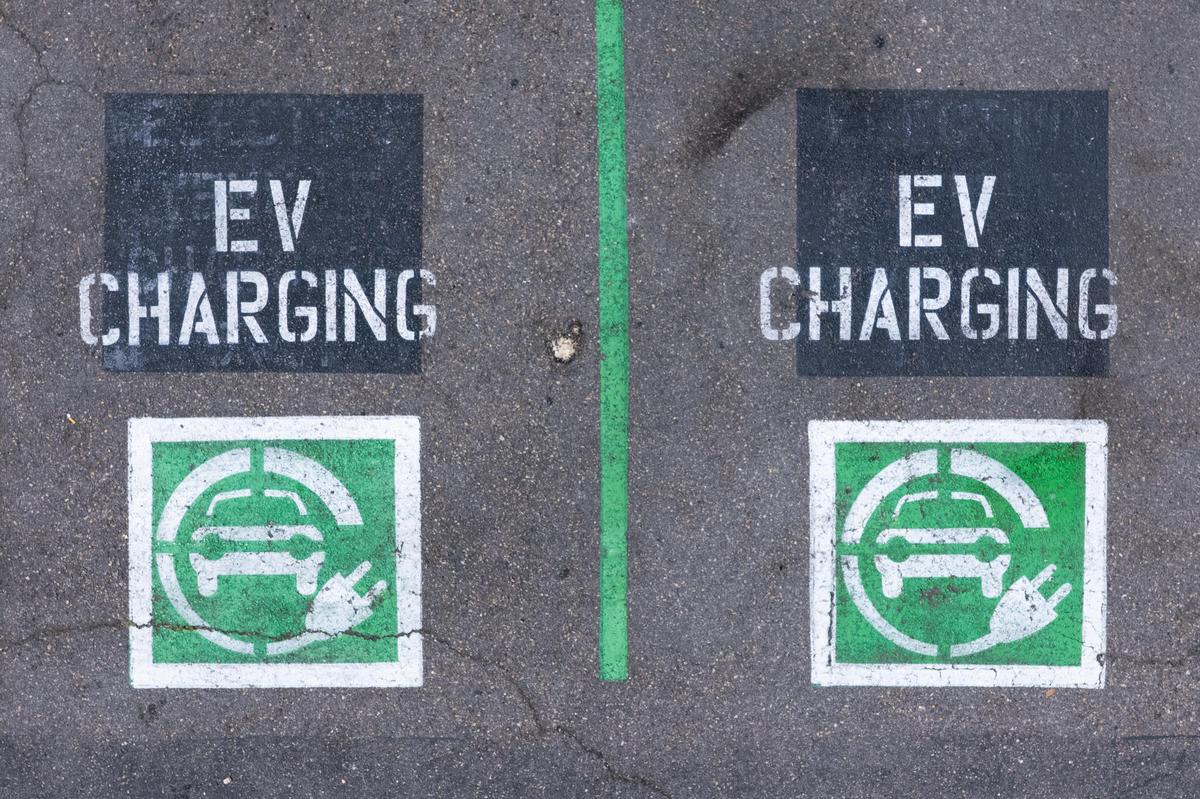
Green push: India’s FAME initiative drives EV growth with subsidies and incentives for cleaner transport and charging infrastructure.
| Photo Credit:
Reuters
More recently, India announced the implementation of a national compliance carbon market with sectoral emissions intensity targets. This is expected to be a baseline-and-credit system, which allows trading of credits in a secondary market as credits are gained or sold by industries only with respect to the baseline. This circumvents the credit-auctioning process that characterises most other carbon trading systems worldwide and is the main source of additional revenue. The ‘Green Credit Programme’ is a complementary scheme that grants credits for afforestation and water conservation activities.
While market mechanisms show some promise with respect to achieving marginal emission reductions, they are subject to numerous drawbacks, making them less than ideal for achieving the clean energy transition required to limit climate change.
They focus on compliance and cost-effectiveness. For example, a coal plant may buy offsets or make minor efficiency upgrades instead of phasing out coal altogether or switching to renewables. The additionality of mitigation activities has long been a concern: India’s proposed baseline-and-credit system is particularly susceptible to the risk of allowing companies to claim credit for activities they would have undertaken anyway.
Therefore, the incremental effects of carbon markets will be insufficient to make cleaner alternatives more accessible. This raises equity concerns as the impact of higher costs of fossil fuel-intensive commodities disproportionately affects poorer populations.
A fundamental shift — rather than incremental adjustments — will help integrate financial instruments with mitigation policies in a way that strategically mainstreams clean technologies and sustainable production systems. This highlights the need for structural transformation to recognise and respond to the inherently unsustainable nature of fossil fuel-driven growth and development. Given the extent to which markets are influenced by investor and consumer perceptions, such a shift — if supported by coherent and sustained policy signals — can reorient large-scale capital flows toward sustainable growth drivers.
However, this demands we develop instruments capable of identifying and quantifying both the actual damages caused by climate change and the broader systemic risks associated with continued extractive economics.
Historically, research has often provided only weak or ambiguous links between climate impacts and economic loss, frequently avoiding direct attribution or failing to highlight the critical fault points within prevailing economic systems. Recent advances in climate-economy scholarship show progress in this direction, helping “quantify linkages between individual emitters and particularised harms”, in the words of one April 2025 study.
In this context, India’s evolving climate finance instruments and climate action policies represent more than domestic priorities. They reflect a deliberate strategy to build fiscal and institutional resilience in the face of uncertain and inconsistent global financial support. By embedding climate goals within its financial systems, India is striving to strengthen its autonomy in pursuing low-carbon development while enhancing its credibility in international negotiations.
As India moves forward, the success of this strategy will hinge not only on domestic policy coherence but also on its ability to influence the climate negotiation outcomes to better align with development and climate imperatives of the Global South.
Krithika Ravishankar is a senior analyst in the Climate Change Mitigation team and Kaveri Ashok is a research scientist in the Sustainability team, both at the Center for Study of Science, Technology and Policy (CSTEP), a research-based think-tank.