
Verdict
It’s tough to get hyped for the Pixel 10a when it’s basically a twin of the now-cheaper Pixel 9a, offering only minor tweaks like a brighter screen and a flatter back. While it’s definitely not worth the upgrade for current 9a users, it’s still a solid mid-range pick that keeps Google in the game for now.
-
Completely flat rear -
Flagship-level AI features -
Great camera performance
-
Too many similarities with Pixel 9a -
Older Tensor G4 chipset -
Bezels remain relatively thick -
No PixelSnap support
Key Features
-

Review Price: £499 -
Plenty of AI smarts
The Pixel 10a shares many of the same AI features with the flagship Pixel 10 series, including recent additions like Camera Coach. -
Solid battery and faster charging
The Pixel 10a boasts a fairly large 5100mAh battery for the size, complete with faster 30W wired charging. -
Google’s signature camera processing tech
Despite not having the biggest sensors around, the Pixel 10a manages to outshine much of the mid-range competition.
Introduction
Google might call it the Pixel 10a, but in reality, it’s the Pixel 9a in a new suit. Well, not even a new suit, really.
While not every smartphone update has to be revolutionary, there have to be some differences between it and its predecessor to help differentiate them. That usually comes in areas like performance, with newer chipsets, or a bigger battery, or a refreshed design.
The Pixel 10a has none of that.
Yes, there are changes on offer, but these are so minor in day-to-day use that, despite being a fantastic mid-range phone overall, I can’t help but feel that most people would be better off going for the cheaper year-old (and just as good) Pixel 9a. It’s quite the conundrum.
Design
- Near-identical to Pixel 9a
- New completely flush rear
- Bright, colourful colour options
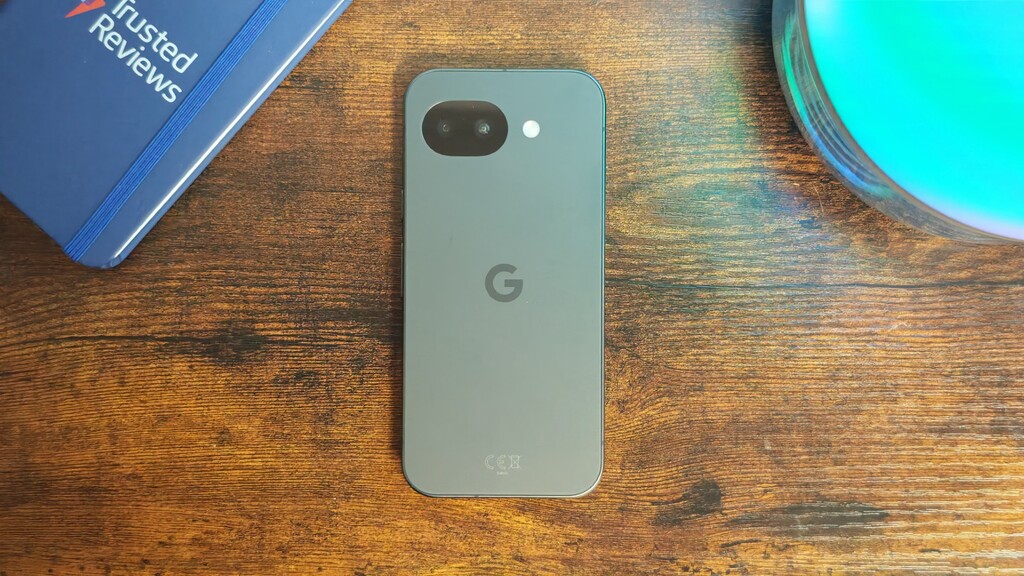
Glance at the Pixel 10a, and you’d struggle to tell the difference between it and last year’s Pixel 9a. Like, really struggle. For the most part, the phones look completely identical – though this year’s model is a smidge thicker at 9mm thick, making it one of the thickest phones in its category.

But paired with a relatively compact 6.3-inch screen and a weight of just 183g, it doesn’t feel hefty in the hand. Generally speaking, it’s the weight, not the thickness, that adds to a phone’s overall bulk.
And, for the most part, the Pixel 10a has a clean look with the same flat edges and rounded corners as the flagship Pixel 10 it’s based on – but with a key difference. The rear of the phone is completely flat. Now you might say, well so was the Pixel 9a, but it actually had a slightly raised edge around the cutout. That’s not here on the Pixel 10a.

It’s an impressively clean look that harks back to the flat rears of phones we saw 10 years ago, offering a stark contrast to not only the long camera bar of other Pixel phones but practically every other smartphone on the market today. If you’re sick of your phone wobbling on the table, the Pixel 10a is the remedy.
This does come with a catch though; with a completely flush camera housing, the entire matte-finish plastic back makes contact with the surfaces it’s placed on. Translation: a risk of easily noticeable scratches if not paired with a case.

Despite the plastic back, the phone does feel fairly premium in hand, thanks mostly to the cold-touch aluminium frame – though with the likes of the similarly priced Samsung Galaxy A56 offering a combination of aluminium and glass, it’s not quite as luxurious as it could be.
It does at least offer full IP68 dust- and water-resistance for added durability, and the Gorilla Glass 7i protection on the screen hasn’t failed me just yet.

Colour options also remain bright and vibrant, with the new Berry finish offering a particularly vibrant shade of hot pink/red alongside the same soft purple Lavender as the Pixel 10 collection, along with more muted Obsidian and Fog finishes. If you want people to know you’re using a Pixel 10a, not a 9a, it’ll mainly come down to the colours.
Screen
- 6.3-inch pOLED screen
- Vibrant, detailed and easy to use in daylight
- Slimmer bezels, but still pretty thick
The Pixel 10a remains usable despite its thickness, mainly because it’s paired with a compact 6.3-inch screen – something increasingly rare in modern smartphones, with many alternatives going all-in on big screens. It’s particularly well-suited for one-handed use, a nice change from the 6.8-inch Oppo Find X9 Pro I’ve been using recently.

For the most part, the screen is identical to that on the Pixel 9a; it remains a 6.3-inch pOLED screen with a (non-LTPO) 120Hz refresh rate and HDR support, making it a solid option for scrolling and a bit of casual gaming.
The colours, as you’d expect from an OLED panel, are bright and vibrant – though interestingly, Google doesn’t let you tweak the colour palette if it’s too colourful for your tastes, a common feature seen these days.
That said, there are a few key upgrades on offer this year, though I’d describe them as subtle at best. The screen is a smidge brighter, managing 2000nits in high-brightness mode and 3000nits peak when watching HDR content, an increase of 200nits and 300nits respectively.

Similarly, the Pixel 10a has slimmer bezels than the comically large Pixel 9a alternative, though it’s not exactly a dramatic difference. These are still thick bezels, especially compared to the mid-range competition from the likes of the OnePlus Nord 5 and Honor 400, and only increase the screen-to-body ratio by 0.8%. It’s the thought that counts, I suppose?
So, yes, it’s a perfectly fine screen that’ll serve the vast majority of users just fine, but not one that I’d describe as one of the best around, even at its mid-range price point.
Cameras
- Same 48MP and 13MP cameras
- Excellent performance considering the hardware
- Lack of zoom lens is becoming notable
Google is usually praised for its camera prowess, offering impressive performance despite underlying hardware that’s not exactly the most advanced around – and that continues with the Pixel 10a, even if the cameras are the exact same as last year’s Pixel 9a. Sensing a theme here yet?

The Pixel 10a continues on with the same 48MP main and accompanying 13MP ultrawide, with the main lens doubling up as a digital zoom. Don’t get me wrong, I’m a little disappointed that there are no hardware changes at all – especially when we’re seeing competitors with dedicated zoom lenses – but, for the most part, what Google is offering here remains excellent in day-to-day use.
Even with a 1/2.0-inch sensor that’s on the small side, the main OIS-enabled 48MP continues to impress. Google’s impressive image processing tech and accurate colour reproduction go a long way here, delivering consistently sharp, in-focus shots with natural colours and some of the best skin tones of any phone on the market.
Colours are vibrant without veering too far into the sickly territory, and it even handles complex lighting environments well, with a nice balance between highlights and shadows that leaves plenty of detail in both. And, with a fairly wide f/1.7 aperture, that great performance continues as light levels drop, often with very little time needed for a capture.
It doubles up as a fairly competent zoom lens if you don’t push it too far. At 2x, there’s very little difference in overall quality, and it’ll do a decent job up to around the 5-7x mark depending on lighting. Push it any further, however, and you’ll get those telltale signs of digital upscaling that make finer details look a little soft and overprocessed.
At the other end of the scale, the 13MP ultrawide is there when you want to get a little more perspective in your shots. As with the Pixel 9a, this remains a competent secondary lens that matches the main lens in colour and overall brightness, even with a slightly narrower f/2.2 aperture. It does mean it’s not quite as capable in low light, but it can still give it a good go and get something semi-decent in most instances.
Performance
- Same Tensor G4 chipset as Pixel 9a
- Great everyday performance, especially for AI
- Not the best phone for gaming
If there’s one single controversy about the Pixel 10a, it’d be the processor.
Even with the most uninspired of phone updates, you can rely on one thing: a new chipset. But that’s not the case with the Pixel 10a, instead sticking with the same Tensor G4 chipset as last year’s Pixel 9a in place of the newer Tensor G5 found on the flagship Pixel 10. A big part of the ‘a’ proposition has traditionally been its parity in performance with its flagship alternative, but that’s not quite the case here.

Paired once again with 8GB of RAM and either 128- or 256GB of storage, the Tensor G4 remains a solid chipset – it was still a flagship chipset that powered 2024’s Pixel 9 collection – but it does mean that you can pick up the older and cheaper Pixel 9a and have the same level of performance.
Not that you’d really be able to tell in everyday use; just like the flagship Pixels, the 10a can comfortably handle just about anything you can throw at it with practised ease. It’s fast, smooth in everyday use and can handle basic gaming without much worry.
I wouldn’t push it too far into gaming territory though; the phone isn’t a graphical monster compared to chipsets from MediaTek and Qualcomm, and it can get pretty warm when playing demanding 3D titles over longer periods, especially if you crank the graphics up. Think more along the lines of Archero 2 than Genshin Impact.

Interestingly, it benchmarks quite poorly for what should be a flagship chipset – a common symptom of Pixel’s Tensor chipsets, which tend to prioritise on-device AI smarts over pure graphical performance – but it’s solid for the mid-range price, and importantly, this performance isn’t reflected in everyday use. Something I can only put it down to Google wizardry.
So, yes, performance is fine from the Pixel 10a for the vast majority, but it’s essentially the exact same as what you’ll get from the cheaper, older Pixel 9a.
Software
- A clean approach to Android 16
- Genuinely useful AI tools
- Seven years of OS upgrades
Android is Google’s bread and butter, so it shouldn’t come as much surprise to hear that the experience here is excellent.

Google’s stock approach to Android 16 remains one of the more attractive options in the Android world. Where competitors go all-in on flashy, niche features that most consumers won’t use, Google’s spin feels more refined, more controlled, offering only features that are genuinely helpful in day-to-day life.
Despite not being the flagship Pixel, the Pixel 10a packs an excellent roster of AI features – some seen on other phones, some exclusive to the Pixel experience – that reach practically every area of the phone.

You’ve got Google’s excellent photo-editing features, from staples like Magic Editor to newer ones like Best Take, along with handy little extras like the phone automatically detecting and cataloguing the music you hear throughout the day.
Not everything hits the mark – elements like Camera Coach, introduced this year, take far too long to work with fairly generic recommendations – but for every miss, there are plenty of wins. If you want an AI phone that feels actually useful in day-to-day use without the associated flagship price, the Pixel 10a is that phone.

The catch, as ever in this review, is that the same is true of last year’s Pixel 9a – and while it has yet to get Pixel 10 features like the Camera Coach present on the Pixel 10a, there’s no reason why it wouldn’t at some point in the future. The two phones have the same chipset after all, and Google claimed that the 10a was the first ‘a’ series phone to get the features, not the only model.
The only area where the 10a gets a win is long-term software support; while both phones offer the same leading seven years of OS upgrades, the 9a’s jump from the Android 15 it shipped with to the Android 16 it’s rocking now means it’ll end up on Android 22, while the 10a will get Android 23. Either way, that’s not a bad offering for a mid-range phone.
Battery life
- A big 5100mAh battery
- Easy all-day battery life
- Slightly faster wired charging, but no PixelSnap
The Pixel 10a takes a quiet win in the battery life department, even with the same 5100mAh cell as its predecessor.
That’s a pretty big capacity for a phone with a 6.3-inch screen – for comparison, Samsung’s more premium 6.3-inch Galaxy S26 has a 4300mAh cell, and even the 6.9-inch Galaxy S26 Ultra has a 5000mAh battery – though it’s still dwarfed by Chinese competitors like the 7400mAh OnePlus 15R.

Still, that battery capacity, combined with the smaller, more energy-efficient panel, means you can comfortably get through the day without worrying about scrambling for a charger.
It got me through an especially busy workday – off-charge at 8am, used throughout the day for messaging, snaps, and scrolling, then went to an event in the evening – with 26% left by the time I went to bed just after midnight.
It might be a two-day device for some, but as always, it’ll come down to how you use your phone.
Charging has also seen an upgrade this year – though not in the way I had hoped. The headline upgrade is faster 30W wired charging, up from 23W on the Pixel 9a, which Google claims can deliver 50% in 30 minutes – a claim that rang true in my own testing, though a full charge still took close to an hour and 40 minutes.

Instead, I was hoping Google would bring its new PixelSnap wireless charging tech to the 10a.
It debuted on the flagship Pixel 10 collection as a Qi2-based alternative to Apple’s popular MagSafe tech, and it even worked with MagSafe-branded accessories. It meant you could snap the phone onto wireless chargers and attach accessories with ease, and while you can still get a magnetic case for the Pixel 10a, it’s not quite the same.
There is still wireless charging here, though at 10W, it’ll take quite a bit of time to reach full charge. You’d be better off just plugging it in.
Should you buy it?
You want a great all-round mid-range phone
The Pixel 10a doesn’t excel in one particular area, instead offering a fairly balanced experience across cameras, screen tech, performance and battery life – a rarity in the mid-range market.
You can live without the minor improvements
If you can live without the ever-so-slight enhancements on offer, you can get the near-identical Pixel 9a for a lot cheaper.
Final Thoughts
It’s hard to get excited about the Pixel 10a, when it’s so close to the Pixel 9a – a phone that, a year after release, is much cheaper than the 10a’s £499/$499 asking price.
There are slight improvements on offer this year, like a slightly brighter screen and a truly flat rear panel, but for the most part, the experience – even down to core elements like performance and battery life – is near-identical.
That said, even with slight updates to the existing formula, the Pixel 10a remains a great option for those looking for a solid all-round mid-range smartphone in 2026. It’s certainly not for Pixel 9a users to upgrade to, but it keeps Google’s head above water in increasingly choppy mid-range waters – for now, anyway.
How We Test
We test every mobile phone we review thoroughly. We use industry-standard tests to compare features properly and we use the phone as our main device over the review period. We’ll always tell you what we find and we never, ever, accept money to review a product.
- Used as a main phone for over a week
- Thorough camera testing in a variety of conditions
- Tested and benchmarked using respected industry tests and real-world data
FAQs
Google has committed to seven years of OS upgrades for the Pixel 10a.
Yes, it offers full IP68 dust and water resistance.
Test Data
| Google Pixel 10a | |
|---|---|
| Geekbench 6 single core | 1753 |
| Geekbench 6 multi core | 4551 |
| Geekbench 6 GPU | 8803 |
| AI performance | 1287 |
| Time from 0-100% charge | 98 min |
| Time from 0-50% charge | 31 Min |
| 30-min recharge (no charger included) | 49 % |
| 15-min recharge (no charger included) | 19 % |
| 3D Mark – Wild Life | 2608 |
| 3D Mark – Wild Life Stress Test | 91 % |
Full Specs
| Google Pixel 10a Review | |
|---|---|
| UK RRP | £499 |
| USA RRP | $499 |
| Manufacturer | |
| Screen Size | 6.3 inches |
| Storage Capacity | 128GB, 256GB |
| Rear Camera | 48MP + 13MP |
| Front Camera | 13MP |
| Video Recording | Yes |
| IP rating | IP68 |
| Battery | 5100 mAh |
| Wireless charging | Yes |
| Fast Charging | Yes |
| Size (Dimensions) | 73 x 9 x 153.9 MM |
| Weight | 183 G |
| Operating System | Android 16 |
| Release Date | 2026 |
| First Reviewed Date | 04/03/2026 |
| Resolution | 1080 x 2424 |
| HDR | Yes |
| Refresh Rate | 120 Hz |
| Ports | USB-C |
| Chipset | Google Tensor G4 |
| RAM | 8GB |
| Colours | Obsidian, Fog, Berry, Lavender |
| Stated Power | 30 W |