
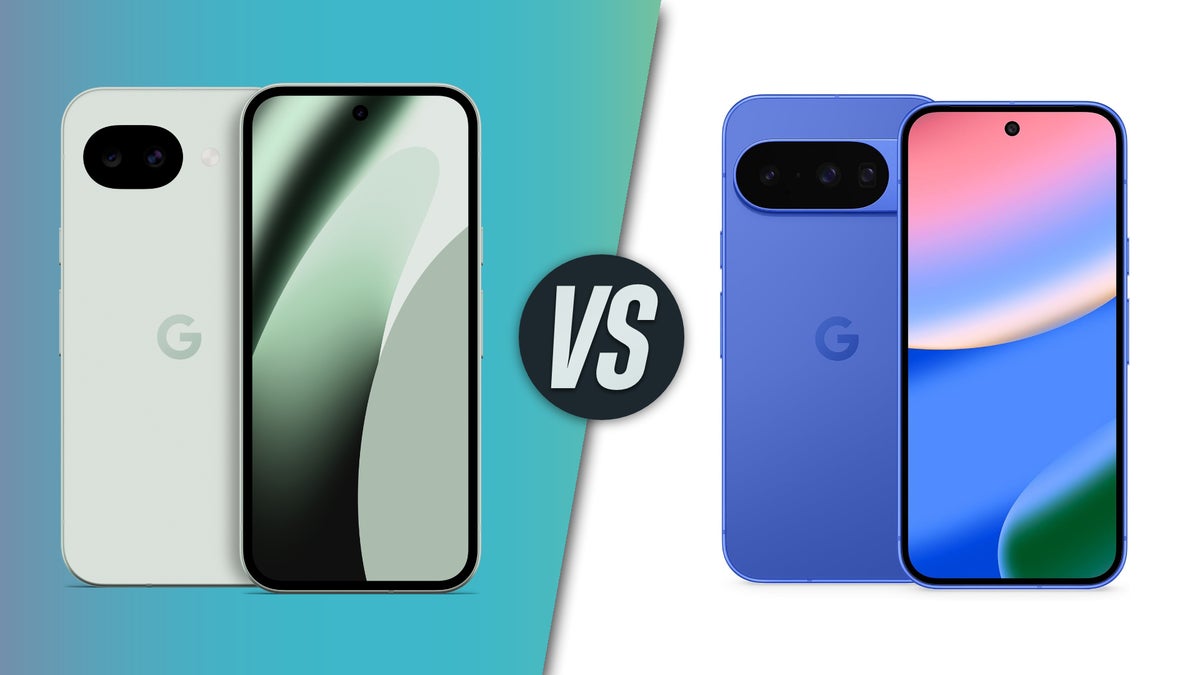
Google Pixel 10a vs Pixel 10a | Image by PhoneArena
Pixel 10a vs Pixel 10 expected differences:
| Pixel 10a | Pixel 10 |
|---|---|
| Same flat design as Pixel 10/9a, just new colors | Flat and modern design language |
| Google Tensor G4 4nm | Equipped with the 3nm Google Tensor G5 chipset |
| 8 GB RAM | 12 GB RAM |
| 6.3-inch display as well, Gorilla Glass 7i | Slightly brighter 6.3-inch screen, Gorilla Glass Victus 2 |
| 3,000-nit peak brightness | 3,000-nit peak brightness |
| Dual-camera system | Triple-camera system, first regular Pixel with 5X telephoto |
| 5,100 mAh battery | 4,970 mAh battery |
| 45 W wired charging | 30 W wired charging |
| 10W wireless charging | Qi2 15W wireless charging |
| No Pixelsnap system | Pixelsnap |
| Satellite SOS | Satellite SOS |
| $499 price | $799 price (no changes vs Pixel 9) |
Table of Contents:
Also read:
Design and Size
Minor changes only
Both the Pixel 10a and the Pixel 10 look unmistakably Pixel, though there are major visual differences. The starkest difference is the camera bar at the back: the Pixel 10 has a more pronounced and protruding one, whereas the Pixel 10a has a fully flush rear camera setup, which is refreshing to see after years upon years of camera islands that become more and more protruding outwards.
The Pixel 10a is, for the most part, identical to the Pixel 9a. There are just marginal differences in the dimensions: the Pixel 10a is slightly taller, wider, and thicker but lighter than the Pixel 9a. Not enough that you’d notice, but enough to render your old cases incompatible…
The Pixel 10, on the other hand, is a bit more compact in terms of dimensions (shorter, narrower, and thinner), but it’s also noticeably heavier at 204 g.
In terms of materials, there’s a clear distinction between the Pixel 10a and the Pixel 10, though it doesn’t have particularly major repercussions for real-life usage. While both phones use aluminum frames, the Pixel 10a uses a plastic backplate, while the Pixel 10 relies on a Gorilla Glass one, delivering a more premium experience.
| Pixel 10a | Pixel 10 |
|---|---|
| Thickness 9.0 mm |
Thickness 8.6 mm |
| Dimensions 153.9 x 73 mm |
Dimensions 152.8 x 72 mm |
| Weight 183 g |
Weight 204 g |
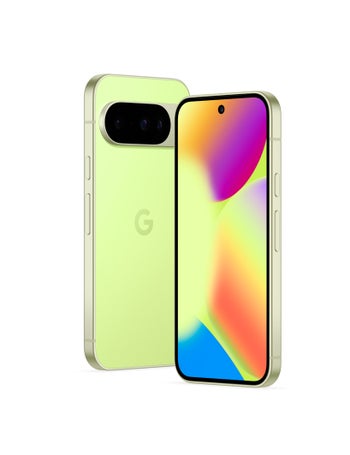
The Pixel 10a comes in Obsidian, Berry, Fog, and Lavender colors (rather than the Obsidian, Porcelain, Iris, and Peony ones of the Pixel 9a). At the same time, the Pixel 10 arrives in the colorful Lemongrass, Obsidian, Frost, and Indigo hues.
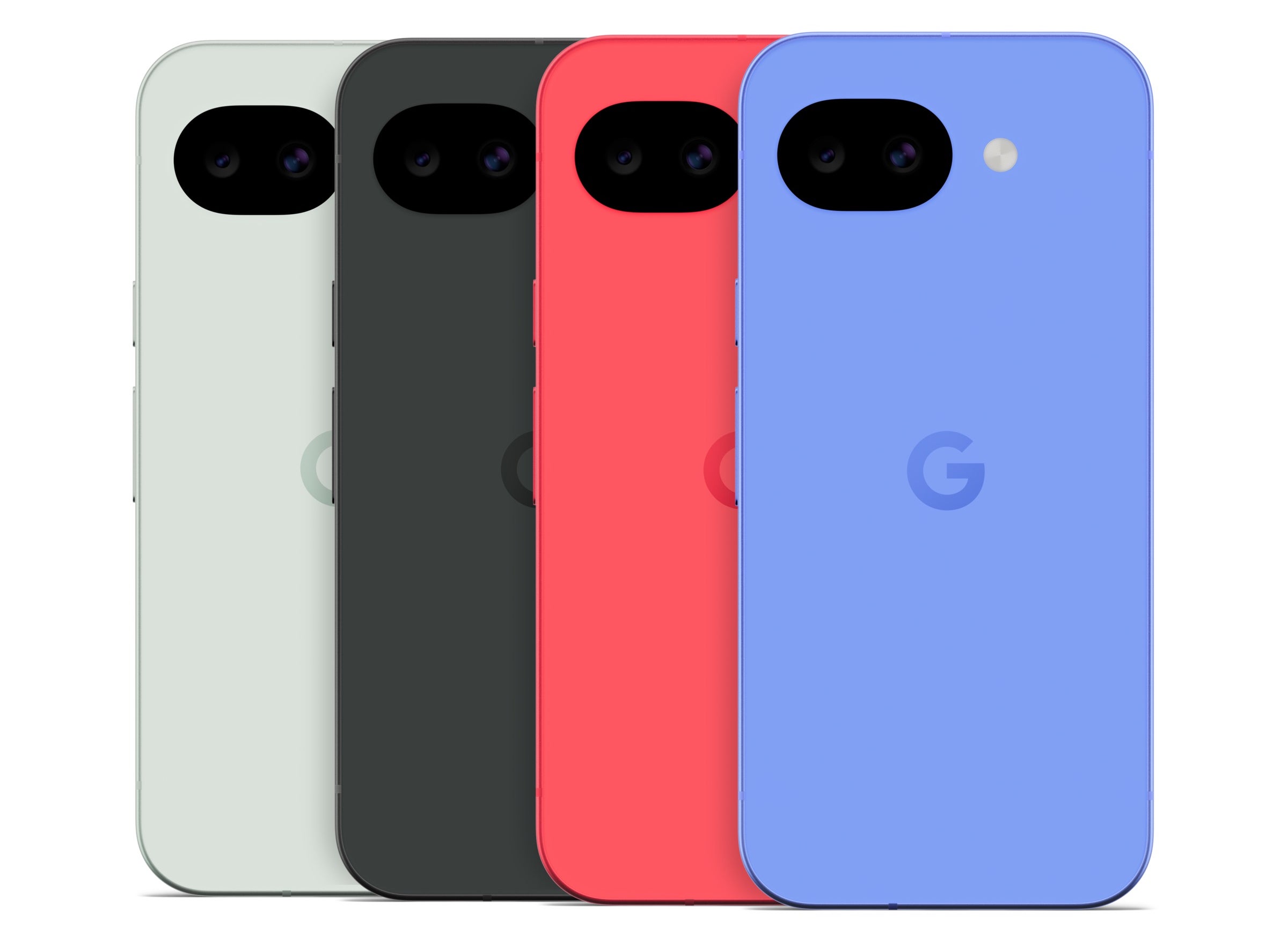
All Google Pixel 10a colors | Image by Google
Display Differences
The Pixel 10a scores a few upgrades in the display department, and those are pretty significant.
First, gone is the old Gorilla Glass 3 protection up front, as the Pixel 10a comes with Gorilla Glass 7i, which is more scratch resistant. Second, the peak brightness has been amped up by 11% and now matches the Pixel 10‘s 3,000 nits of peak brightness.
The essential specs are very similar: both phones have 6.3-inch FHD+ OLED displays achieving up to a 120 Hz refresh rate. The Pixel 10 also relies on Gorilla Glass Victus 2, which is a notch better in terms of durability.
| Pixel 10a | Pixel 10 |
|---|---|
| Size 6.3″ |
Size 6.3″ |
| Brightness 3,000 nits (peak) |
Brightness 3,000 nits (peak) |
In terms of biometrics, the Pixel 10a comes with an optical fingerprint sensor, which usually functions a bit slower than an ultrasonic one. The Pixel 10 has an ultrasonic sensor, so it has a leg up in the competition.
One thing to keep in mind is that Google has successfully made its face unlock secure enough to be used for banking authentication without having a dedicated 3D biometric module. That’s a welcome step over picture-based face unlocking. Both the Pixel 10a and Pixel 10 will most certainly share that.
Performance and Software
Not a big difference in raw performance
In contrast, the Pixel 10 comes with the newer 3nm Tensor G5 chip. Slightly faster and slightly more efficient. Would you notice that in real life? We honestly doubt that anyone can tell the difference between the Tensor G5 and G4 during real usage.
Remember, you don’t get a Pixel for the excess raw power and gaming prowess; it’s tailored for machine-learning and on-device AI processing.
| Pixel 10a | Pixel 10 |
|---|---|
| Chip Google Tensor G4 |
Chip Google Tensor G5 |
| Process 4nm |
Process 3nm |
| RAM, Storage 8/128 GB 8/256 GB |
RAM, Storage 12/128 GB 12/256 GB |
The Pixel 10a comes with 8 GB of RAM and either 128 or 256 GB of onboard storage. The Pixel 10 is slightly better endowed with 12 GB of RAM, as well as the same 128 and 256 GB storage options.
Camera
Dual versus triple
With the Pixel 10a, we get the same camera as the Pixel 9a: a 48 MP main and a 13 MP ultrawide, as well as another 13 MP front camera. Not a particularly exciting or versatile setup, but it should get the job done just fine.
In contrast, the Pixel 10 is a bit more exciting in terms of its camera selection. It actually ships with a proper 5X telephoto camera, which greatly improves its versatility.
The rest of the cameras are the same, so we can generally expect extremely similar image quality between the Pixel 10a and the Pixel 10, with the important distinction that the latter will be victorious once you start zooming in.
| Pixel 10a | Pixel 10 |
|---|---|
| Main 48 MP, f/1.7 |
Main 48 MP, f/1.7 |
| Ultrawide 13 MP, f/2.2 |
Ultrawide 13 MP, f/2.2 |
| – | Telephoto 10.8 MP F3.1 5.0X optical zoom |
Battery Life and Charging
Pixel 10a supremacy?
The Pixel 10a comes with the same 5,100 mAh battery as the Pixel 9a, which should give it a very slight edge over the 4,970 mAh battery that’s inside the Pixel 10. However, the slightly better efficiency of the Tensor G5 should be enough to offset this difference.
Which phone will have the better battery life?
In our tests, the Pixel 9a proved to be more durable than the Pixel 10, so we definitely expect the Pixel 10a to reiterate that. We’ll reserve our judgment for the final review, though.
| Pixel 10a | Pixel 10 |
|---|---|
| Battery size 5,100 mAh |
Battery size 4,970 mAh |
|
Charging speeds 7.5 W wireless charging |
Charging speeds 30 W wired 15 W wireless charging |
One area in which the Pixel 10a has scored some exciting upgrades is charging speeds. The new phone supports up to 45 W wired charging and 10W Qi wireless charging, a massive boost over the Pixel 9a‘s much lower charging speeds. The Pixel 10 has slightly less impressive 30 W wired charging, but has faster 15 W Qi2 wireless charging, as well as Pixelsnap support. The Pixel 10a does not support Pixelsnap.
Also read:
Specs Comparison
|
|
| Google Pixel 10a | Google Pixel 10 |

| Dimensions | |
|---|---|
| 152.8 x 72 x 8.6 mm | |
| Weight | |
| 204.0 g | |
| Size | |
|---|---|
| 6.3-inch | 6.3-inch |
| Type | |
| P-OLED, 120Hz | OLED, 120Hz |
| System chip | |
|---|---|
| Google Tensor G4 (4 nm) | Google Tensor G5 (3 nm) |
| Memory | |
| 8GB (LPDDR5X)/128GB (UFS 3.1) 8GB/256GB |
12GB (LPDDR5X)/128GB 12GB/256GB |
| Type | |
|---|---|
| 5100 mAh | 4970 mAh |
| Charge speed | |
| Wired: 23.0W Wireless: 7.5W |
Wired: 30.0W Wireless: 15.0W |
| Main camera | |
|---|---|
| 48 MP (OIS, PDAF) Aperture size: F1.7 Focal length: 25 mm Sensor size: 1/2″ Pixel size: 0.8 μm |
48 MP (OIS, PDAF) Aperture size: F1.7 Focal length: 25 mm Sensor size: 1/2″ Pixel size: 0.8 μm |
| Second camera | |
| 13 MP (Ultra-wide) Aperture size: F2.2 Sensor size: 1/3.1″ Pixel size: 1.12 μm |
13 MP (Ultra-wide) Sensor size: 1/3.1″ |
| Third camera | |
| 10.8 MP (Telephoto, OIS, PDAF) Optical zoom: 5.0x Aperture size: F3.1 Focal Length: 112 mm Sensor size: 1/3.2″ |
|
| Front | |
| 13 MP | 10.5 MP |
Google Pixel 10a vs Google Pixel 10 specs comparison
or compare them to other phones using our
Phone Comparison tool
Summary
Overall, the Pixel 10a is a weird release, no matter how you look at it. It’s a small upgrade over the Pixel 9a and fixes many of the lingering shortcomings of Google’s affordable Pixel lineup.
The Pixel 10, on the other hand, has evolved into an underrated flagship phone that boasts a ton of versatility and value in a compact body, combined with the usefulness of Google’s AI suite.
Which one should you get? Well, honestly, the Pixel 10a is shaping up to be great value, even more so than the Pixel 9a, especially considering the familiar $499 price tag has been kept intact.