


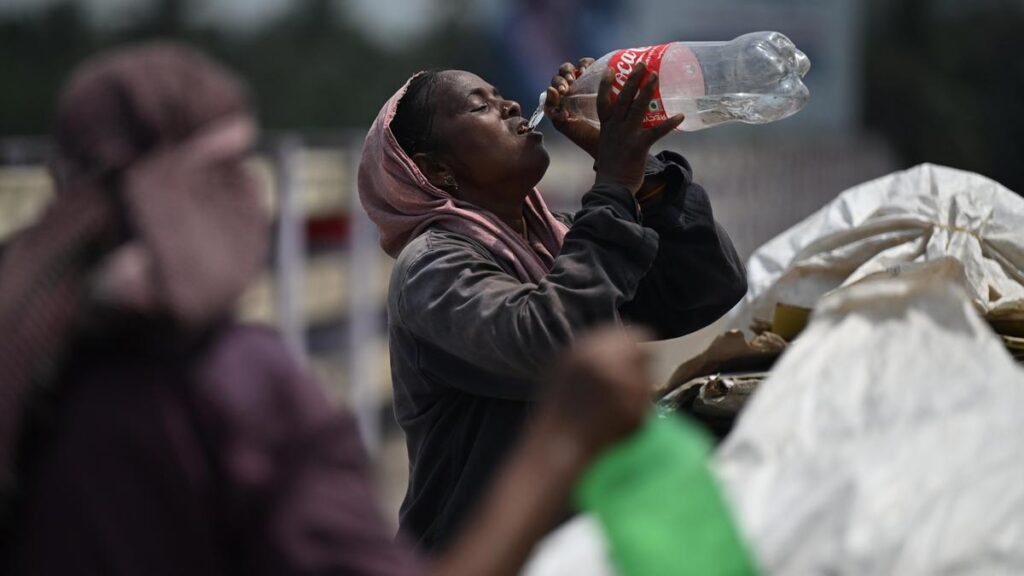
In summer 2024, the world watched as Delhi battled through its longest ever heat wave, with temperatures ratcheting up to a scorching 50º C. Even the night offered no respite, with night-time minimum temperatures soaring up to nearly 35º C.
But it wasn’t just Delhi that burned. Heat waves swept across most of India, with a report by the National Programme on Climate Change and Human Health (NPCCHH) estimating 269 suspected heat stroke deaths, 161 confirmed heat stroke deaths, and more than 48,000 suspected heat stroke cases across multiple States. Another report by the nonprofit HeatWatch revealed that due to inadequate data collection, the number of deaths may have been undercounted, going up to 733.
The NPCCHH and the National Centre for Disease Control released a ‘National Heat Action Plan’ in 2021, and a revised set of guidelines in 2024, detailing early warning systems, emergency cooling measures, and protocols for dealing with high heat.
The government has also been working with the National Disaster Management Authority (NDMA) to create State- and city-specific heat action plans (HAPs) as well. But HeatWatch and other reports have suggested that the plans are underfinanced and may not be widely and properly implemented across the country.
When heat action plans falter against the backdrop of rising temperature, workers — who bear the brunt of the unbearable heat — suffer the most.
Different cities, different stories
The NDMA has been working with 23 States to develop HAPs at the State and city levels, with some States like Odisha and Maharashtra even putting district-level HAPs in place, according to a 2024 report by The Hindu. But according to a more recent report by Sustainable Futures Collective, a New Delhi-based research organization, many of these HAPs focus more on short-term goals and lack long-term efforts to address the heat wave problem. In some cases where long term goals are mentioned, they either only focus on preparing for the consequences of a heat wave instead of trying to prevent one or they haven’t been implemented effectively for the most heat-vulnerable populations.
Short-term efforts include access to drinking water, modifying work schedules in the day, and ensuring enough beds in hospitals in case of heat emergencies. As for long- term goals: most of them focused on improving the health sector — which, while it is important, suggests a greater focus on preparing for the eventuality of a heatwave rather than efforts at preventing them, according to the review.
Some of the long-term efforts the study authors recommend include ensuring household and workplace cooling for the most exposed populations, insurance against lost work, and expanded fire-safety measures. The authors have also noted that long-term goals will require more dedicated financing and better coordination between municipal, State, and district departments, both of which are currently lacking.
What is considered a heat wave can vary widely from city to city, necessitating strict, city-specific early-warning and preparedness systems. The India Meteorological Department (IMD) declares a heat wave when the temperature is 40º C or more in the plains, 37º C or more along the coasts, and 30º C or more in the hills. According to Lipika Nanda, a public health specialist in sectoral planning at the Public Health Foundation of India (PHFI) in Gurugram, a blanket cut-off of 40º C is not helpful for some cities.
In a 2018 study focussing on Bhubaneswar, the capital of Odisha, she and her colleagues looked at how the risk of all-cause mortality — which are deaths occurring due to any cause — varied with ambient atmospheric temperature during the months of March to July between 2007 and 2014. They found a lower cut-off of a maximum daily temperature of 36.2º C, above which the mortality risk started increasing, and an upper cut-off of 40.5º C, above which the mortality risk rose even more rapidly.
“For Bhubaneswar, the threshold is much lower than 40 [°C], so the State government should not be thinking ‘it’s safe until 40’,” Nanda said.
According to the study, two trigger points could help the city plan out a graded, “traffic-light”-like response to increasing heat. When the temperature forecast is between 36.2º C and 40.5º C, citizens could receive an orange alert, and when it crosses 40.5º C, they could receive a red alert to prepare for the upcoming heat waves. With the help of these findings, Nanda and her colleagues worked with the Odisha government and NDMA to inform policy decisions surrounding the heat action plans for Odisha.
In 2020, Nanda and her colleagues also conducted vulnerability assessment surveys in four cities: Kolkata in West Bengal, Angul in Odisha, Ongole in Andhra Pradesh, and Karimnagar in Telangana. Across 500 households in the urban areas of each city, covering both slum and non-slum localities, the authors assessed overall vulnerabilities of the households to increased heat.
Based on their findings, Angul had the maximum share of vulnerable households, followed by Kolkata, Karimnagar, and Ongole in that order. In terms of exposure to intense heat, one of the factors underlying vulnerability, Kolkata was the highest.
“[Kolkata] was very different from the other three cities in terms of the difficulties that they faced,” Nanda explained. “There was no open environment. The slums were so close to each other [and the] big buildings. There was no circulation of air.”
In a follow-up study, Nanda and her colleagues dove deeper into Angul and Kolkata — trying to understand which populations were particularly vulnerable and what other factors could contribute to them being unable to cope with the heat. In Angul, they found that women were more vulnerable than men, and that how far houses were from the nearest primary healthcare centre also affected the vulnerability of the households. In Kolkata, vulnerability was highest amongst those working as clerks and among the unemployed.
Nanda emphasised that continuous research is required to better understand the science behind heat waves and how they can affect different populations. “Only research and solid data can provide us an answer to [questions like] are we on a ticking time bomb, should we do something about it, should we save lives or prevent illnesses,” Nanda said.

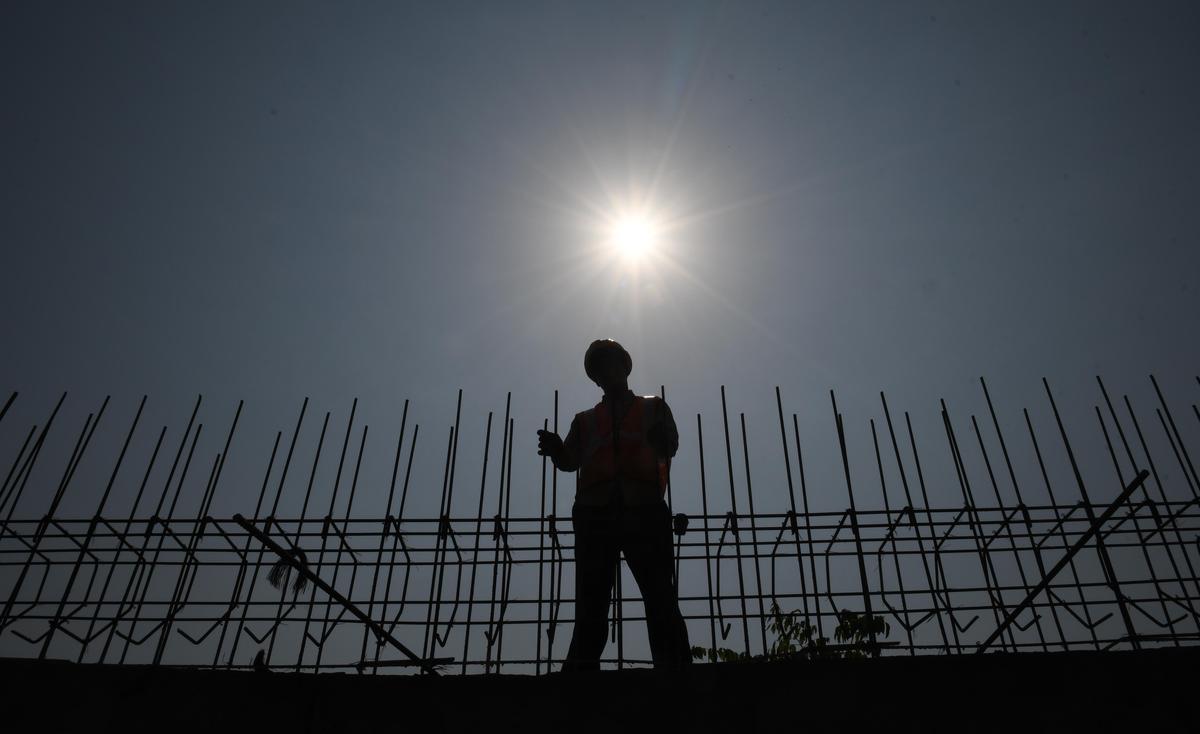
Struggling under sun: Outdoor workers face the brunt of rising temperatures amid inadequate protection.
| Photo Credit:
H. Vibhu
“Each place, if it reacts to the heat differently, one size doesn’t fit all for [developing] a policy. A policy that works in Odisha may not work in Telangana.”
Heatwaves can vary
In February 2024, a group of scientists led by Jeroen de Bont, an environmental scientist at the Karolinska Institutet in Stockholm, Sweden, published a study on how heat waves affect all-cause mortality in 10 cities from varying climate zones in the country. They focussed on Ahmedabad, Bengaluru, Chennai, Delhi, Hyderabad, Kolkata, Mumbai, Pune, Shimla, and Varanasi, and examined mortality data roughly from 2008 to 2019.
Apart from looking at a temperature cut-off, a heat wave is also defined by looking at how long and sustained the period of high temperatures is. They found that longer and more intense heat waves, where the temperatures reached much higher than the average mean temperatures for many days, led to a higher risk of mortality. But shorter, less intense heat waves also resulted in a higher number of heat-wave-related deaths. This is because once the criteria for being an “extreme heat wave” become less stringent, many more days came under the definition of a heat wave, and thus the deaths on all those days are liable to be counted as heat-wave deaths.
“[In] heat, it is not only the extreme temperatures that [are] bad, but there’s also other issues. If you have sustained heat, even if it is not at 40º C or 45º C, or if you have high night-time temperatures,” Siddhartha Mandal, one of the co-authors of the study and a senior research scientist at the Centre for Chronic Disease Control, explained. “People think that it is a short spike so maybe it will be an acute effect, [but] it could lead to chronic disease as well.”
Just like Nanda, Mandal pointed out that as a country, we lack good-quality data on heat waves and their associated casualties. “We don’t have surveillance data for mortality due to heat or how many other heat related illnesses are happening,” he added. “So unless you have that kind of data with good quality across the country, you will not have the evidence to determine policies.”
The vulnerable workers
Vidhya Venugopal, a professor of Occupational and Environmental Health at the Sri Ramachandra Institute of Higher Education and Research in Chennai, is working on filling this gap by collecting data on how the rising temperature affects workers. Outdoor workers in particular have some of the highest chances of succumbing to heat-related illnesses, but current heat action plans don’t adequately focus on improving their conditions.
“Construction workers, a person working in the salt pans, somebody who is working in the brick fields — they can’t choose to sit down,” she said. “Informal sector in India is very, very [large]. The government can probably reach me and say, ‘during summer drink more water.’ But that is not possible for the informal sectors because they are not monitored.”
Pregnant women are even more at risk. Usually when a human body heats up, it flushes as the blood rushes to the undersurface of the skin, which helps it sweat. As the sweat evaporates, the body cools. But in pregnant women, the body can send the blood inwards towards the foetus instead of outwards towards the skin. This can prevent her from flushing and sweating, hampering her built-in mechanisms to cool down and causing overheating. In a 2024 study, Venugopal unearthed evidence of how occupational heat exposure leads to adverse pregnancy outcomes in women.
Migrant workers also struggle. A lack of clean, hygienic sanitary facilities forces women to hydrate less and increases their chances of a heatstroke, according to Venugopal. Migrant workers live in temporary houses made of shacks and metal sheets, with poor ventilation, and sometimes no electricity. “They experience everything the same as other workers, but the local workers are much safer because they still have a home, even if not with an attached roof. These people don’t even have a home,” she said.

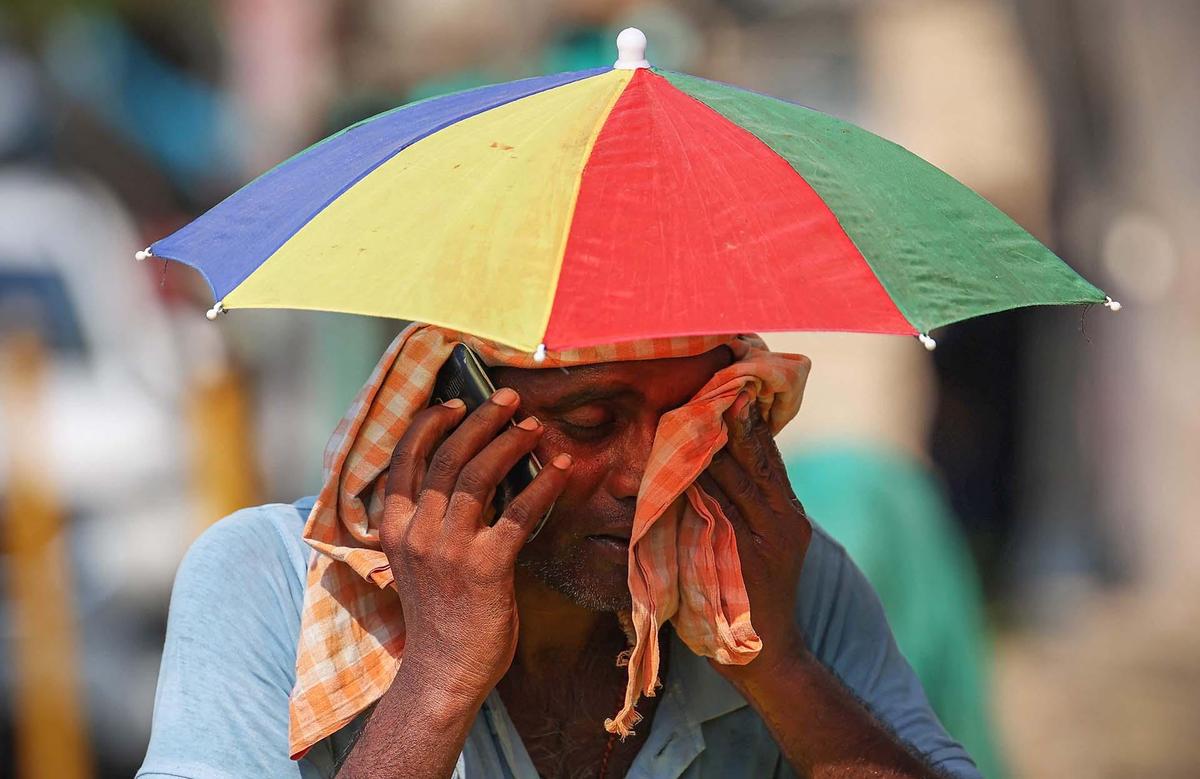
Sun shield: A man shields himself from rising temperatures during a hot summer evening in New Delhi.
| Photo Credit:
AFP
Venugopal and her colleagues also recently showed how relative humidity — how much water the air holds at a given time as compared to the maximum amount of water it can hold at that temperature — interacts with heat, making conditions even more dangerous for outdoor workers across India. Heat and humidity together constitute an especial concern in South India. When the air is humid, sweat doesn’t evaporate as easily, making it harder to cool down, especially when the ambient temperature starts soaring. The study showed that workers exposed to high humidity were 2.5-times more likely to experience physiological strain and determined a heat-humidity threshold as 32º C and 60% relative humidity. Above this threshold, physical exertion can become more dangerous as the body’s cooling mechanisms start breaking down.
Venugopal advocates for cooler living quarters and strict occupational guidelines that incorporate measures that deal with both humidity and heat to help the workers. But many of the workplace rules that Indian workers follow are based on guidelines set in the United States or Central America, based on workers there.
“When it comes to heat, all of that has to be repeated for our crowd,” Venugopal said. “The size, the shape, the anatomy, everything of an American is not the same as [someone like] an Indian agriculture worker.”
Communication is key
Some States have managed to work well with research organisations, to incorporate their advice on heat vulnerabilities in their heat action plans. When Nanda worked at the PHFI at Bhubaneshwar, she was involved closely with the Government of Odisha and the Odisha State Disaster Management Authority (OSDMA) to deal with heat waves in the State.
Peak working hours for construction workers and bus drivers used to be 11 am to 4 pm, which is the time one is most likely to get a heat stroke in the summer months. “We worked very hard with Odisha and the Labour Department to see how certain labour policies can be changed,” Nanda said. She and her team put forward multiple measures to combat the heat and said they were taken seriously, like providing protective gear and drinking water for traffic police and other workers on the roads, opening up public parks in the afternoon for people to seek refuge in the shade, reducing load shedding (in the power grid) in the afternoon, ensuring water and electricity to the slums, and so on. According to Nanda, the OSDMA set up a steering committee that worked round the year on heat waves on preventive measures, not just in the summer months.
But many States are still struggling. “Last year, just in Chennai and Madurai, 240 people died of heat stroke. All of them were workers,” Venugopal said. “So the government had to say that people will not be working beyond 1 o’clock to 4 o’clock, and the employer has to pay them.”
Venugopal expressed belief that clear communication of health messages, which inform people about the dangers of heat and the ways in which to take preventative measures, is crucial. Ideally, they should be simple messages on billboards, displayed in local languages and in ways that can inform the literate and the illiterate both. Televisions can also be used to broadcast such messages, according to her, the way it happened during the COVID-19 pandemic.
“Climate change is happening, that’s not going to stop right now,” she added. “Health communication, particularly timely communication, is a vital initiative the government should take and lead, and it’s essential that [their] messaging resonates with the masses. Such initiatives will make the program successful and reach those who need it the most.”
Rohini Subrahmanyam is a freelance journalist in Bengaluru.