


Many people have reported moments when the sense of being a distinct self ‘loosens’. Among astronauts, it is called the overview effect while deep-sea explorers report a similar shift sometimes called the underview effect. Both involve sudden changes in perspective in which the usual boundary of ‘me’ briefly softens, as if the vastness they encounter is mirrored inwardly and the distance between self and world is momentarily absent.
This dissolution often translates into shared experiences of oneness and interconnectedness with the outside world.
The 19th century Indian teacher Ramana Maharshi treated this instability not as an anomaly but as something to examine directly. Continuing a long philosophical tradition, he invited people to look for the ‘I’ in their own experiences — in the body, sensations, and thoughts — and notice that none of them fully captures the true nature of the self.
Such inquiry explores experience from the inside, a subjective, first-person view. Modern science, by contrast, examines the brain processes that accompany experience from the outside, making these inner shifts harder to access directly.
Only recently, however, has a new experimental tool offered a way to observe what happens in the brain as the sense of self begins to shift. Psychedelics can temporarily ‘loosen’ the brain patterns that support the feeling of a ‘me’, allowing researchers to watch that system reorganise itself in real time.


The brain in action
To study what happens when the sense of self weakens, an international team of researchers turned to a fast-acting psychedelic compound called N,N-Dimethyltryptamine (DMT) in a laboratory study with 27 volunteers. DMT produces a brief and intense shift in awareness that often includes a loss of the usual feeling of being a separate ‘me’.
In the experiment, published in The Journal of Neuroscience on January 14, volunteers received DMT while researchers recorded their brain activity using electroencephalography (EEG) to track rhythmic electrical patterns across the scalp.
In normal conditions, one of the brain’s dominant rhythms is the alpha wave — a slow oscillation linked to inward focus. This rhythm helps regulate internally focused processing. Importantly, this rhythm is not the self itself but one neural signature associated with how the brain maintains a coherent sense of self over time.
During the DMT experience, that pattern began to loosen. Alpha rhythms weakened and lost coordination. Overall brain activity also shifted away from its usual organisation. And the more this rhythm weakened, the more strongly participants reported losing their ordinary sense of self.

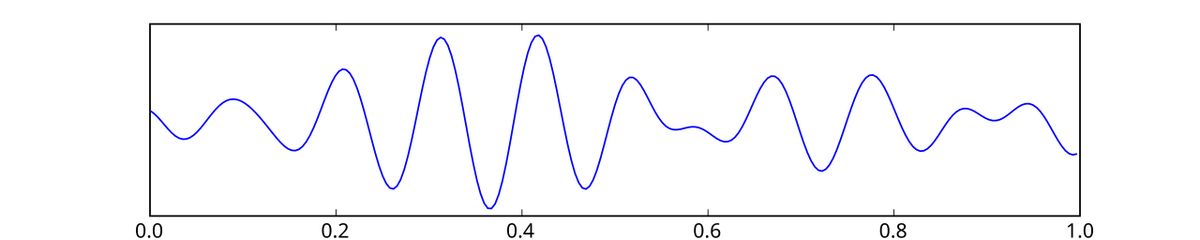
A one-second sample from an EEG filtered to show the alpha waves.
| Photo Credit:
Hugo Gamboa (CC BY-SA)
The findings suggest that specific brain processes are involved in maintaining aspects of the felt sense of self. When neural patterns associated with maintaining a stable sense of ‘me’ loosen, the organisation of that experience can temporarily shift.
Neuroscientists describe the waking brain as operating in a delicate balance between structure and flexibility. This regime is sometimes called criticality. In this state, brain networks are organised enough to remain coherent while still adapting to new information. Under the influence of DMT, that balance shifted towards a quieter, less coordinated mode. As the organising rhythm weakened, the brain activity associated with maintaining a coherent self-model also shifted.
But what shifts in these experiments is not something transcendental, like in the philosophical traditions of India and China. Dan Zahavi, professor of philosophy at the University of Copenhagen, cautioned that the self isn’t a single thing that can simply vanish. “It involves multiple layers,” he explained, including bodily awareness, lived experience, and personal narrative, “and altering how those layers are organised is not the same as erasing identity”. Neuroscience, in this view, is observing temporary changes in how the self is structured rather than its elimination.
At a more practical level, Jeff Greenberg, professor of psychology at the University of Arizona noted that a stable sense of self plays an important role in everyday functioning, including supporting emotional regulation, planning, and continuity. Brief disruptions can be informative, he added, but they should not be mistaken for a lasting loss of identity.

Self, mortality, emotional acceptance
If a brief disruption of the brain’s self-model can reveal how fragile the feeling of ‘me’ really is, the question naturally arises whether that insight changes how we face impermanence or the transient nature of the world.
Psychologists have long shown that reminders of death can influence the way we behave, in part because the sense of self is a continuous, bounded self and acts as a psychological anchor, keeping change and mortality at a distance.
In a study published recently in Psychopharmacology, researchers asked whether repeated ego-softening might reshape how people relate to death by comparing 54 long-term ayahuasca users, each with at least nine lifetime uses and averaging around fifty uses, to 53 people who had never taken psychedelics. Participants completed psychological measures assessing death anxiety, avoidance, and emotional attitudes towards impermanence.


Ayahuasca brewing in a pot in Iquitos, Peru, in 2016.
| Photo Credit:
brindle95/Flickr
The ayahuasca group reported less fear and anxiety about death, were less likely to avoid thinking about it, and were more comfortable with the idea of impermanence. The researchers found that this pattern was best explained by what they called “acceptance of impermanence”, an emotional ability to stay open to change — rather than religion, personality or general mindfulness.
Yair Dor-Ziderman, research director at the University of Haifa, Israel, and lead author of the study, said this was striking because popular narratives often assume psychedelic experiences reduce fear of death by changing one’s beliefs.
Instead, he explained, the data pointed to a different mechanism: not adopting a comforting metaphysical story but developing “a more flexible emotional relationship to uncertainty, dissolution, and loss”. The emotional acceptance of change rather than belief or personality best explained the difference between the groups.
To clarify what that kind of acceptance entailed, M. Samir Hossein, a psychiatrist and thanatologist, noted that fearing death less was not the same as accepting impermanence. Fear, he explained, could diminish in defensive ways like distraction or reinterpretation whereas acceptance reflected a deeper shift in how a person related to loss and change in everyday life.
“Fear can quiet down without disappearing but acceptance reorganises how we live with impermanence.”
Prof. Greenberg cautioned that studies of this kind are correlational and rely heavily on self-report measures, making it difficult to determine whether psychedelics themselves produce lasting changes in how people relate to death. Larger, more controlled research will be needed to clarify if there is a causal link.
“But if someone who is in need thinks one of these approaches might help, I would not discourage them from trying,” he said.

Meditation and the brain’s defences
The ayahuasca findings point towards a broader possibility: that such shifts may not be unique to psychedelics but reflect a more general capacity of the brain to relax its defensive stance, in general and toward death.
In one February 2025 study involving magnetoencephalography — a brain-imaging method similar to EEG that tracks small magnetic signals produced by neural activity — Dr. Dor-Ziderman and another team of researchers compared how meditators and meditation-naïve participants responded to death-related words.
The participants repeatedly saw words paired with images of their own face or a stranger’s, while the brain’s rapid ‘surprise’ signal — a built-in response that appears when something unexpected happens — was measured in real time.
In most people, reminders of mortality triggered an automatic defensive pattern. When death-related words were paired with self-images, the ‘surprise’ signal weakened, suggesting the brain was dampening the association before conscious awareness, effectively filtering out the implication that “death applies to me”.
Experienced meditators showed a different response. Their brains registered the same death-related cues without that suppression. Rather than reflexively filtering the signal, neural activity indicated the information was processed more directly, pointing to a reduced automatic defence linking death and self.
Dr. Dor-Ziderman interpreted this shift as reflecting a change in how the embodied self is represented. Ordinarily, he explained, the brain models the self as a stable object that must be protected, especially when confronted with mortality. Meditation repeatedly exposes practitioners to experience as an unfolding process: sensations arise and pass, agency fluctuates, and the sense of being a fixed ‘someone’ loosens.
In this context, death is processed less as a catastrophic contradiction and more as another expression of change, allowing the brain to encounter existential cues without automatically reinforcing defensive boundaries.
A common pattern

Representative image of a psychedelic liquid light show. Neuroscientists describe the waking brain as operating in a delicate balance between structure and flexibility. In this state, brain networks are organised enough to remain coherent while still adapting to new information.
| Photo Credit:
Dominik (CC BY-SA)
None of these results implies that ego dissolution is inherently beneficial or that altering the sense of self is a universal remedy for existential distress. Dr. Dor-Ziderman cautioned that not all disruptions of self-experience operate at the same level. Acute psychedelic states may reshape concepts and emotions whereas deeply rooted perceptual defenses — including those tied to mortality — likely require sustained training and repeated evidence for the brain to revise them. The studies also rely on different methods, populations, and interpretations, so they can’t establish straightforward cause-effect claims.
What the findings do point to, however, is a clearer view of how the brain might construct its sense of self. Moments when that sense loosens — whether in orbit, in meditation or under carefully studied conditions — reveal what feels like a fixed boundary is actively maintained and can shift. The emerging evidence points less to transcendence than to flexibility: a reminder that the experience of self is dynamic, not fixed.
In that light, as Dr. Dor-Ziderman put it, acceptance of impermanence is less about adopting a belief than “developing an emotional stance toward change”, the capacity to remain open to endings without reflexively turning away. The idea echoes a long-standing contemplative insight — known in Buddhist thought as ‘anicca’, for instance — a doctrine asserting that all conditioned existence, physical and mental, is in a constant state of flux, arising and passing away.
Modern neuroscience doesn’t quite resolve the mystery of the self — yet. But it does suggest that learning, whether through experience or training, to hold that ‘me’ a little more lightly may change how the mind responds to temporariness.
Anirban Mukhopadhyay is a geneticist by training and science communicator from New Delhi.