

After all, the Galaxy S24 Ultra has the titanium frame, a gorgeous display, and replaced the old impractical 10x telephoto camera with a sharper and more usable 5x zoom. It might be two years old, but even today it remains a strong flagship specimen, especially if purchased refurbished at a lower price.
Galaxy S26 Ultra vs Galaxy S24 Ultra differences:
| Galaxy S26 Ultra | Galaxy S24 Ultra |
|---|---|
| Snapdragon 8 Elite Gen 5 for Galaxy (3 nm), all regions | Snapdragon 8 Gen 3 for Galaxy (4 nm) |
| 6.9-inch Dynamic AMOLED 2X (QHD+), 1–120Hz | 6.8-inch Dynamic AMOLED 2X (QHD+), 1–120Hz |
| 2,600 nits peak brightness | 2,600 nits peak brightness |
| More scratch-resistant Gorilla Glass Armor 2 | 1st-gen Gorilla Glass Armor |
| Privacy Display mode | No Privacy Display mode |
| 200 MP main with f/1.4 aperture | 200 MP main with f/1.7 aperture |
| 50 MP ultrawide | 12 MP ultrawide |
| 50 MP 5x periscope with f/2.9 aperture and “Optical Quality 10x” | 50 MP 5x periscope with f/3.4 aperture |
| 60W wired charging | 45W wired charging |
| 25W wireless, Wireless PowerShare | 15W wireless, Wireless PowerShare |
| 78.1 × 163.6 × 7.9 mm, 214 g | 162.3 × 79 × 8.6 mm, 232 g |
| Aluminum frame | Titanium frame |
Table of Contents:
Design and Size
Slimmer, lighter, and more durable
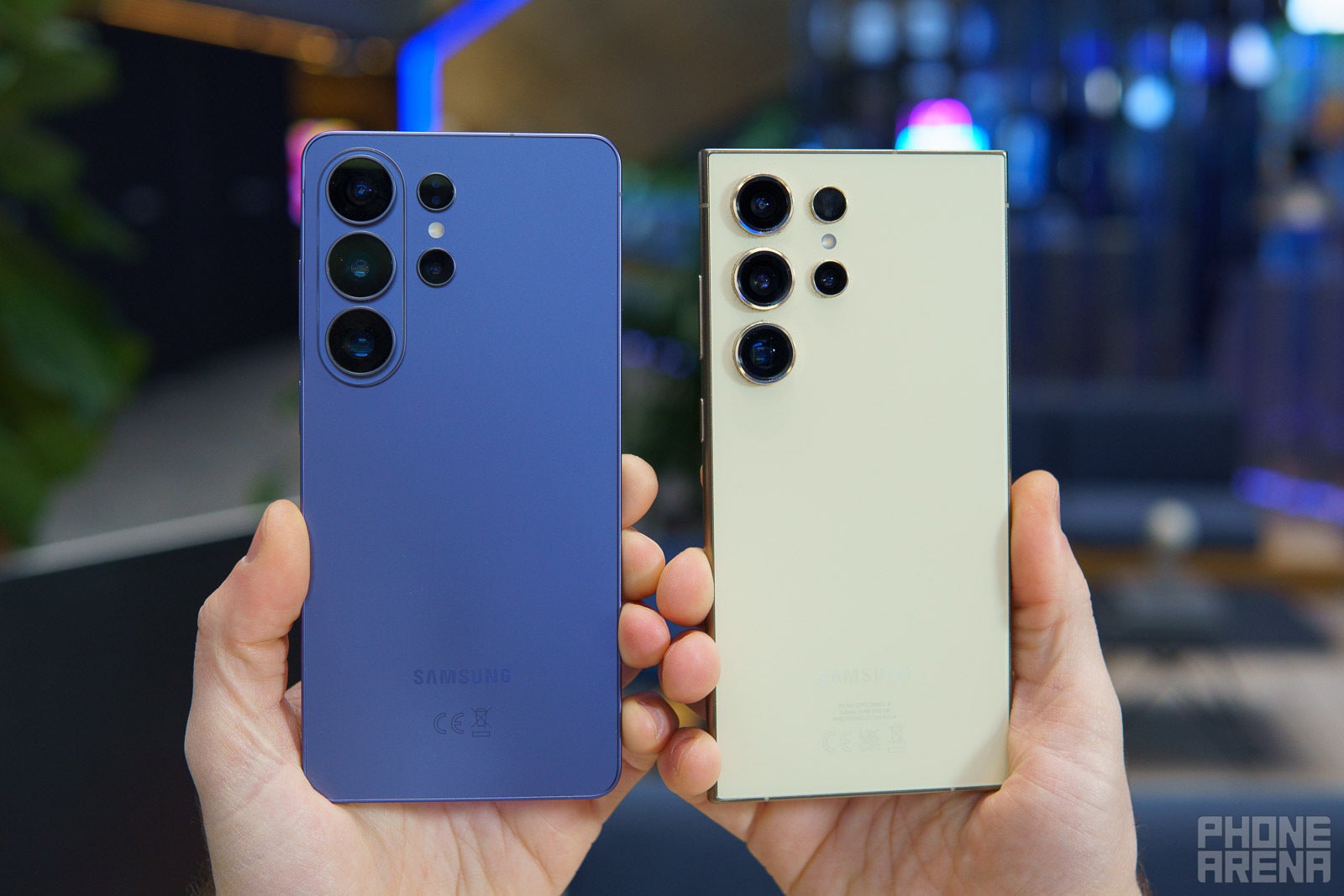
Titanium is gone, but the thinner and lighter S26 Ultra will feel brand new in your hand. | Image by PhoneArena
The Galaxy S24 Ultra introduced titanium as the main material for its build, and despite rumors saying that would change this year, but the S26 Ultra goes back to aluminum for its frame.
When it comes to the dimensions, though, the S26 Ultra will feel like a brand new phone in the hand. It is just 7.9 mm thick and weighs only 214 g, compared to the S24 Ultra’s 8.6 mm and 232 g. That’s enough to feel a difference when the phone is in your pocket or when you are using it for longer periods.
| Galaxy S26 Ultra | Galaxy S24 Ultra |
|---|---|
| Thickness 7.9 mm |
Thickness 8.6 mm |
| Dimensions 163.6 x 78.1 mm |
Dimensions 162.3 x 79 mm |
| Weight 214 grams |
Weight 232 grams |
There is also a slight visual change at the back. The S24 Ultra came with protruding lenses, while the S26 Ultra houses all of its cameras in a camera island, which in my opinion looks cleaner and more deliberate.
Display Differences
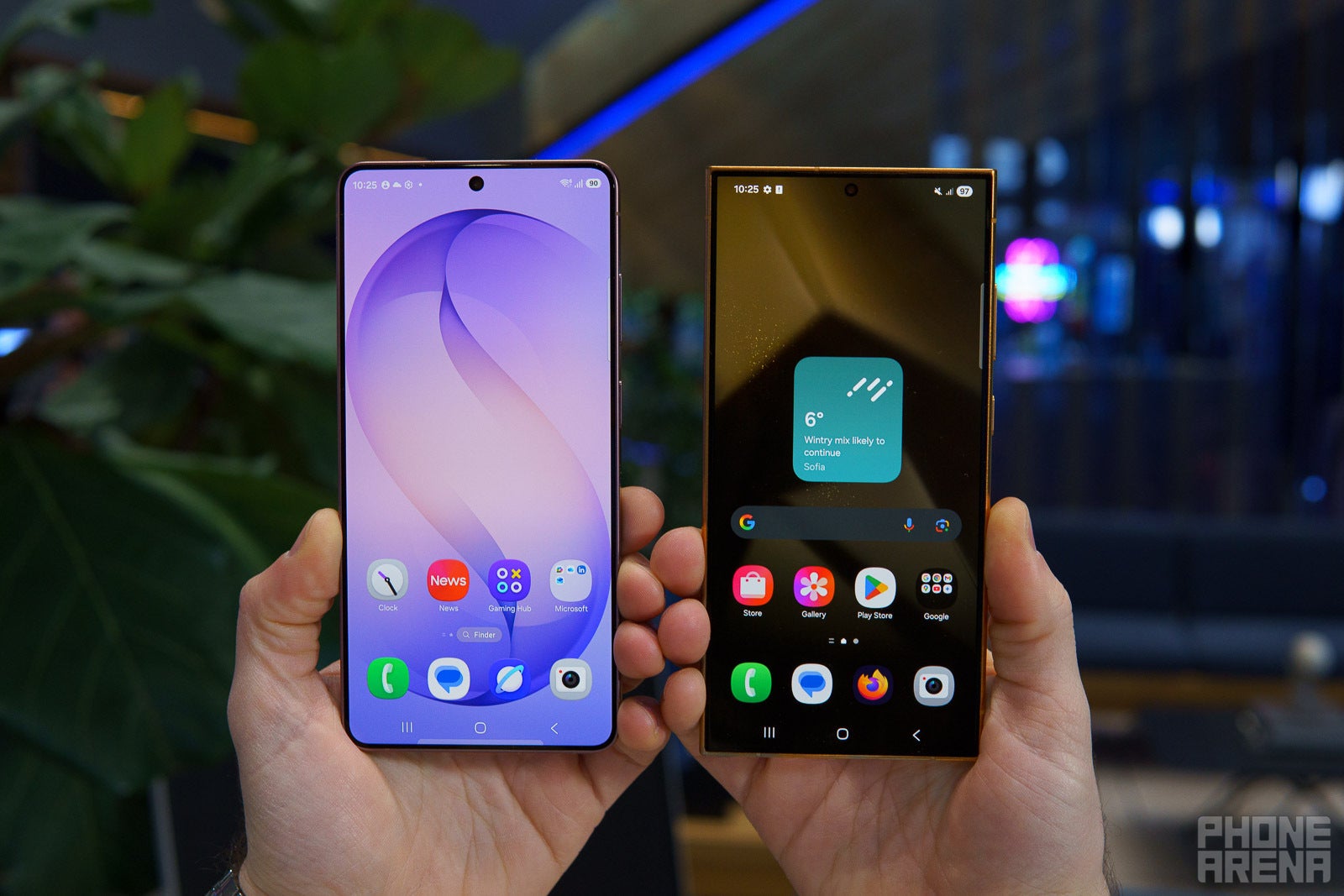
Same stunning brightness, now tougher glass and a Privacy Display that blocks wandering eyes. | Image by PhoneArena
The S24 Ultra already set a high bar with its beautiful QHD+ OLED display and high 2600 nits peak brightness. The S26 Ultra keeps all of that but throws in more durable glass and better anti-reflective coating.
| Galaxy S26 Ultra | Galaxy S24 Ultra |
|---|---|
| Size 6.9″ |
Size 6.8″ |
| Brightness 2600 nits (peak) |
Brightness 2600 nits (peak) |
The other major change with the S26 Ultra is called Privacy Display. This is not a software-only “dim the screen” trick. It is positioned as a hardware-enhanced display mode designed to narrow side-angle visibility so shoulder surfing is harder while keeping the image clear head-on. Users can even decide when the feature will automatically activate. For example, you can choose Privacy Display to turn on when opening your banking app or when typing a PIN number.
Performance and Software
Two generations of SoC progress
| Galaxy S26 Ultra | Galaxy S24 Ultra |
|---|---|
| Chip Qualcomm Snapdragon 8 Elite Gen 5 (for Galaxy) |
Chip Snapdragon 8 Gen 3 (for Galaxy) |
| Process 3nm |
Process 4nm |
| RAM, Storage 12/256 GB 12/512 GB 12/1 TB 16/1 TB Faster LPDDR5X RAM |
RAM, Storage 12/256 GB 12/512 GB 12/1 TB — LPDDR5X RAM |
The RAM and storage options are the same as on the S24 Ultra, with the only difference being that the S26 Ultra’s 1 TB variant comes with 16 GB of RAM instead of 12 GB.
CPU Performance Benchmarks:
GPU Performance:
Camera
New optics pave the way to higher image quality
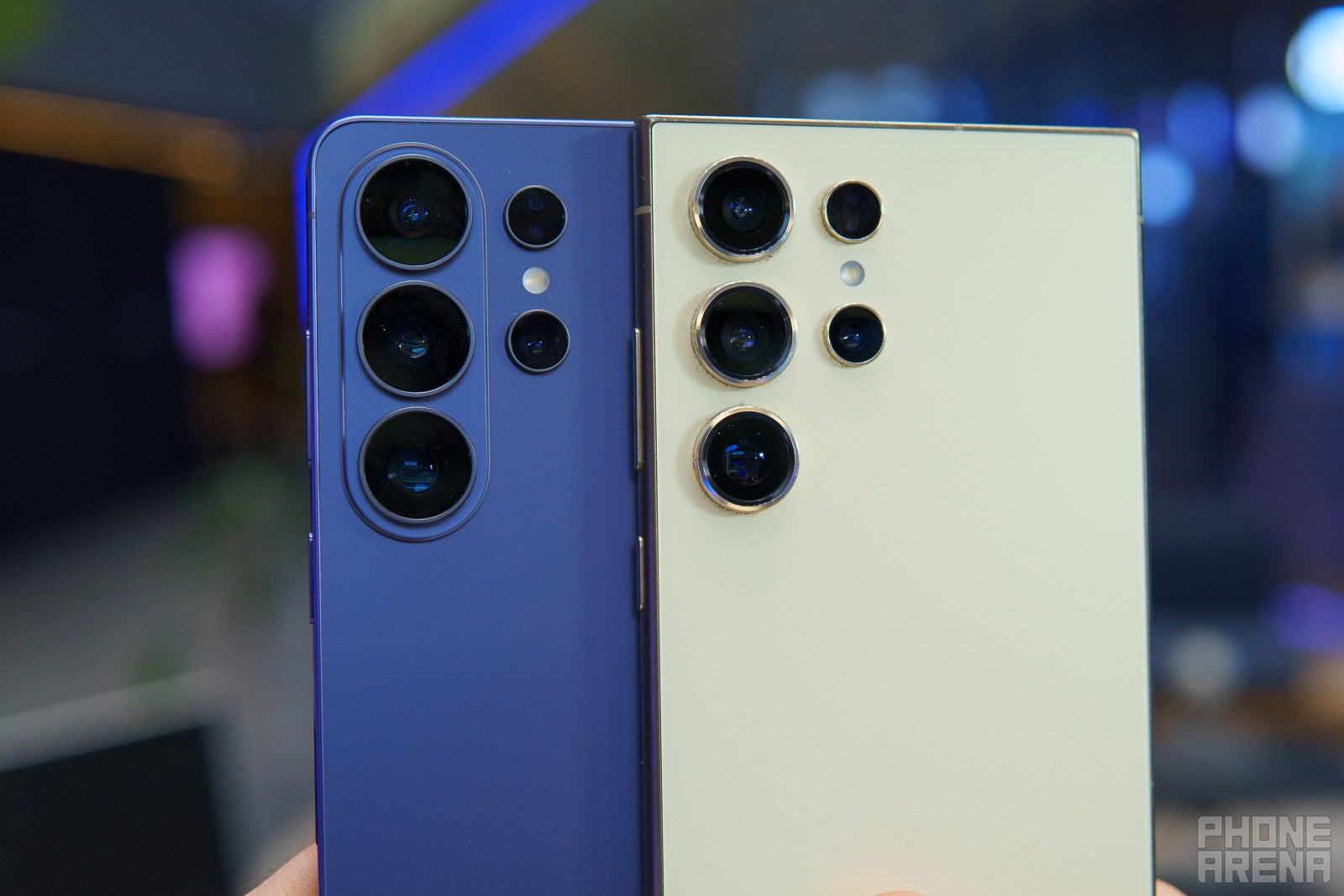
Wider lenses, a 50 MP ultrawide, and better low light. | Image by PhoneArena
The Galaxy S24 Ultra already made the “modern zoom” switch by replacing the older 10x telephoto camera with a more practical and sharper 50 MP 5x snapper. The S26 Ultra still has that camera, but it now comes with a new lens that lets in more light. This should increase the camera’s dynamic range, HDR performance, and overall image quality.
Another major difference between the two phones will be their ultrawide cameras. The S26 Ultra comes with the 50 MP ultrawide introduced with the S25 Ultra, which offers higher levels of detail compared to the 12 MP ultrawide on the S24 Ultra.
| Galaxy S26 Ultra | Galaxy S24 Ultra |
|---|---|
| Main 200 MP, f/1.4 24 mm 1/1.3″ sensor size |
Main 50 MP, f/1.7 24 mm 1/1.3″ sensor size |
| Ultrawide 50 MP, f/1.9 13 mm 1/2.5″ sensor size |
Ultrawide 12 MP, f/2.2 13 mm 1/2.55″ sensor size |
| 5x Telephoto 50 MP, f/2.8 5X zoom (111mm) 1/2.52″ sensor size |
5x Telephoto 50 MP, f/3.4 5X zoom (111mm) 1/2.52″ sensor size |
| 3x Telephoto 10 MP, f/2.4 3x zoom (67mm) 1/3.94″ sensor size |
3x Telephoto 10 MP, f/2.4 3x zoom (67mm) 1/3.52″ sensor size |
The S24 Ultra already takes great photos, but the S26 Ultra should be stronger, especially in low-light conditions where those wider apertures will definitely come in handy.
Samsung also continues its push on video tools and formats this year, including APV. APV is essentially a Samsung video capture format designed for higher-quality recording options while giving users a choice between quality levels, rather than treating video as one single “mode” with one fixed output.
Battery Life and Charging
Same capacity, but with faster charging
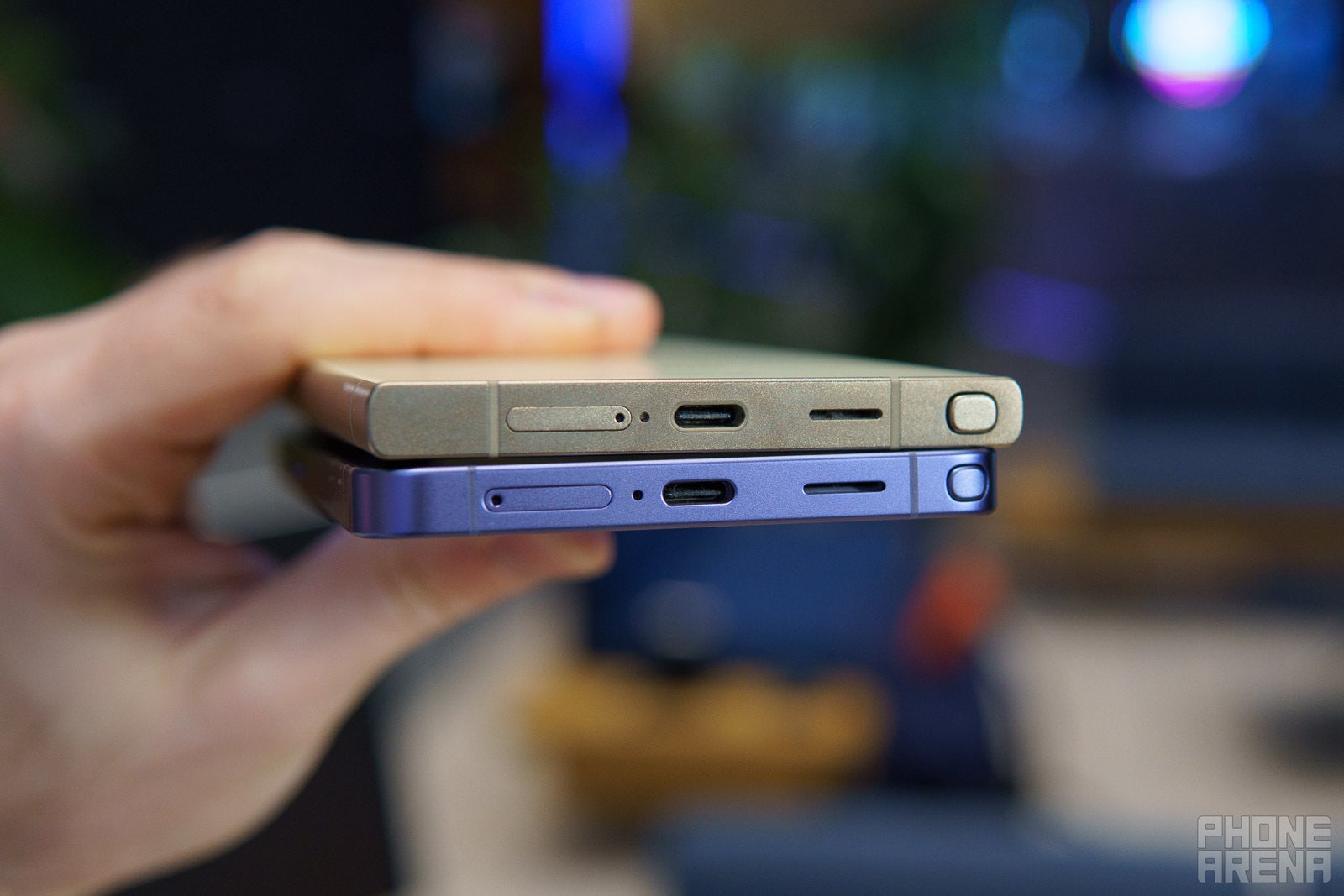
Faster 60W charging is real. The magnetic upgrade, not so much. | Image by PhoneArena
The battery capacity is still 5,000 mAh on the S26 Ultra, but it comes with faster charging.
According to Samsung, the S26 Ultra can charge to around 75% in 30 minutes thanks to its 60W charging speed. In comparison, the S24 Ultra (45W) charged up to 68% in 30 minutes during our tests.
Wireless charging has also improved from 15W to 25W. Unfortunately, though, we still don’t have magnetic wireless charging.
| Galaxy S26 Ultra | Galaxy S24 Ultra |
|---|---|
| Battery size 5,000 mAh |
Battery size 5,000 mAh |
|
Charging speeds 25W wireless charging USB-C 3.2 |
Charging speeds 45W wired 15W wireless charging USB-C 3.2 |
Specs Comparison
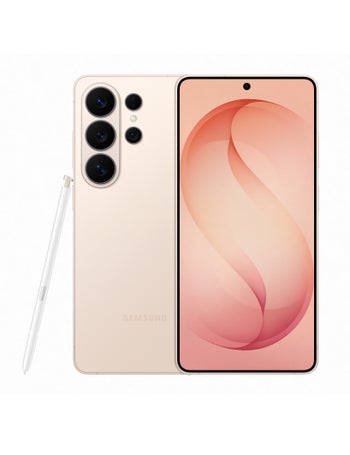
|
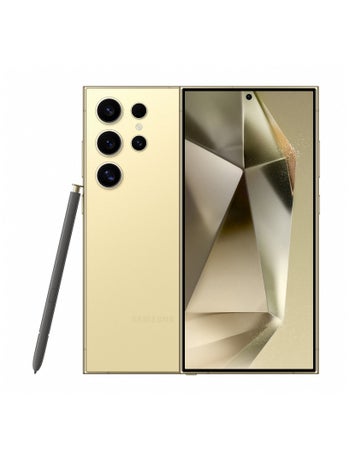
|
| Samsung Galaxy S26 Ultra | Samsung Galaxy S24 Ultra |
| Dimensions | |
|---|---|
| 163.6 x 78.1 x 7.9 mm (~10 mm with camera bump) | 162.3 x 79 x 8.6 mm (~9.5 mm with camera bump) |
| Weight | |
| 214.0 g | 233.0 g |
| Size | |
|---|---|
| 6.9-inch | 6.8-inch |
| Type | |
| Dynamic AMOLED, 120Hz | Dynamic AMOLED, 120Hz |
| System chip | |
|---|---|
| Snapdragon 8 Elite Gen 5 SM8850-AC (3 nm) | Snapdragon 8 Gen 3 SM8650-AB (4 nm) |
| Memory | |
| 12GB (LPDDR5X)/256GB (UFS 4.0) 12GB/512GB 16GB/1024GB |
12GB (LPDDR5X)/256GB (UFS 4.0) 12GB/512GB 12GB/1024GB |
| Type | |
|---|---|
| 5000 mAh | 5000 mAh |
| Charge speed | |
| Wired: 45.0W Wireless: 15.0W |
Wired: 45.0W Wireless: 15.0W |
| Main camera | |
|---|---|
| 200 MP (OIS, PDAF) Sensor name: Samsung ISOCELL HP2 Aperture size: F1.4 Focal length: 23 mm Sensor size: 1/1.3″ Pixel size: 0.6 μm |
200 MP (OIS, Laser and PDAF) Sensor name: Samsung ISOCELL HP2 Aperture size: F1.7 Focal length: 24 mm Sensor size: 1/1.3″ Pixel size: 0.6 μm |
| Second camera | |
| 50 MP (Ultra-wide, PDAF) Sensor name: Samsung JN3 Aperture size: F1.9 Sensor size: 1/2.5″ Pixel size: 0.7 μm |
12 MP (Ultra-wide, PDAF) Sensor name: Sony IMX564 Aperture size: F2.2 Focal Length: 13 mm Sensor size: 1/2.55″ Pixel size: 1.4 μm |
| Third camera | |
| 10 MP (Telephoto, OIS, PDAF) Sensor name: Sony IMX754 Optical zoom: 3.0x Aperture size: F2.4 Sensor size: 1/3.94″ Pixel size: 1.12 μm |
10 MP (Telephoto, OIS, PDAF) Sensor name: Sony IMX754 Optical zoom: 3.0x Aperture size: F2.4 Focal Length: 67 mm Sensor size: 1/3.52″ Pixel size: 1.12 μm |
| Fourth camera | |
| 50 MP (Telephoto, Periscope, OIS, PDAF) Sensor name: Sony IMX854 Optical zoom: 5.0x Aperture size: F2.9 Focal Length: 115 mm Sensor size: 1/2.52″ Pixel size: 0.7 μm |
50 MP (Telephoto, Periscope, OIS, PDAF) Sensor name: Sony IMX854 Optical zoom: 5.0x Aperture size: F3.4 Focal Length: 111 mm Sensor size: 1/2.52″ Pixel size: 0.7 μm |
| Front | |
| 12 MP (PDAF, HDR) | 12 MP (PDAF, HDR) |
Samsung Galaxy S26 Ultra vs Samsung Galaxy S24 Ultra specs comparison
or compare them to other phones using our
Phone Comparison tool
Summary
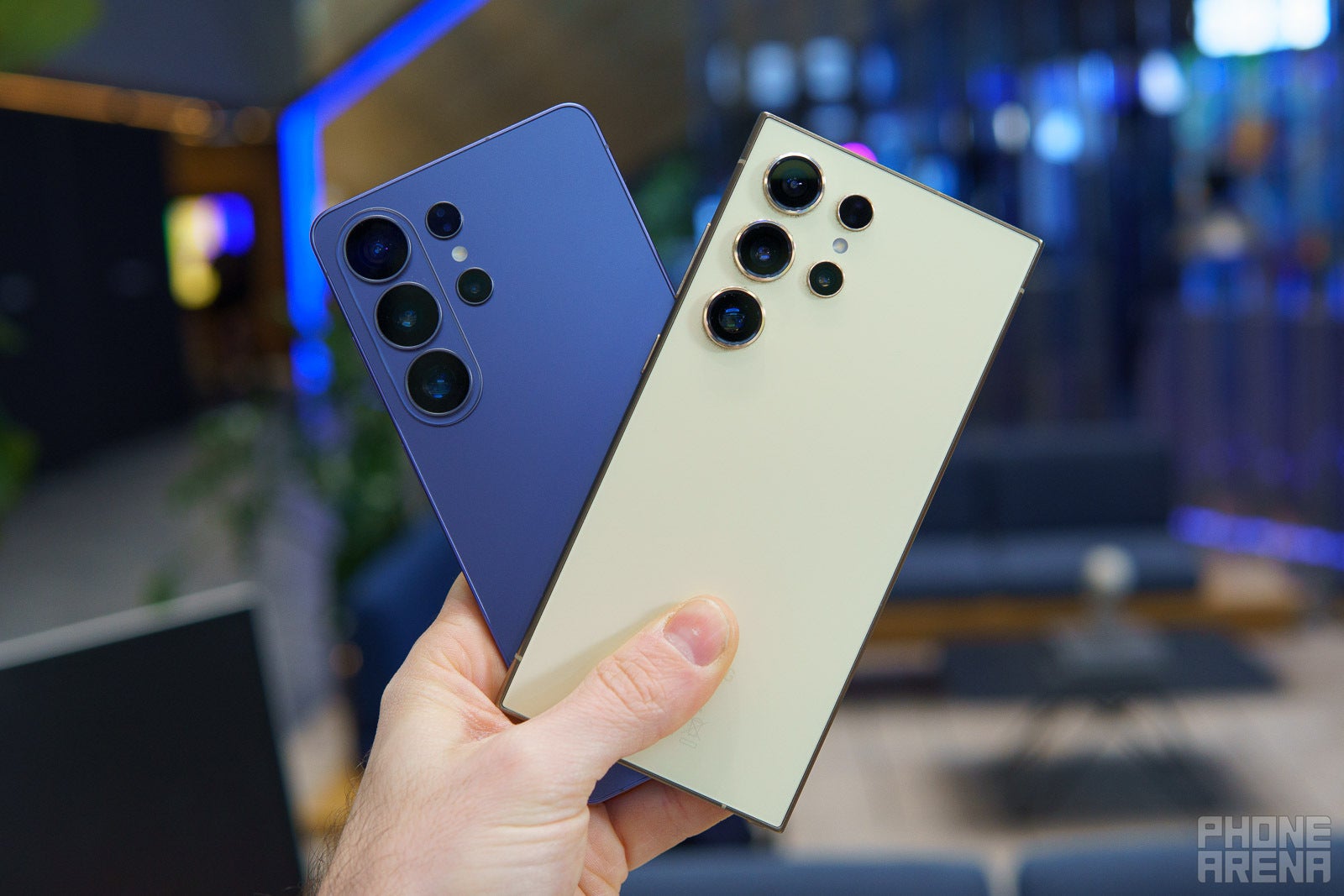
For S24 Ultra owners, the S26 Ultra will feel refined, but not by much. | Image by PhoneArena
While the Galaxy S26 Ultra sounds impressive and definitely brings some interesting perks that we haven’t seen until now, I don’t think it offers enough to elicit an upgrade for S24 Ultra owners.
The results from the camera changes are also likely to be small. The S24 Ultra already offers stellar cameras. The differences will mostly be visible when shooting in low light, so if that’s not something you often do, then this is a negligible upgrade.