
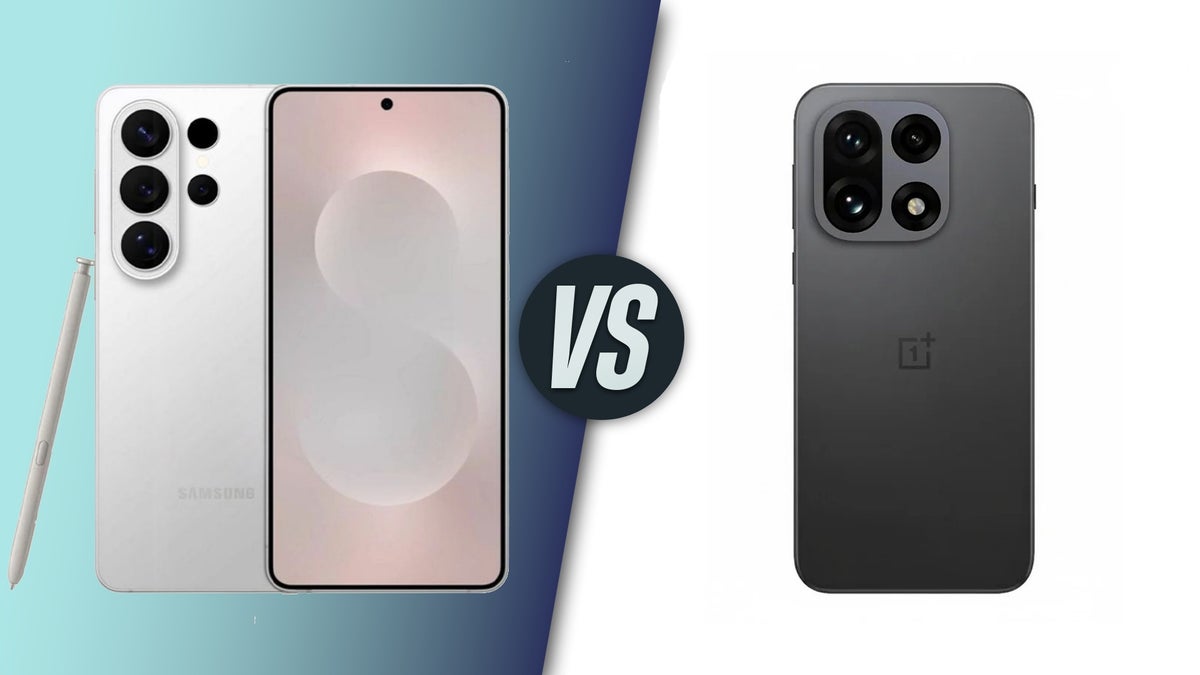
Samsung has just announced the Galaxy S26 Ultra, its top flagship for 2026, and it’s very similar to the Galaxy S25 Ultra with just a few key improvements here and there, but nothing too drastic.
The key new feature here is the new Privacy screen feature, which obscures your sensitive data from prying eyes. The phone also features the Snapdragon 8 Elite Gen 5, the fastest chip for Android devices right now.
It is powered by the same chipset but has a much larger battery that no Samsung flagship will get anytime soon (aside from the company’s tablets, and that’s saying something).
In this article, we will summarize what we know of these two Android darlings and compare their ins and outs with the goal of determining which one is the smarter buy in 2026. Flagship battle, commence!
Samsung Galaxy S26 Ultra vs OnePlus 15 differences:
| Galaxy S26 Ultra | OnePlus 15 |
|---|---|
| Design | |
| Continuation of the Galaxy S25 Ultra design, but using aluminum frame | Flat new design with redesigned camera bump |
| Thinner at 7.9 mm | Slightly thicker at 8.1 mm |
| Display | |
| 6.9-inch Dynamic AMOLED 2X | 6.78-inch OLED |
| 1-120 Hz refresh rate | 1-165 Hz refresh rate |
| Anti-reflective coating and Privacy Display feature | No anti-glare coating or Privacy Display feature |
| Gorilla Glass Armor | Gorilla Glass Victus 2 |
| Performance | |
| Snapdragon 8 Elite Gen 5 for Galaxy, 3nm | Snapdragon 8 Elite Gen 5, 3nm |
| 12GB/256GB 12GB/512GB 16GB/1TB |
12/256GB 16/512GB |
| Camera | |
| Quad camera (200MP + 10MP 3X + 50MP 5X + 50MP ultra) | Triple camera (50MP + 50MP ultra + 50MP 3.5X) |
| 12MP front | 32MP front |
| Battery | |
| Smaller 5,000 mAh battery | Significantly larger 7,300 mAh silicon-carbon battery |
| An upgrade from 45W to 60W wired charging, 25 W wireless charging | 120W wired charging, 50W proprietary wireless charging |
Design and Size
New looks for the OnePlus
Meanwhile, the OnePlus 15 takes a lot of design inspiration from the Oppo Find X9 Pro. It utilizes a flat aluminum frame with a matte glass back. In terms of sizes, the OnePlus 15 is slightly more compact in terms of height and width and is only marginally thicker. Very curious, as the OnePlus 15 has a much more massive 7,300 mAh battery. With that in mind, a thickness of just over 8 millimeters is still mind-boggling.
| Galaxy S26 Ultra | OnePlus 15 |
|---|---|
| Thickness 7.9 mm |
Thickness 8.1 mm |
| Dimensions 163.6 x 78.1 mm |
Dimensions 161.4 x 76.7 mm |
| Weight 214 g |
Weight 215 g |
The Galaxy S26 Ultra could arrive in Black, White, Silver Shadow, Sky Blue, Cobalt Violet, and Pink Gold, while the OnePlus 15 comes in Infinite Black, Ultra Violet, and Sand Storm.
Display Differences
The Galaxy S26 Ultra has Gorilla Glass Armor at the front, while the OnePlus 15 relies on the good ol’ Gorilla Glass Victus 2.
At the same time, the Galaxy S26 Ultra display is very similar to the one on the Galaxy S25 Ultra. Think of a 6.9-inch size (among the largest around), with full HDR support, smooth 1-120Hz refresh rate support, and a lower peak brightness of 2,600 nits. There’s a third-gen anti-reflective coating on board, which should passively boost the visibility.
| Galaxy S26 Ultra | OnePlus 15 |
|---|---|
| Size 6.9-inch |
Size 6.78-inch |
| Refresh rate 1-120Hz |
Refresh rate 1-165Hz |
Now, in our display tests, the OnePlus dominates in terms of peak brightness, and by a mile at that. However, the Galaxy has it beat in terms of minimum brightness as well as color accuracy.
Another upgrade is the new privacy film-like feature dubbed Privacy screen. This one protects any sensitive information on your screen from prying eyes around you. That’s a pretty intriguing feature that could eliminate the need for a dedicated privacy screen protector.
Both the Galaxy S26 Ultra and the OnePlus 15 rely on ultrasonic fingerprint scanners. For your convenience, you will be able to add facial recognition as a possible unlock method, of course.
Performance and Software
Now that’s about to be a battle for the ages
The Galaxy S26 Ultra comes with a new thermal interface material and a redesigned vapor chamber that’s some 20% better at dissipating heat away from the chip. This enables the device to sustain its peak performance for longer before throttling.
Yet, the Samsung might have a leg up: it scores a Snapdragon 8 Elite Gen 5 for Galaxy chipset inside, a slightly overclocked version that will potentially deliver better raw performance than the one inside the OnePlus 15. Remains to be tested, though.
| Galaxy S26 Ultra | OnePlus 15 |
|---|---|
| Chip Qualcomm Snapdragon 8 Elite Gen 5 for Galaxy |
Chip Qualcomm Snapdragon 8 Elite Gen 5 for Galaxy |
| Process 3nm |
Process 3nm |
| RAM, Storage 12/256GB 12/512GB 12/1TB |
RAM, Storage 12/256GB 16/512GB |
The Galaxy S26 Ultra also beats the OnePlus 15‘s Snapdragon 8 Elite Gen 5 in both the single- and multi-core Geekbench 6 tests, revealing that this year’s “for Galaxy” chip is pretty tuned up.
CPU Performance Benchmarks:
In terms of graphics performance, the Galaxy S26 Ultra achieves a significantly better peak graphics performance, but it is the first to throttle, while the OnePlus 15 sustains its peak graphics performance for longer. This speaks volumes about the thermal management of both phones, and… Samsung is beat here.
The Galaxy S26 Ultra comes with 12 GB of RAM, a bit low for current Android flagships, which typically pack 16 GB of RAM these days. That’s exactly what we get on the OnePlus 15, which packs 16 GB of memory for exceptional multitasking and future-proofness with AI in mind. You can get the Galaxy S26 Ultra with 16 GB of RAM, but only in the 1 TB storage version.
Storage-wise, both phones start at 256 GB, but only the Galaxy S26 Ultra will be available with 1 TB of storage. The OnePlus 15 will only be available with up to 512 GB of storage.
First, the software scores a new floating app bar at the bottom, which should improve the readability. Next up, One UI 8.5 now offers even more customization options and lets you personalize the Quick Settings panel even more by reordering and removing existing controls.
If you set a picture of a person or a pet as your lock screen wallpaper, the layout will automatically move around so that neither the clock nor the widgets obscure key parts of the image. There are a few extra customization options for the lock screen clock, too.
Galaxy AI has been upgraded with continuous image generation, which lets you generate several images without stopping and pick from the ones you want afterward.
Call Screening is another new feature that will let Galaxy AI answer calls for you and see who’s calling and for what reason. You will be provided with a transcript and only then decide if you want to answer the call.
Bixby can now understand you better when you talk to the assistant in your own words. This lets you use it to find specific settings or features without having to sift through numerous menus. It now has an easy way of accessing your conversation history with Bixby.
The Galaxy S26 now comes with an AI-powered screenshot analyzer, which will automatically sort your screenshots into one of eight categories. You can then find these screenshots by simply searching for said category.
The Weather app has scored a more detailed new widget that will showcase a graph of any upcoming precipitation that is expected. Your daily alarms can also show the current weather as a background when they ring, which is a neat quality-of-life upgrade.
Samsung has also enhanced the battery info menu, making it easier to check the remaining battery life left, the battery usage, as well as your charging status. There are also two power-saving modes now: Standard, which is more temperate, and Maximum, which disables all non-essential features to boost battery life.
Camera
Little changes
With the Galaxy S26 Ultra, we’re getting the same camera setup as the one on the Galaxy S25 Ultra: a 200MP main camera, a 50MP ultrawide, and two zoom cameras, a 10MP 3X telephoto and a 50MP 5X periscope. So, any and all improvements will have to be on the software and image-processing side.
| Galaxy S26 Ultra | OnePlus 15 |
|---|---|
| Main 200 MP, f/1.4 24 mm 1/1.1″ sensor |
Main 50 MP, f/1.8 24 mm |
| Ultrawide 50 MP, f/1.9 |
Ultrawide 50 MP, f/2.0 15 mm |
| Telephoto 10 MP, f/2.4 3X zoom (67 mm) |
Telephoto 50 MP, f/2.8 3.5X zoom |
| Periscope 50MP, f/2.9 5X zoom (111 mm) |
Battery Life and Charging
Predetermined win for OnePlus
Can you guess how many times Samsung has used a 5,000 mAh battery on its Galaxy S flagships? Let me save you from opening a new browser tab: it will be six times in a row once the Galaxy S26 Ultra arrives, as that one is also getting a 5,000 mAh battery, just like the very first Galaxy S20 Ultra.
Not a particularly good outlook for Samsung given the recent developments in battery tech, where silicon-carbon batteries are now ruling the landscape and offer larger batteries than your standard lithium-ion battery.
The OnePlus 15 is shaping up to be one such exceptional example, as it’s coming along with, drumroll please, a massive 7,300 mAh battery, significantly larger than what you’d get from any Galaxy flagship.
| Galaxy S26 Ultra | OnePlus 15 |
|---|---|
| Battery size 5,000 mAh |
Battery size 7,300 mAh |
|
Charging speeds 25W wireless charging |
Charging speeds 120W wired 50W wireless charging |
In terms of charging, the Galaxy S26 Ultra has scored a wired charging upgrade from 45W to 60W, which is a welcome and fantastic upgrade.
Sadly, there’s no magnetic attachments on deck that work similarly to Apple’s MagSafe or Google’s Pixelsnap.
OnePlus, one of the leaders in terms of charging speeds, comes with 80 W fast charging and 50 W wireless charging. There’s the proprietary wall adapter included in the box as well, which the Galaxy S26 Ultra doesn’t.
Interestingly, those are double the charging speeds that the Galaxy S26 Ultra will likely end up with.
Specs Comparison
|
|
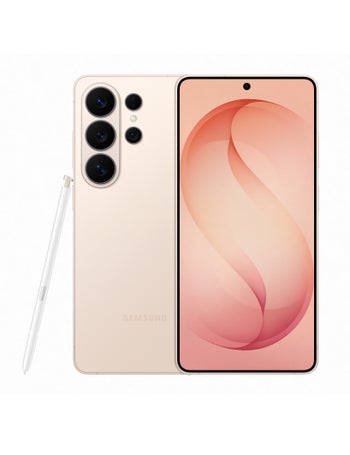
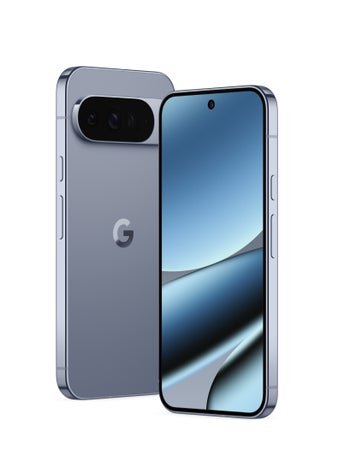
| Samsung Galaxy S26 Ultra | Google Pixel 10 Pro XL |
| Dimensions | |
|---|---|
| 163.6 x 78.1 x 7.9 mm (~10 mm with camera bump) | 162.8 x 76.6 x 8.5 mm |
| Weight | |
| 214.0 g | 232.0 g |
| Size | |
|---|---|
| 6.9-inch | 6.8-inch |
| Type | |
| Dynamic AMOLED, 120Hz | OLED, 120Hz |
| System chip | |
|---|---|
| Snapdragon 8 Elite Gen 5 SM8850-AC (3 nm) | Google Tensor G5 (3 nm) |
| Memory | |
| 12GB (LPDDR5X)/256GB (UFS 4.0) 12GB/512GB 16GB/1024GB |
16GB (LPDDR5X)/256GB (UFS 3.1) 16GB/512GB 16GB/1TB |
| Type | |
|---|---|
| 5000 mAh | 5200 mAh |
| Charge speed | |
| Wired: 45.0W Wireless: 15.0W |
Wired: 45.0W Wireless: 25.0W |
| Main camera | |
|---|---|
| 200 MP (OIS, PDAF) Sensor name: Samsung ISOCELL HP2 Aperture size: F1.4 Focal length: 23 mm Sensor size: 1/1.3″ Pixel size: 0.6 μm |
50 MP (OIS, PDAF) Aperture size: F1.7 Focal length: 25 mm Sensor size: 1/1.3″ Pixel size: 1.2 μm |
| Second camera | |
| 50 MP (Ultra-wide, PDAF) Sensor name: Samsung JN3 Aperture size: F1.9 Sensor size: 1/2.5″ Pixel size: 0.7 μm |
48 MP (Ultra-wide) Aperture size: F1.7 Sensor size: 1/2.55″ |
| Third camera | |
| 10 MP (Telephoto, OIS, PDAF) Sensor name: Sony IMX754 Optical zoom: 3.0x Aperture size: F2.4 Sensor size: 1/3.94″ Pixel size: 1.12 μm |
48 MP (Telephoto, OIS, PDAF) Optical zoom: 5.0x Aperture size: F2.8 Focal Length: 113 mm Sensor size: 1/2.55″ |
| Fourth camera | |
| 50 MP (Telephoto, Periscope, OIS, PDAF) Sensor name: Sony IMX854 Optical zoom: 5.0x Aperture size: F2.9 Focal Length: 115 mm Sensor size: 1/2.52″ Pixel size: 0.7 μm |
|
| Front | |
| 12 MP (PDAF, HDR) | 42 MP |
Samsung Galaxy S26 Ultra vs Google Pixel 10 Pro XL specs comparison
or compare them to other phones using our
Phone Comparison tool
Summary
The Galaxy S26 Ultra has scored some key improvements, like better performance, potentially improved camera, and faster charging, but it’s all more of the same. Of course, the added benefit of the S Pen is also about to be part of the deal.
The OnePlus 15, on the other hand, gives us a raw upgrade in all key aspects that matter, including the performance, camera, and most importantly, the battery, which is set to be among the largest ones on a flagship device available in the US.