

At Galerie des Gobelins in Paris, the air hangs heavy with the legacy of craftsmanship. It was here, amidst a centuries-old tradition of tapestry excellence, that the textile synergy between India and France found its most iconic stage. Ce qui se trame (Textile Matters) was less an exhibition and more of an immersive spectacle — a sensory odyssey through the soul of two nations, spanning four centuries, that have mutually inspired crafted textile traditions. The title alludes to the weft of the loom and the colloquial expression in French for ‘what’s happening’ — suggesting the creative alchemy occurring behind the scenes.
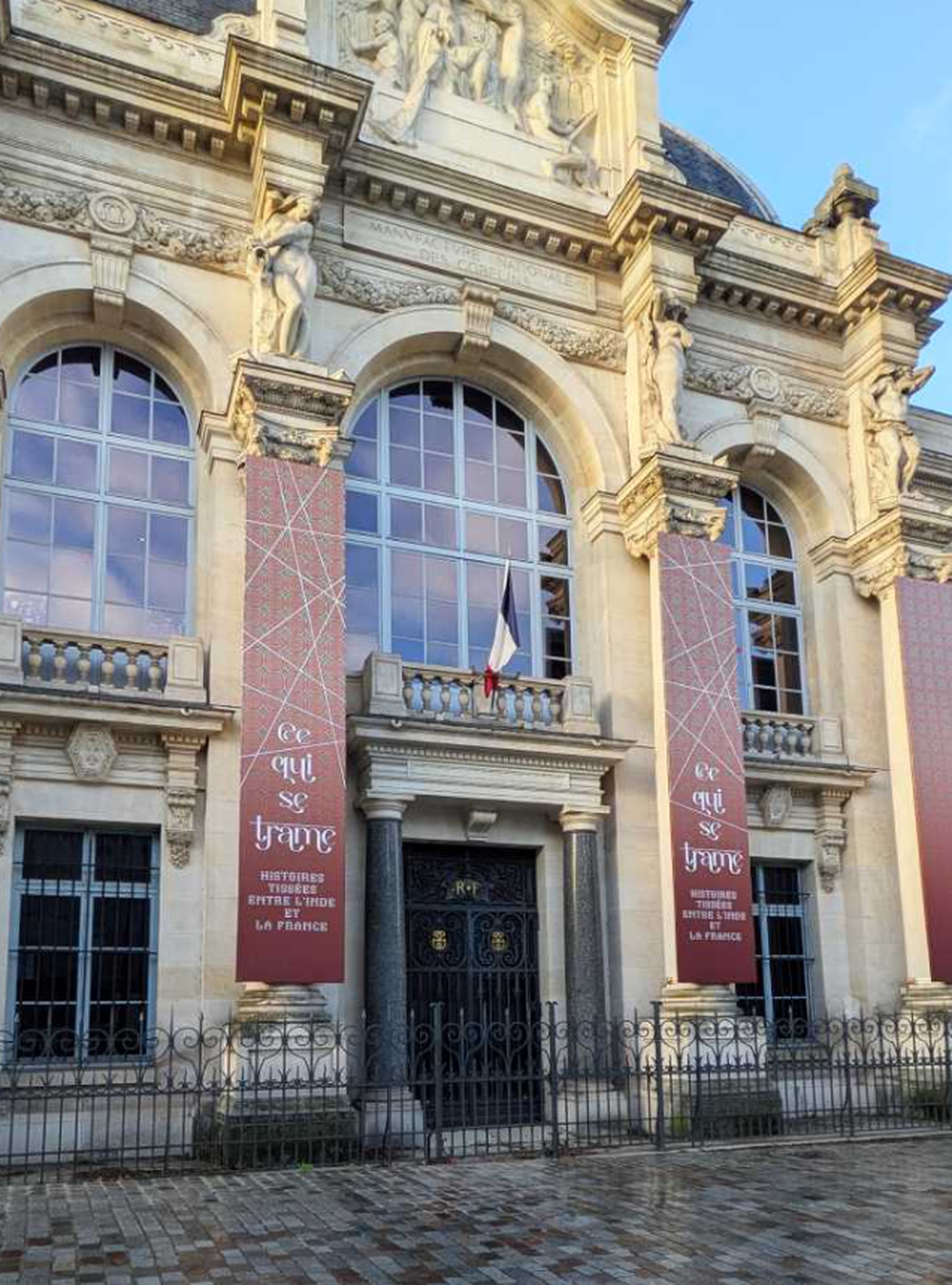
Ce Qui Se Trame. Histoires Tissées Entre l’Inde et la France at Galerie des Gobelins
Born of a visionary mandate announced by French President Emmanuel Macron during his 2024 visit to India, the project emerged as a cornerstone of a new, ambitious cultural roadmap. The Institut Français and Mobilier National — which manages over 100,000 pieces of historic and contemporary furniture, carpets, and tapestries — were charged to not only honour but to actively harness the living heritage of two nations bound by a shared devotion to craftsmanship. The month-long exhibition served as a crucible for Indian and French designers to ignite new narratives.
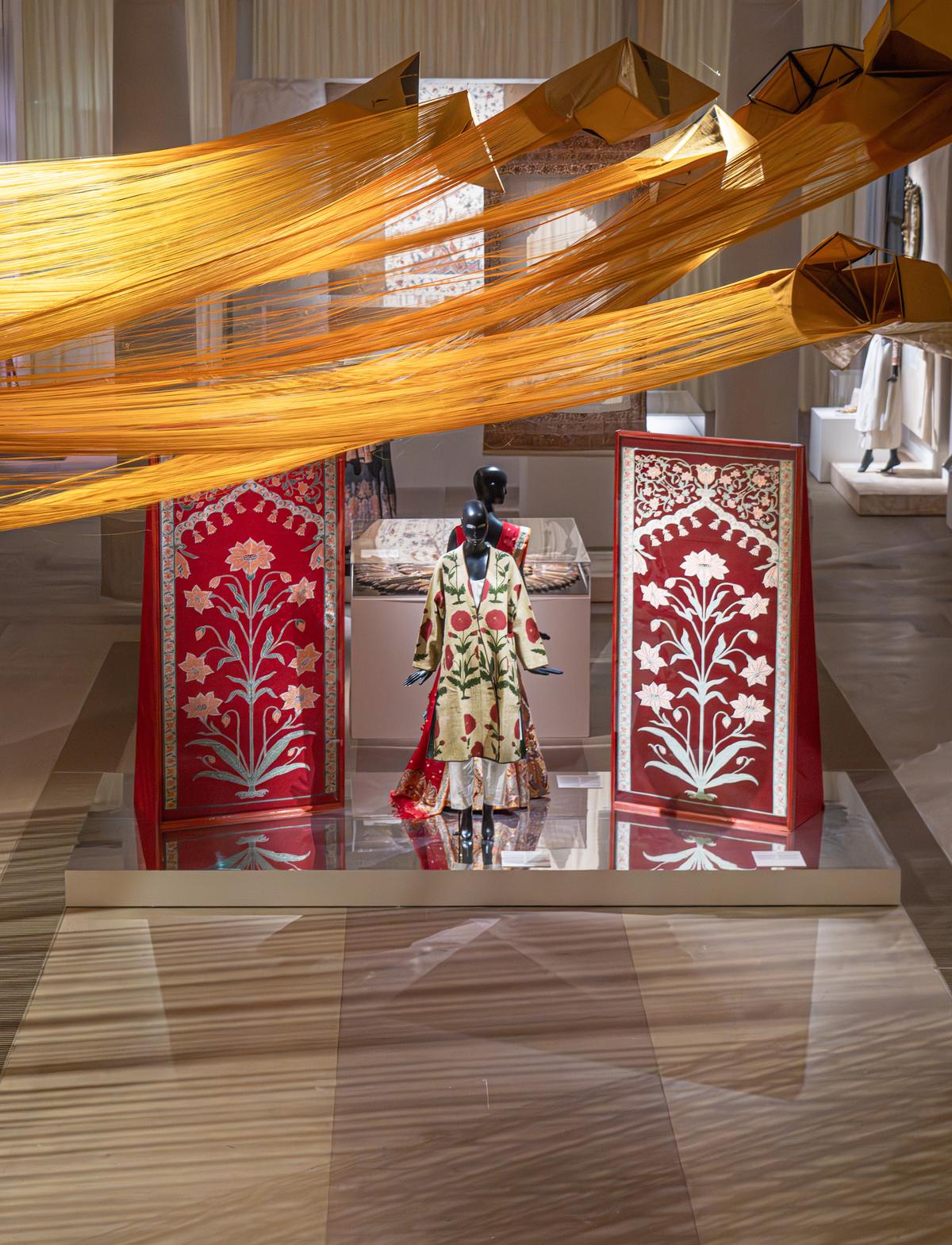
In Le Fil d’Or, visitors discovered brocades and hand-woven silk fabrics
| Photo Credit:
Sophia Taillet
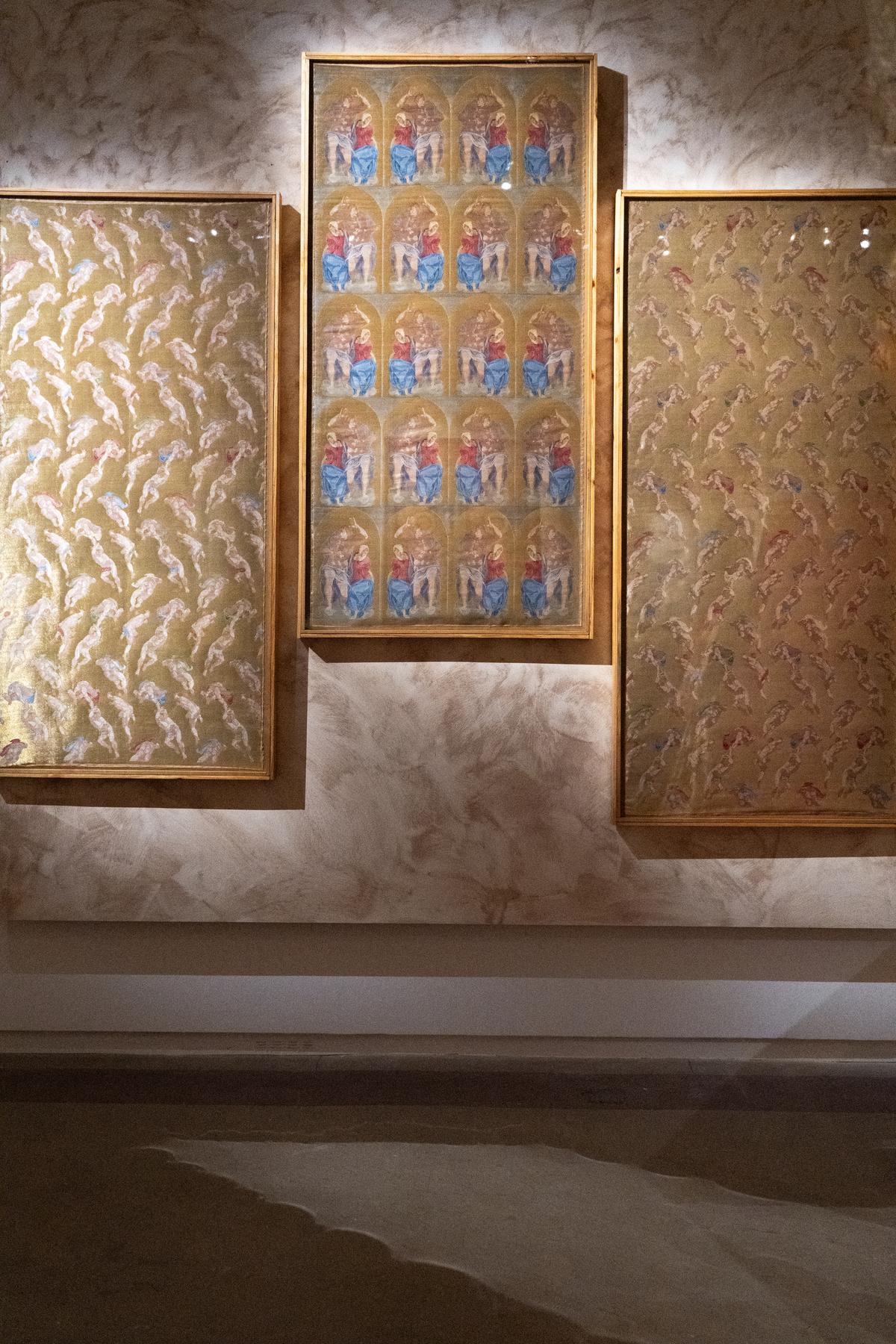
A handwoven triptych, created in the complex technique of samite at the Asha Workshop at Devi Art Foundation. It recreated figurative imagery from frescoes at the Sistine chapel.
| Photo Credit:
Sophia Taillet

Two nation exchange
The task of realising the exhibition fell to a formidable creative pairing: Mayank Mansingh Kaul, Delhi’s textile curator, and Christian Louboutin, the globally renowned red-soled luxury shoe designer with a deep love for India. Together, they infused the gallery with meticulous precision and theatrical flair, drawing together a rare assemblage from major museums and private collections across India and France. “This exhibition shows how Indian textiles have evolved through cultural exchanges,” says Kaul, “turning what could have been a project about two national identities into one of a shared culture and aesthetic.”
The exhibition began within L’ Antechambre, a reconstructed 18th-century French apartment. Paying homage to the historic European love for Indian printed cottons, this mise-en-scène was elevated to a maximalist crescendo. The entire interior was seamlessly enveloped in naturally dyed hand-block printed cloth specially commissioned from master embroiderer Jean-François Lesage’s House of Kandadu in Puducherry — even a strategically placed globe was cloaked in the textile, a silent nod to the global trade routes of the past.
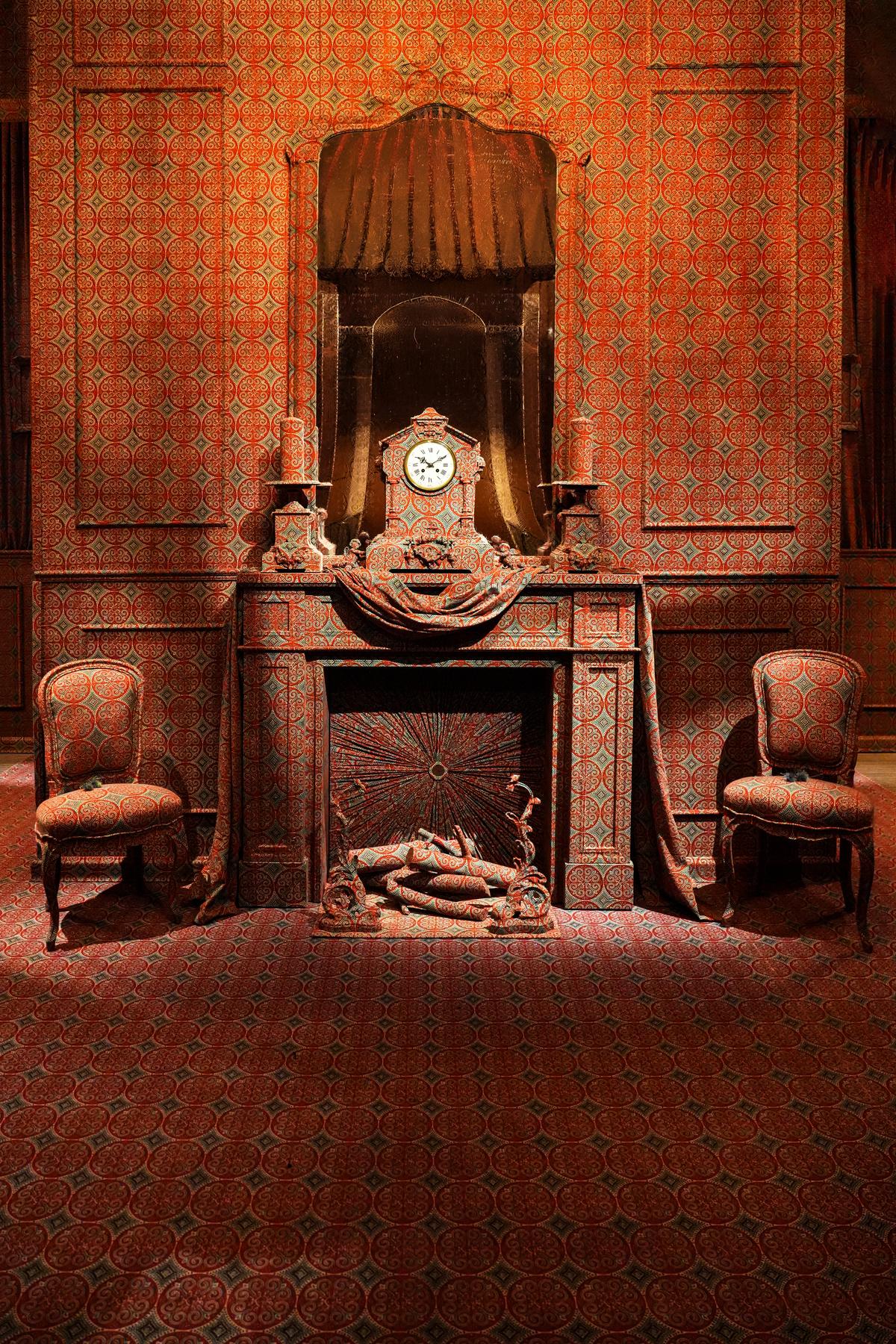
Inside L’ Antechambre
| Photo Credit:
Sophia Taillet
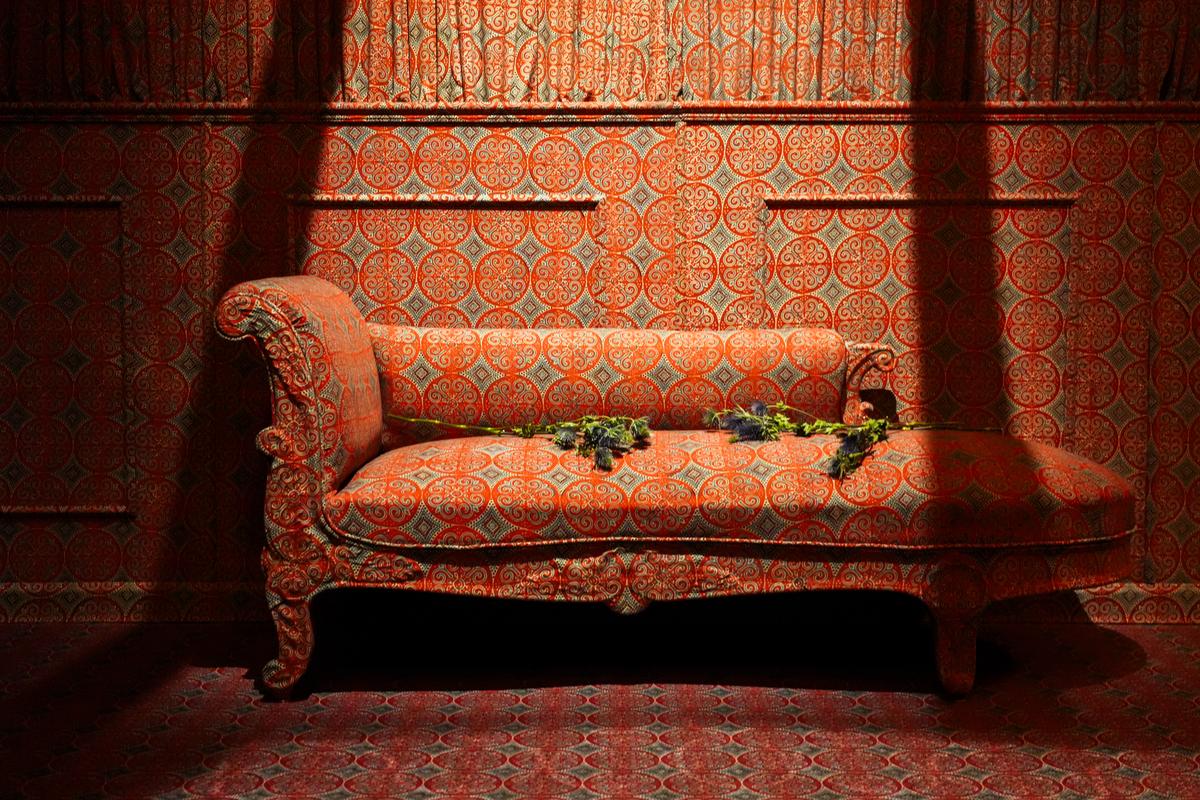
The entire interior was enveloped in naturally dyed hand-block printed cloth
| Photo Credit:
Sophia Taillet
Emerging from this heady love affair was the French printed textile, which came to be known as Toile de Jouy. Here, visitors passed through Mughal-inspired niches lined with the fabric and encountered a ‘madder-root-nest’ installation, Travelling Roots, by Lesage Intérieurs, handcrafted and assembled in South India and on loan from the collection of fashion entrepreneur Shon Randhawa. This sequence set a clear tone for honouring the past and present cultural ties, a springboard for French and Indian collaborative craftsmanship.
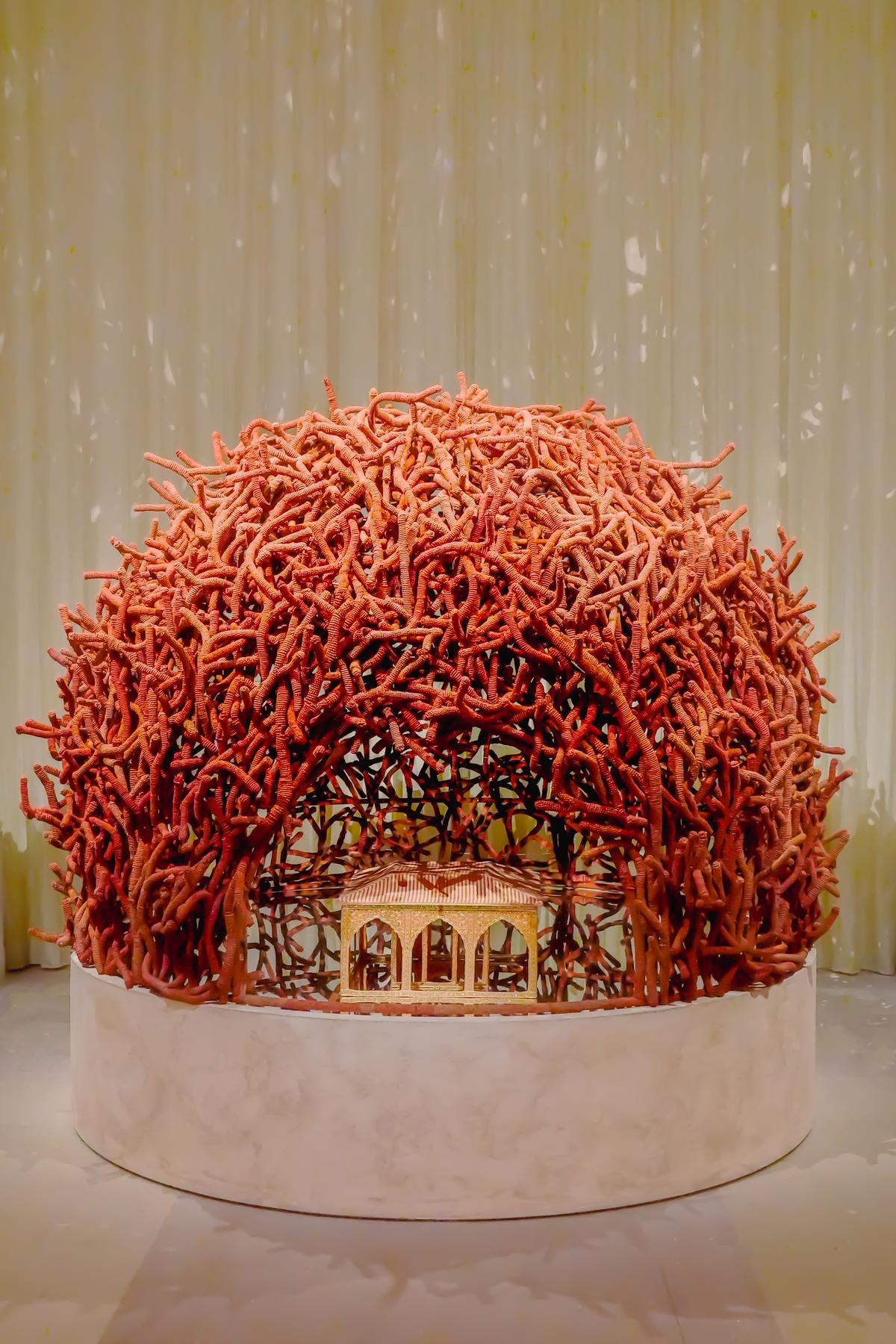
Travelling Roots by Lesage Intérieurs
| Photo Credit:
Sophia Taillet
Of lace and brocade
From the vibrant legacy of printed cottons, the exhibition shifted into serene white-on-white chikankari, muslins, and lace-inspired artworks. Highlights included Victoire de Brantes’ Vitraux Brodés (part of Villa Swagatam, the Indo-French cultural residency programme launched in 2023), which explored traditional techniques to create embroidered stained-glass windows, and Gurugram-based artist Sumakshi Singh’s ‘lace’ sculpture: a haunting, ghost-like marvel embroidered onto a sacrificial base that vanishes to leave behind a fragile memory of thread.
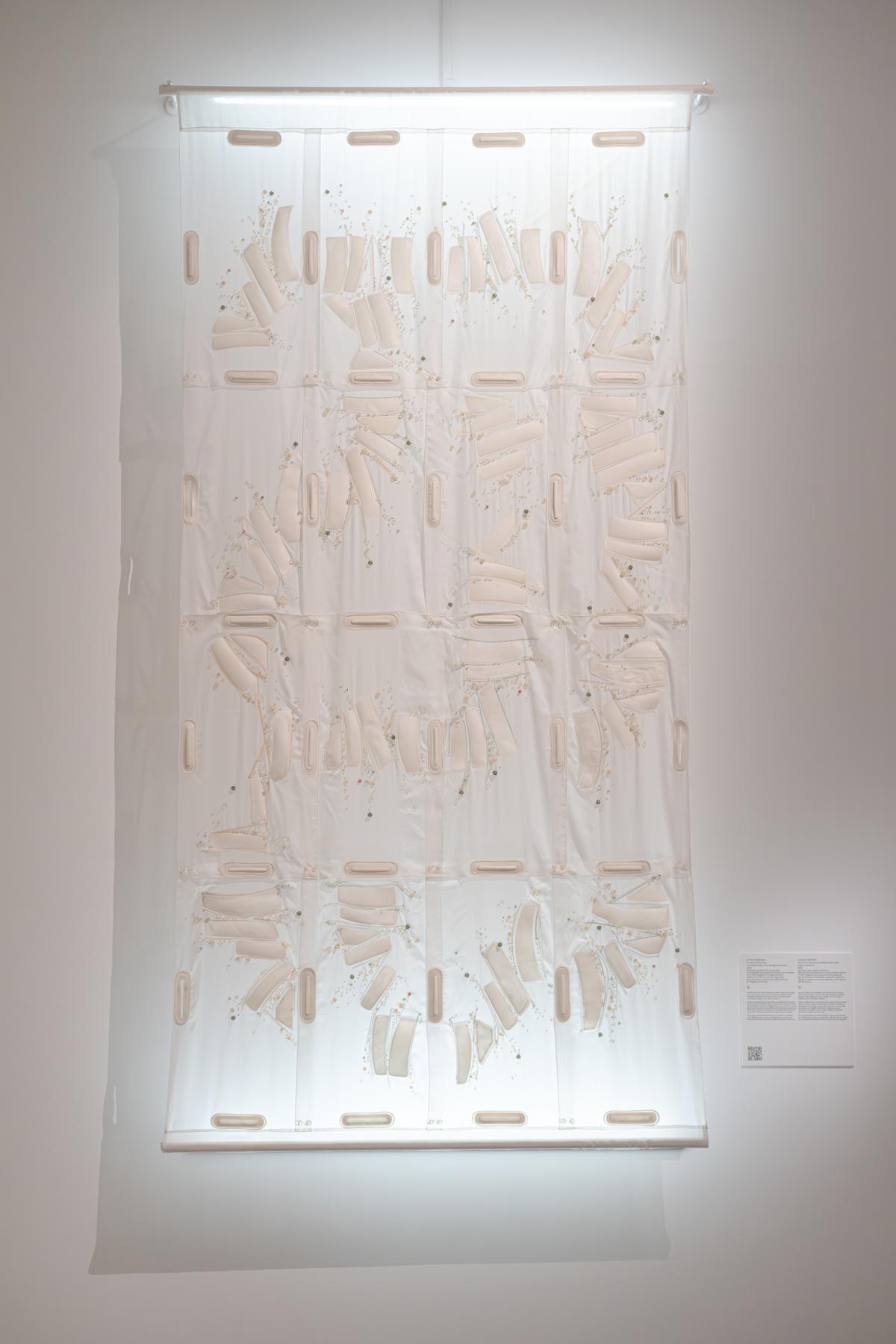
Victoire de Brantes’ Vitraux Brodés
| Photo Credit:
Sophia Taillet
“The work responds to the presentation of historical and contemporary expressions of handmade lace,” Kaul explains. “It creates a conversation between what is seen as quintessentially a French medium, and one which has emerged independently out of her own practise through the act of embroidery.” In this moment, the enduring power of delicate fibre was revealed, bridging the gap between centuries-old French lacemaking and the avant-garde frontiers of modern art.
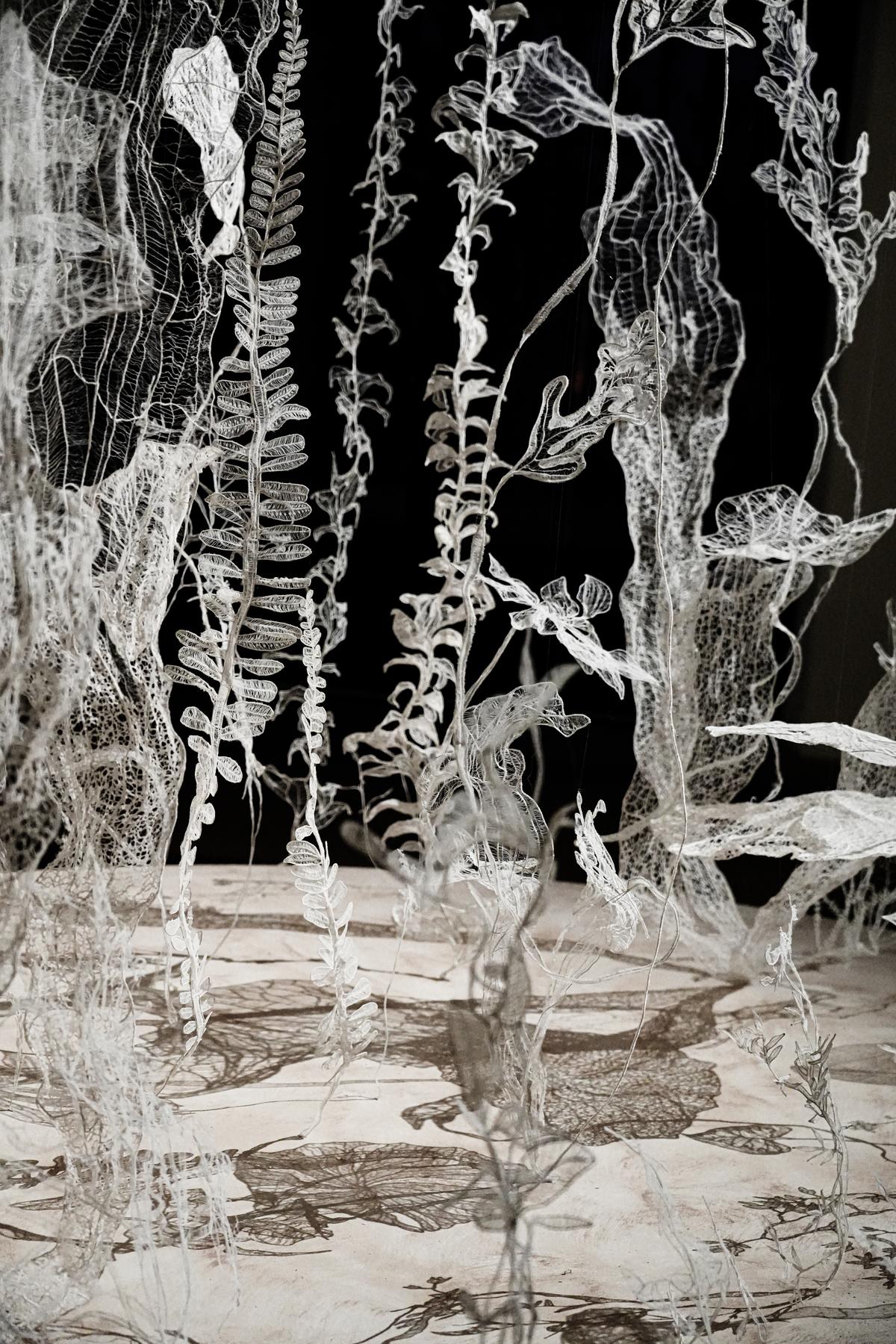
Sumakshi Singh’s ‘lace’ sculpture
| Photo Credit:
Sophia Taillet
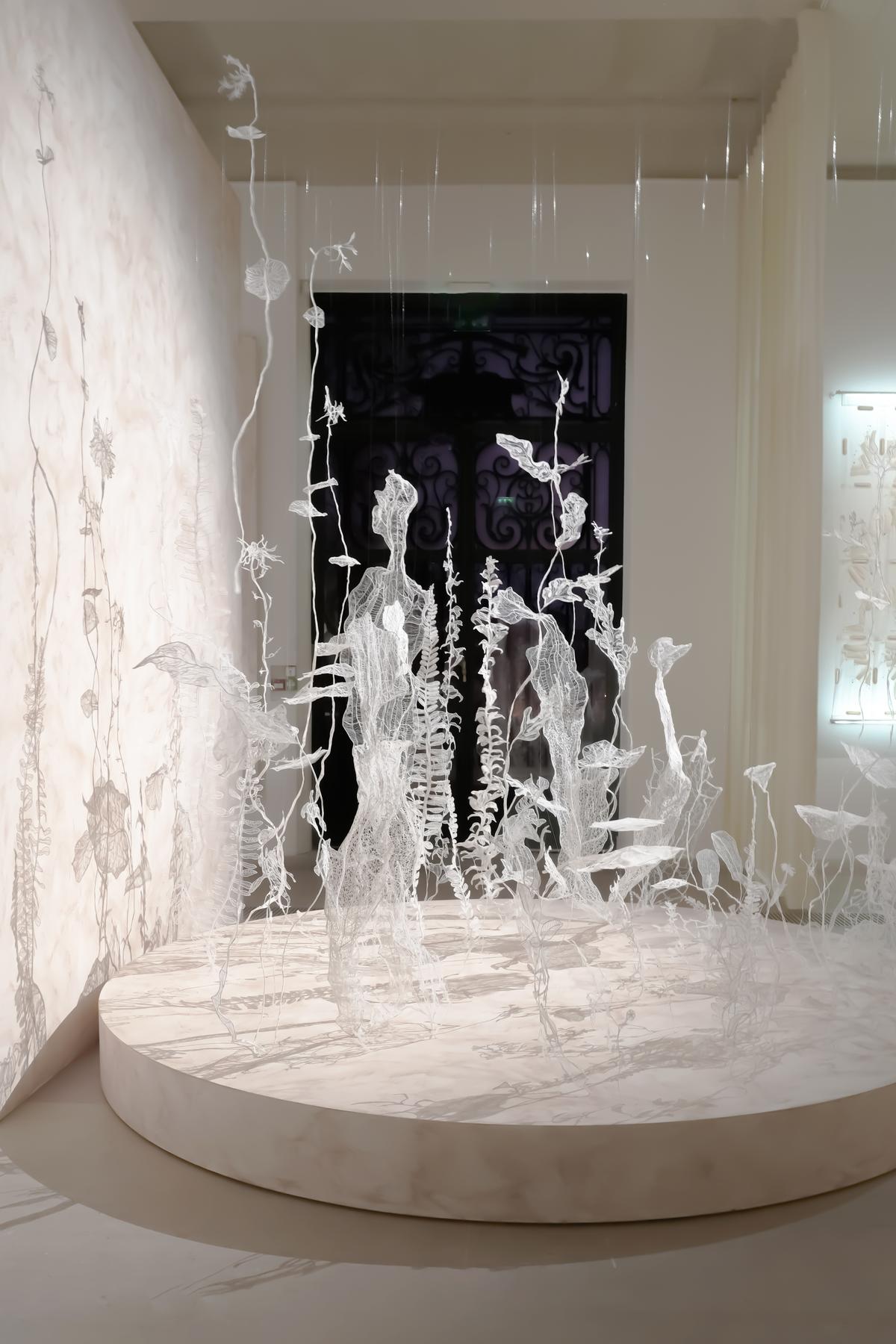
‘The work responds to the presentation of historical and contemporary expressions of handmade lace’
| Photo Credit:
Sophia Taillet
Next came the opulence of gold brocade — fundamentally transformed by the advent of the Jacquard loom, a revolution that positioned Lyon and Varanasi as dual poles of weaving excellence. The push and pull of the shuttle and the interplay of industrial and aesthetic imaginations were beautifully underlined in Ashta Butail’s installation, 7 Yokings of Felicity. Suspended high above and stretched like a celestial accordion, its silk and metallic yarns projected a rhythmic dance of light across contemporary Mughal-inspired florals and a 19th-century silk panel from the Palace of Versailles.
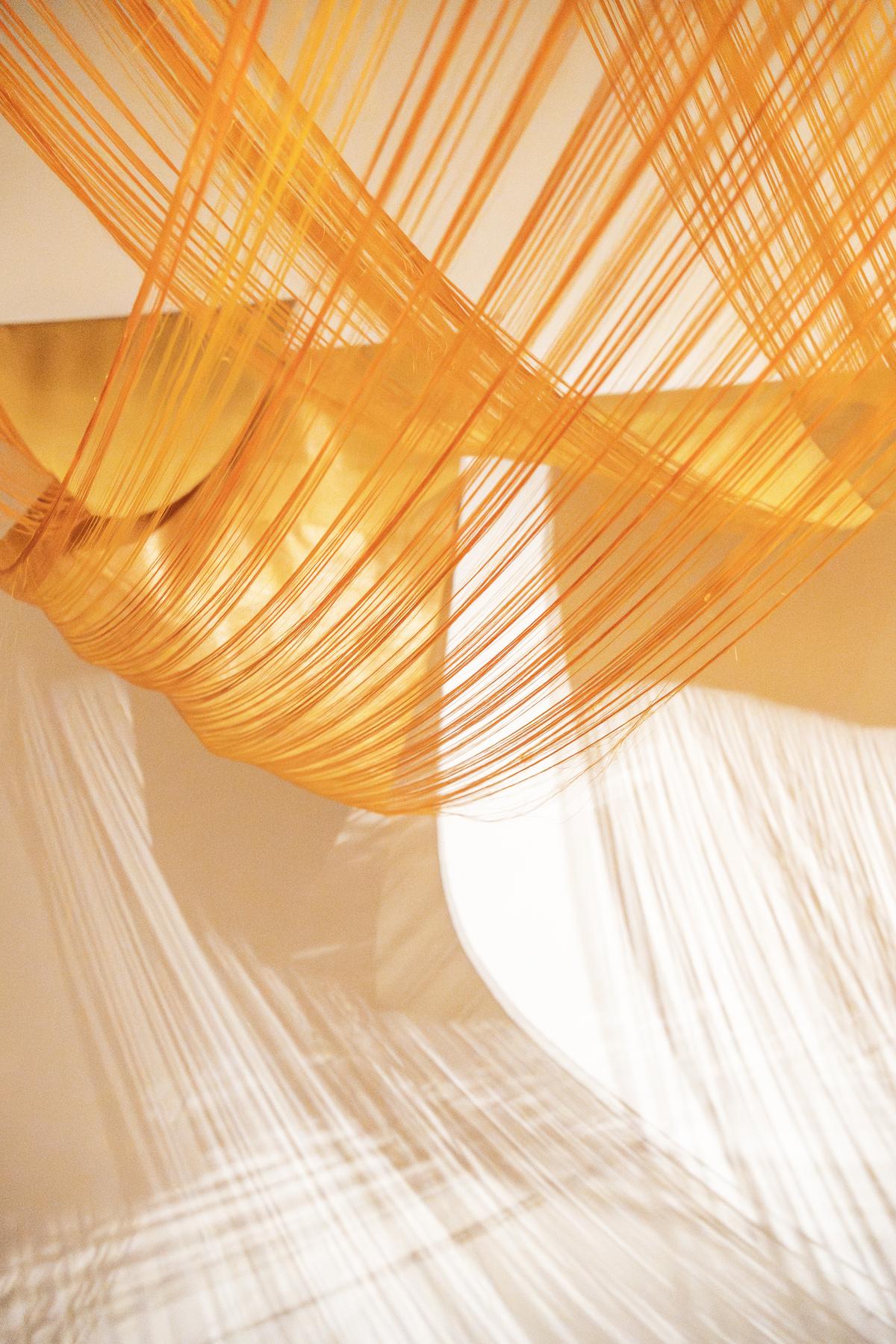
Ashta Butail’s installation, 7 Yokings of Felicity
| Photo Credit:
Sophia Taillet
This luxury found a poignant counterpoint in Lakshmi Madhavan’s art grounded in her work with the kasavu weavers of Balaramapuram in Kerala. Creating a spiral of loom shuttles — originally 96 — wrapped with threads and hair, the artist presented the grandeur of the finished textile against the tools of the trade, serving as a sharp reminder of the labouring bodies and the quiet endurance of the weavers.
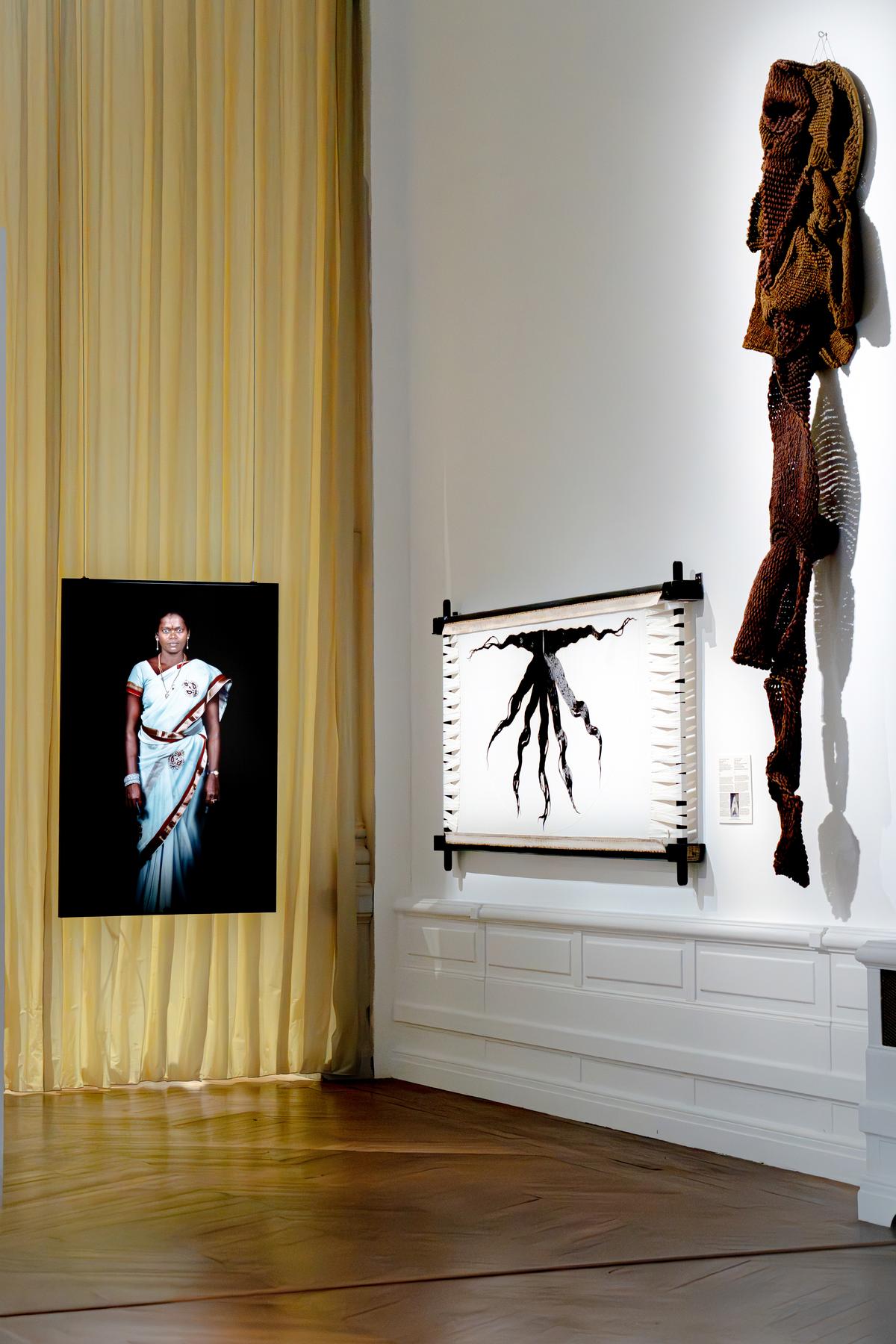
At Sculpter les corps, the works showed how textiles can become sculptural
| Photo Credit:
Sophia Taillet

Imaginative collaborations
Ascending the grand staircase, the focus shifted to the sculptural majesty of the sari. Taking centrestage was Raw Mango, the iconic label that has masterfully recalibrated the contemporary sari. Beyond its role as a fashion house, Raw Mango was presented through Kaul’s lens as a vital “image maker by showcasing the sari in fashion and motion in artistic films and photography”.
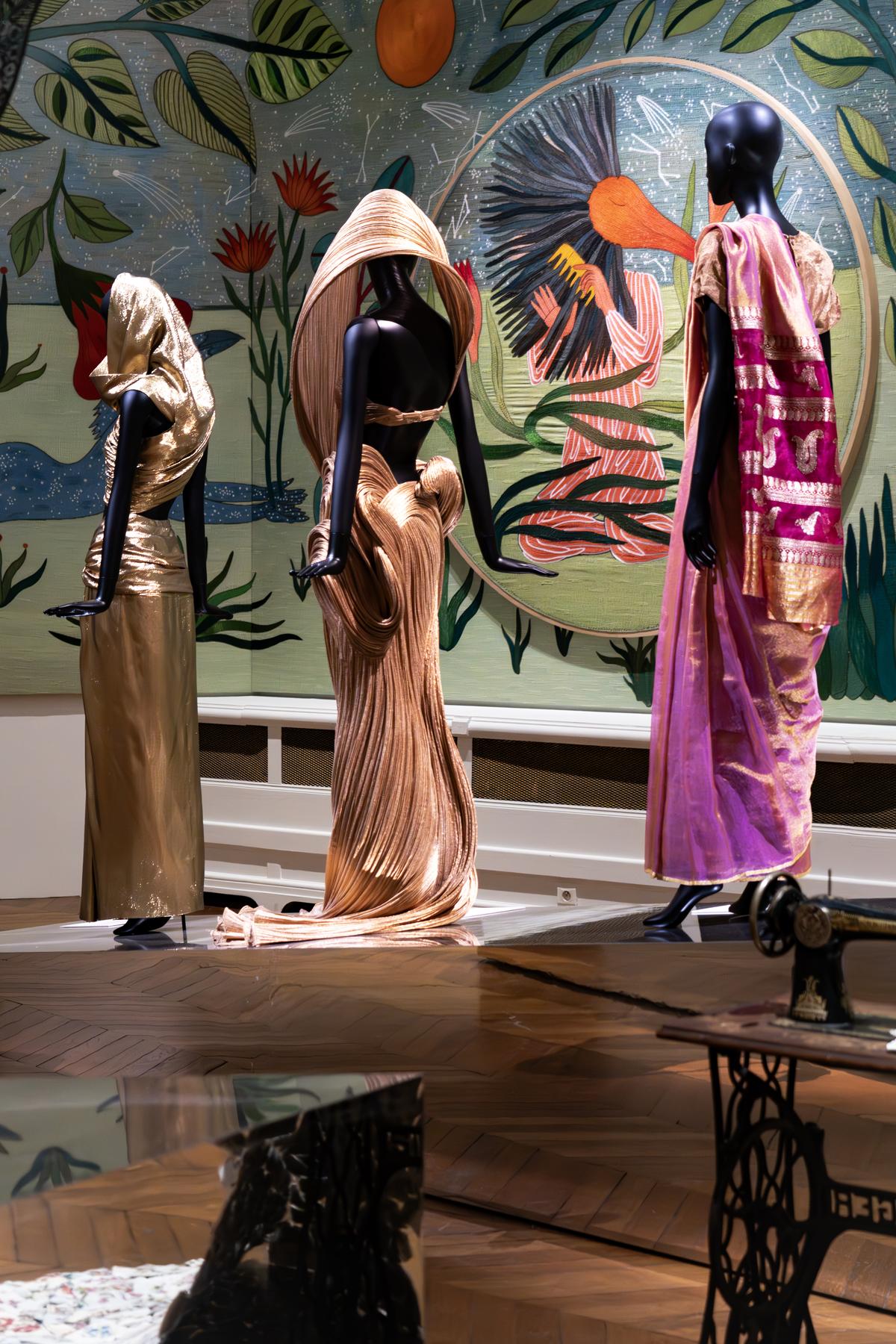
A selection of saris from contemporary Indian designers
| Photo Credit:
Sophia Taillet
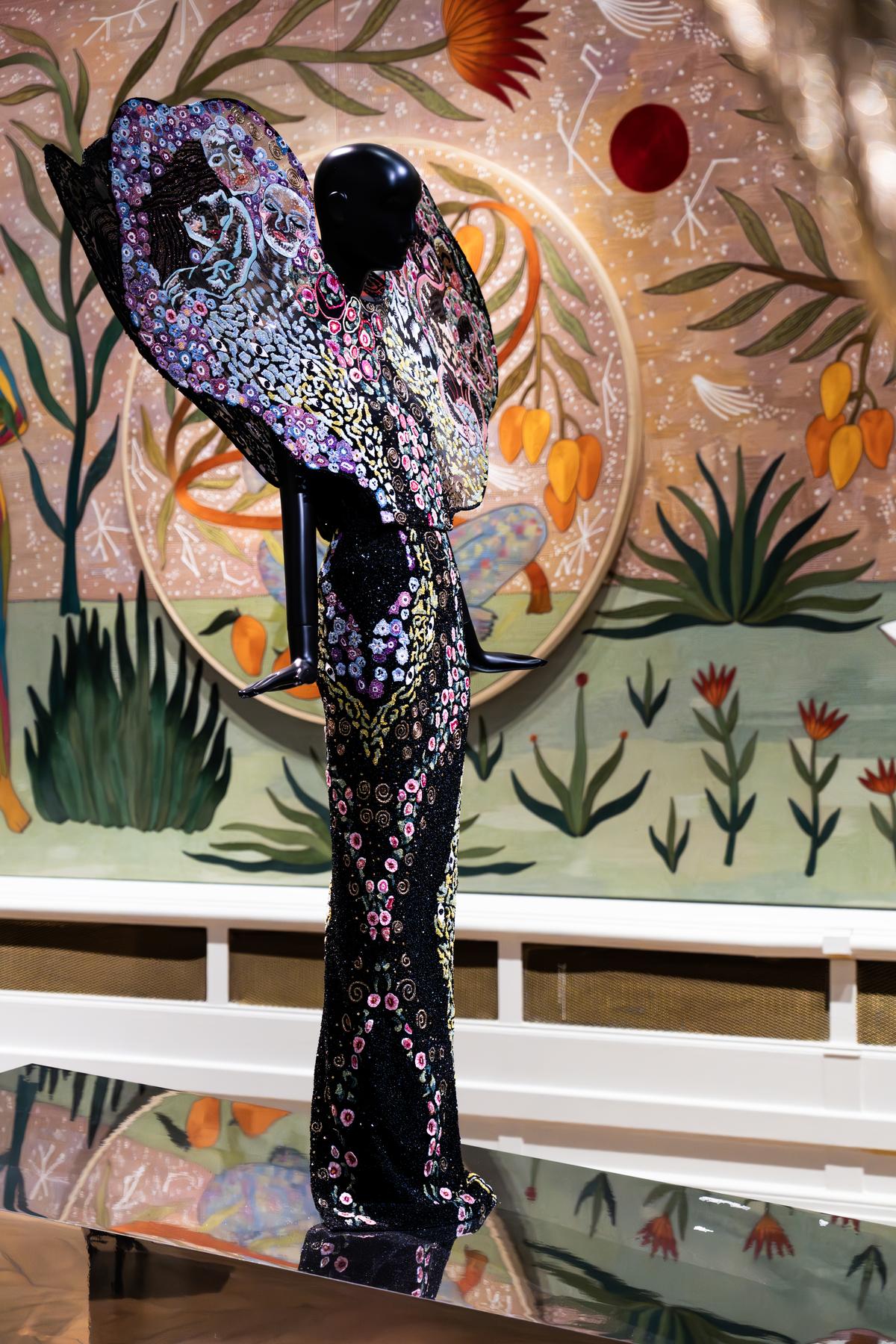
Rahul Mishra’s Becoming Love. Hand-embroidered ‘Mohini’ long dress in noir and Klimt thinking bubble corset frame
| Photo Credit:
Sophia Taillet
The scenography then transitioned to a dramatic mock runway. Here, Louboutin’s signature mirrored plinths elevated mannequins draped in archival couture from Dior, Chanel, and Yves Saint Laurent. These were flanked by monumental, embroidered panels by Mumbai-based visual artist Rithika Merchant in collaboration with the Chanakya School of Craft — created by the hands of over 300 embroiderers. Behind them, the iconic Sabyasachi sari, as worn by businesswoman Natasha Poonawalla at the 2022 Met Gala, with a Schiaparelli sculptural bodice, stood as a statuesque moment of cultural fusion.
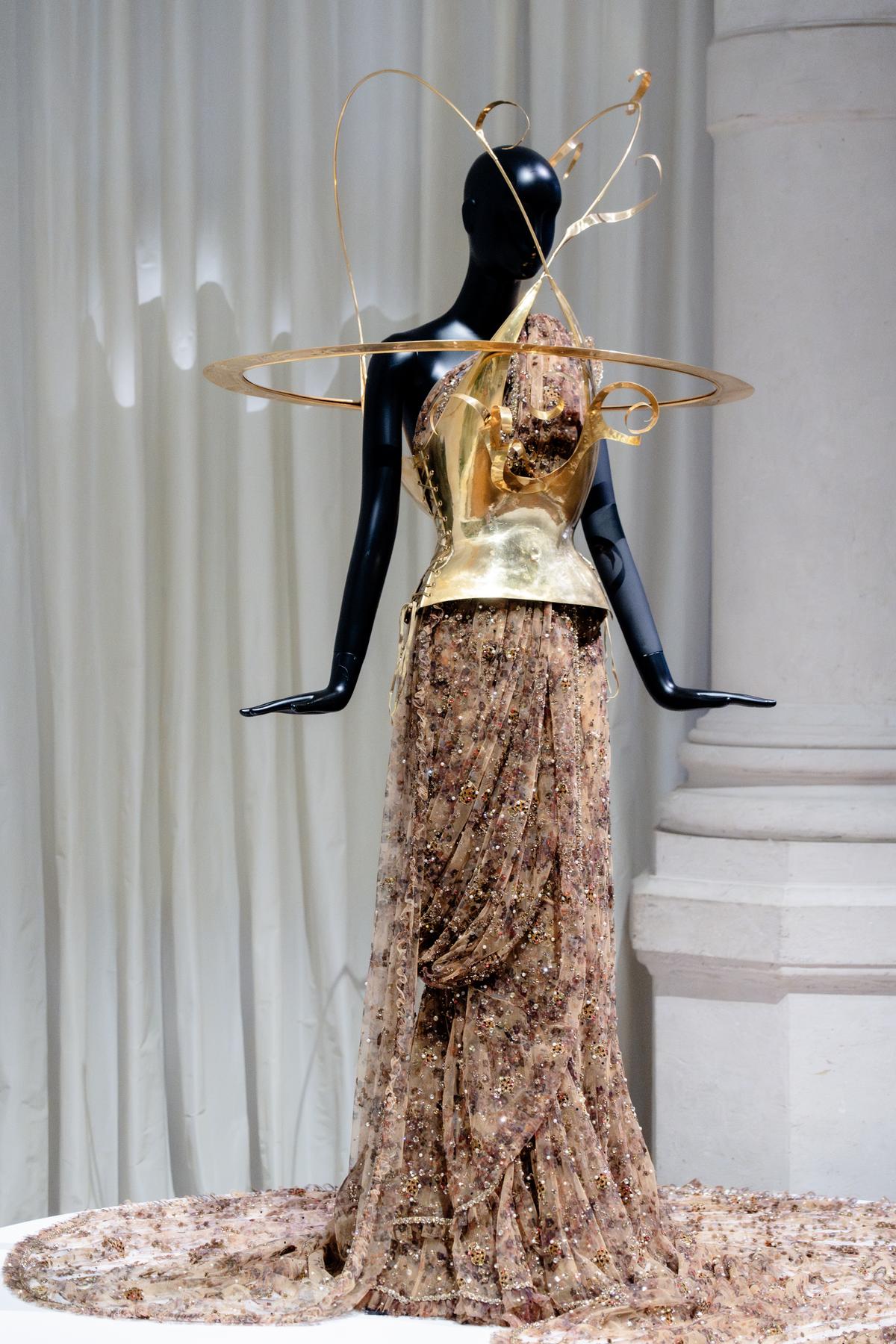
The iconic Sabyasachi sari with a Schiaparelli sculptural bodice
| Photo Credit:
Sophia Taillet
Elsewhere, the exhibition pivoted to the visceral, celebrating the ‘power of the hand’ through portraits of women garment factory workers by French-Moroccan photographer Leila Alaoui. The dialogue became increasingly radical with fibre works by titans such as sculptor Mrinalini Mukherjee and American artist Sheila Hicks. A solitary Nagaland textile introduced a primal dimension, challenging the viewer to look towards the spiritual connections of the craft.
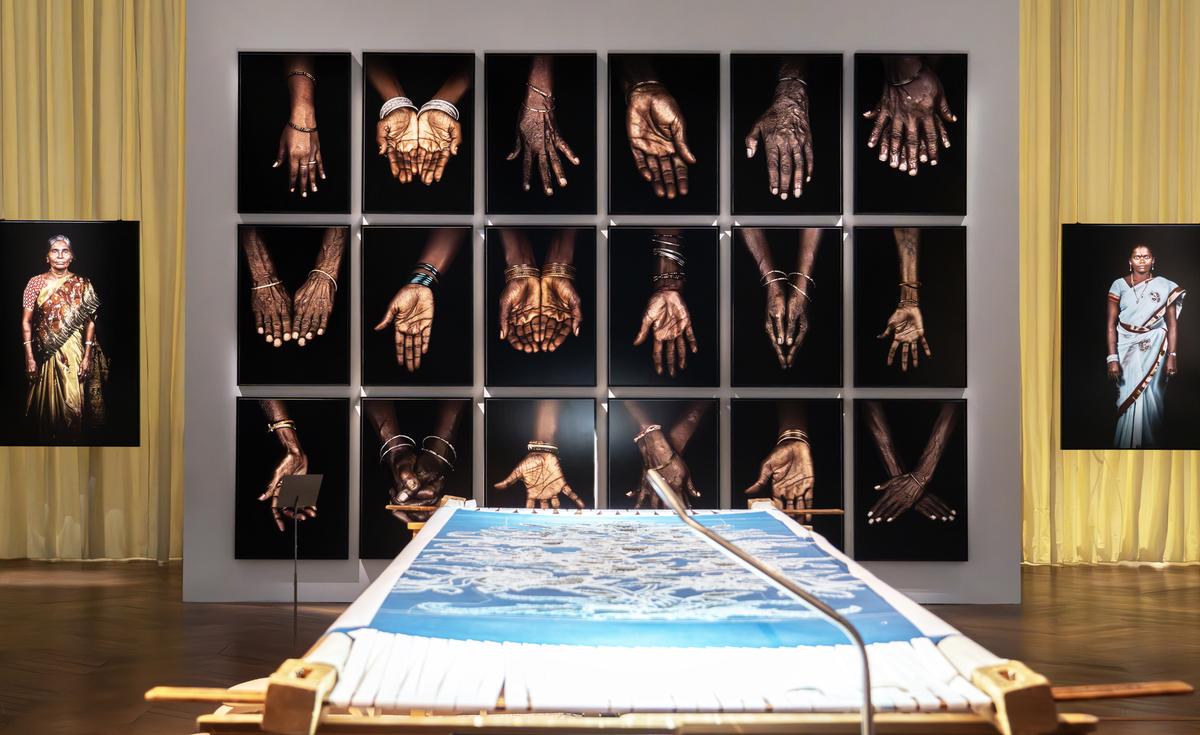
Leila Alaoui’s portraits
| Photo Credit:
Sophia Taillet
Mapping new routes
The finale returned to total immersion: scaffolding draped in shades of indigo denim, a fabric bridging industrial France and India. Evoking an Indian salon and punctuated by flamboyant tapestries of artist Viswanadhan, alongside images of Le Corbusier’s legacy in India, the visitor was absorbed into a series of short films by French artist Elèonore Geissler playfully tracing Indian textile techniques and patterns through stop-motion animation.
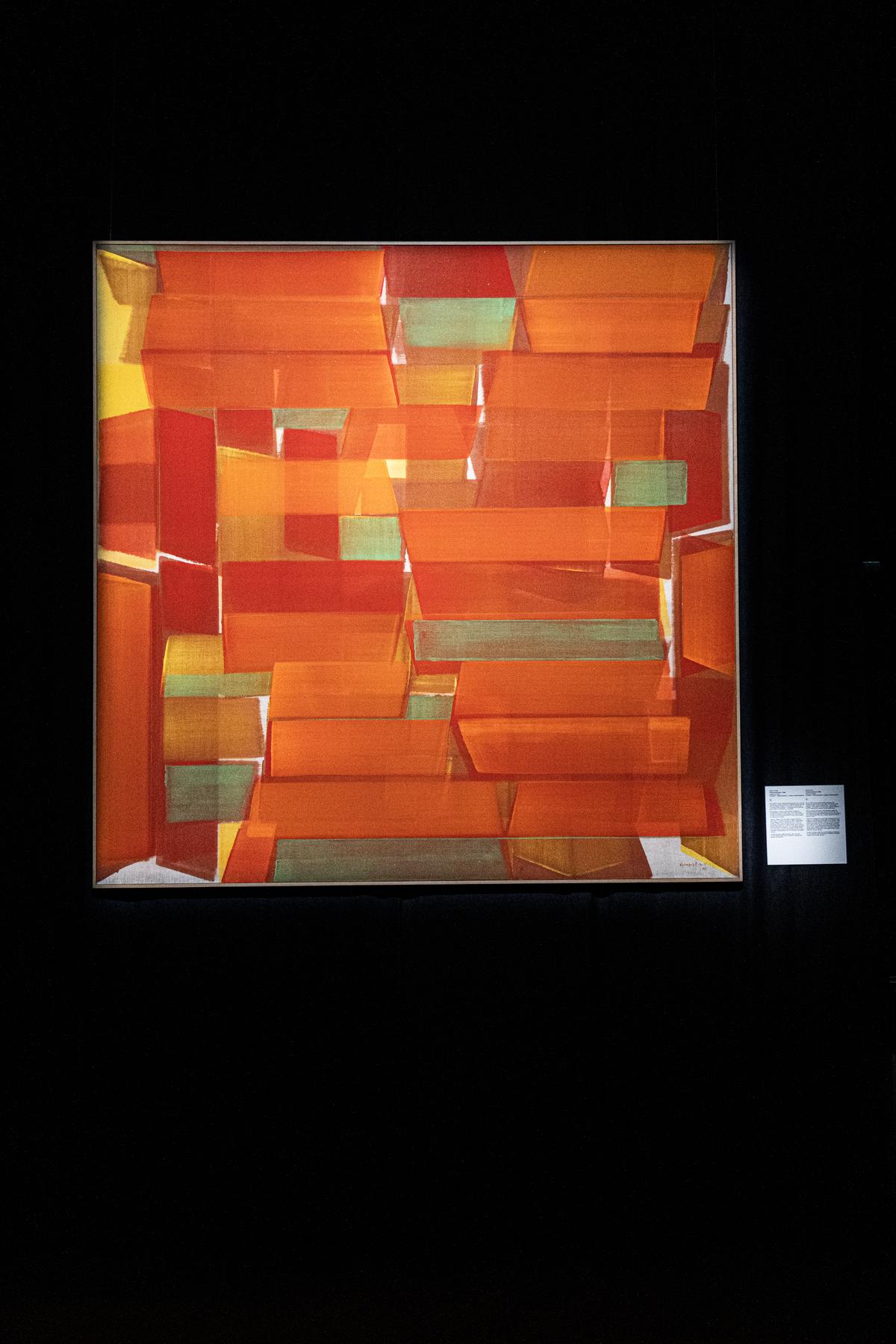
Viswanadhan’s tapestry
| Photo Credit:
Sophia Taillet
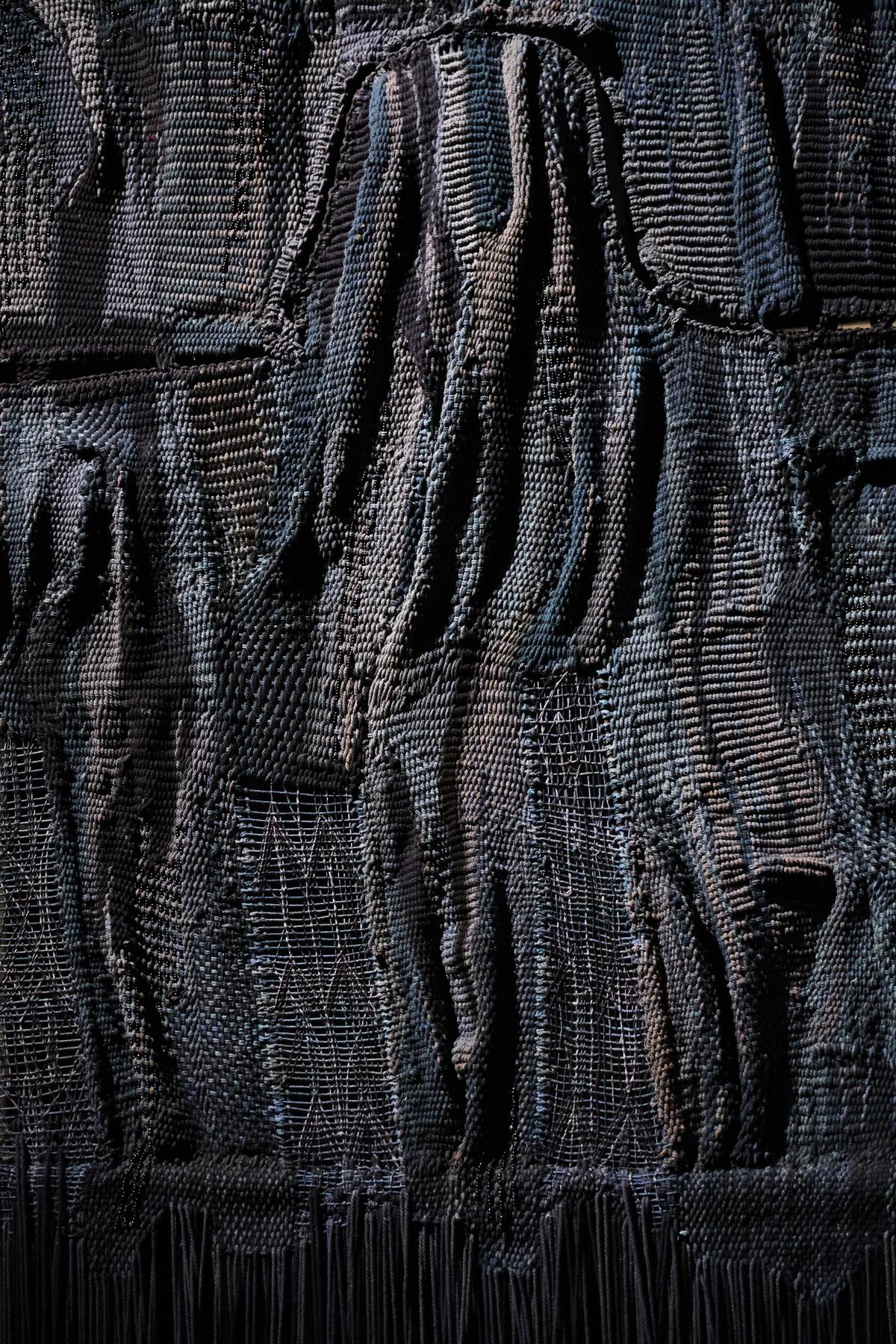
Detail of the Chanakya School of Craft’s Indigo: The Sky Below, a site-specific installation that investigated the material and cultural resonances of indigo
| Photo Credit:
Sophia Taillet
Ultimately, Ce qui se trame imprinted a singular truth: the tapestry of Franco-Indian relations remains profoundly interwoven. While an intriguing tension existed in the curation — Kaul’s effort to subvert Orientalist stereotypes occasionally leaned into a canonical roll-call of blockbuster exports such as muslins, chintzes, Kashmir shawls and brocades — the exhibition succeeded in mapping the way forward for further imaginative Franco-Indian collaborations. Further iterations of this dialogue will soon be announced across major institutions in India.
The writer is an independent curator of textiles based in the U.K.
Published – February 18, 2026 09:40 pm IST