


Verdict
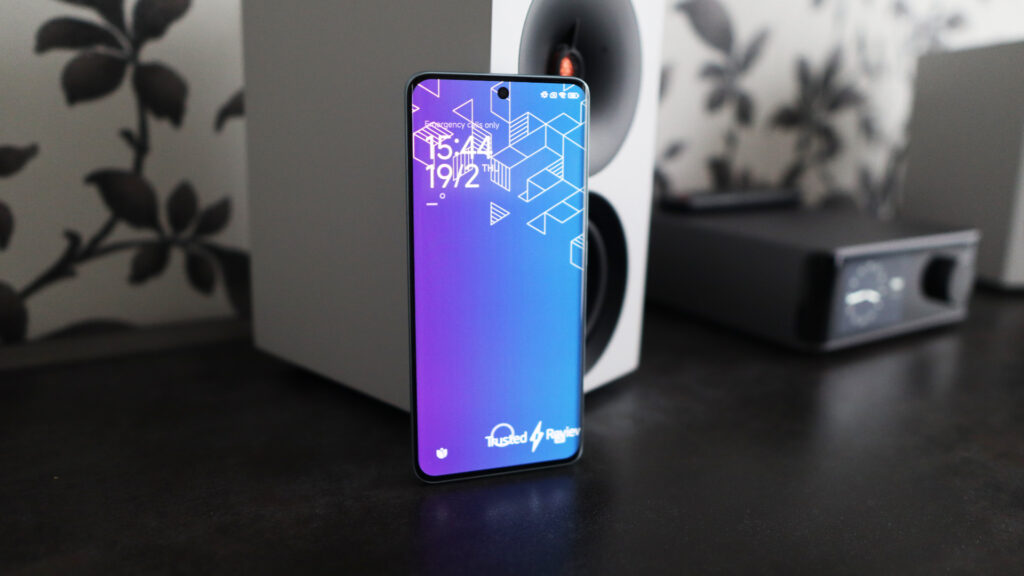
The Xiaomi Redmi Note 15 4G is a decent budget Android phone with a vibrant, large OLED screen, fantastic battery life and a stylish, slim feel to it. Performance is okay for the price, although there are limits to its powers. The camera is just okay, too, and HyperOS still feels quite cluttered at any price, let alone a phone this affordable.
-
Slender and lightweight -
Bright and sharp OLED screen -
Great battery life
-
Camera is just okay -
HyperOS remains riddled with ads
Key Features
-
6.77-inch 120Hz OLED screen:
The Redmi Note 15 4G features a large, bright and responsive OLED screen that’s great for such a cheap phone. -
6000mAh battery:
It also has a hefty battery inside that can keep it going for several days on a charge. -
108MP camera:
The Redmi Note 15 4G is also rocking a single camera with a hefty megapixel count for what it’s worth.
Introduction
The Xiaomi Redmi Note 15 4G sees the Chinese manufacturer take its cheap handset and bring it into 2026 with some new innards that seek to make it one of the brand’s best budget phones yet.
We’ve got a new processor alongside a slightly bigger and brighter OLED screen and a larger silicon-carbon battery to supplement the 8GB of RAM and 256GB of storage that my sample comes with.
This particular variant will run you £189/$299.99 as per current pricing, although paring back the RAM and storage to 6GB and 128GB, respectively, drops this to £146.99/$266.99. For that price, you can also consider the likes of the Motorola Moto G86 5G and the CMF Phone 2 Pro.
To see if Xiaomi’s latest cheap customer can come out on top as one of the best budget phones out there, I’ve been putting it through its paces for the last couple of weeks.
Design
- Durable plastic chassis
- Pleasant green colourway
- MicroSD port is welcome for such a cheap phone
The Redmi Note 15 4G has received a redesigned chassis against its predecessor to bring it into line with the models further up the price ladder, ditching the angular look in favour of rounded corners and edges that I’m more used to with Xiaomi devices.
It is made of plastic, as you’d perhaps expect for a more affordable handset, but I won’t hold that against Xiaomi with this phone. It’s comfortable to hold and feels quite durable against other cheaper phones out there. There isn’t any creaking or twisting at the corners, either.


As for colour options, the Redmi Note 15 4G is available in black, light blue, or light green. My sample is the latter, and it looks to me as more of a teal than a straight green. It is nonetheless a pleasant colourway that’s helped by a nice glossy finish on the rear.
Ports are standard fare for a modern phone, with a USB-C port for charging and a SIM slot off to the left. The SIM slot also doubles as a microSD card slot for expandable storage, which is nice, although this is offset by the loss of the 3.5mm headphone jack compared to the older model.

We’ve got IP64 water and dust resistance for the Redmi Note 15 4G, which should protect it well against water and dust. This is ahead of the IP54 rating on the CMF Phone 2 Pro, although behind the IP68/IP69 rating of the Motorola Moto G86 5G.
In some regions, you will get a power brick with this Xiaomi handset, alongside a USB-C cable that’s proprietary with an extra pin to enable the phone’s fast charging. There is also a silicon case to help protect the phone.
Screen
- 6.77-inch 120Hz 1080×2392 OLED
- HDR10 support
- 3200 nits peak brightness
Where Xiaomi has often shone with its budget phones is with the screen, and the Redmi Note 15 4G is no different. It’s got a slightly larger screen than its predecessor, with the size bumped up to 6.77 inches, making it one of the bigger panels fitted to a phone at its price.
The resolution is more akin to HD, with a 1080×2392 option that provides reasonable detail at the price, and as an AMOLED choice, there are decent blacks and contrast to my eye.

This is helped along by a typical brightness of 800 nits, rising to 3200 nits peak, making this a seriously punchy screen for the price. I’d argue this is the major upgrade of this phone over its predecessor and a lot of its rivals. The panel also benefits from more basic HDR10 support, rather than the more advanced Dolby Vision and HDR10+ found on dearer versions of this phone.
It’s up to 120Hz here, which adds a slickness compared to the 60Hz we were stuck at for a long time, although the screen lacks the more advanced LTPO tech we see in dearer phones, meaning the variable refresh rate works in a blockier manner. For the most part, the Redmi Note 15 4G’s panel sticks at 120Hz, which isn’t much of a hardship.

Xiaomi has also included an optical under-display fingerprint sensor for this phone, mounted quite low down on the panel. It’s fine to use, although not quite as good as the ultrasonic ones seen on higher-end devices.
Cameras
- Main rear camera is reasonable
- Lack of a telephoto leaves long-range photography to be crunchy
- Decent selfie camera and okay video options
In terms of cameras, the Redmi Note 15 4G features a single 108MP wide snapper with a smaller sensor size. By default, it chucks out 12MP images, although you can switch to the camera’s ‘Ultra HD’ mode to make full use of the resolution on offer for more detail, dynamic range and inherently larger file size.
If you were expecting flagship performance out of this ~£150-£200 smartphone, then I’m afraid you’re very much mistaken. Out of the box, the general wide images are fine, although they feel a little flat and lacking in dynamic range to my eye. Colours are natural, and the saturation hasn’t been cranked up in the slightest.

Moving to the Ultra HD mode for a picture of my pink rose-patterened vase on the mantlepiece yielded much more detail than the standard 12MP resolution, it has to be said, with much more when zooming in on its finer patterns. This comes at the expense of larger files, but if you don’t mind, it’s worth a go.
The lack of a telephoto lens is the downfall of the Redmi Note 15 4G’s camera setup, as it means anything beyond a simple 2x or 3x zoom can cause detail to fall off dramatically. For instance, the image of my car taken from the window of my home office is fuzzy, so it’s not possible to make out the number plate. A dedicated telephoto would have resolved the fuzziness and given a lot more to work with.

For selfies, the 20MP snapper on the front is okay, although images can lack a bit of dynamic range and feel quite flat, as with the main rear camera. Video capabilities in any guise are locked to a max of 1080p/60fps, which is fine, if unremarkable.
Performance
- Okay MediaTek SoC inside
- Reasonable speed for more basic tasks
- Multitasking and advanced gaming loads introduce stutters
Xiaomi has sprung a bit of a surprise with the SoC inside the Redmi Note 15 4G, moving away from the Snapdragon 6 Gen 3 you’ll find on the 5G variant.
Instead, we’re seeing the MediaTek Helio G100 Ultra chip that Xiaomi has ported over from the Redmi Note 14 Pro from 2025. Depending on the model you choose, it’s either 6GB or 8GB of RAM that’s bolted on, with my sample coming with the former.
The numbers in the Geekbench 6 tests don’t exactly paint this as a particularly powerful phone, and it is behind the likes of the CMF Phone 2 Pro and Motorola Moto G86 5G in this test. For general use, things are better than the lower benchmark numbers would suggest, with decently zippy performance navigating the operating system, streaming music or video or dealing with social media.
There is a limit to the Redmi Note 15 4G’s powers, though. The lower quantity of RAM, and the general slowness of its SoC, hit a bit of a wall when it comes to multitasking. Having a few Chrome tabs open alongside Facebook and Tidal for streaming music did cause a few unwanted judders with my music every now and again as the phone tried to keep up with what I was doing. It wasn’t all the time, but it happened enough to warrant a mention here.
The same guidance applies to gaming performance, too. More casual titles such as COD Mobile or PUBG fare absolutely fine, just as long as you’re happy to turn down some graphics settings for a smoother feel. With this in mind, don’t expect to be playing the likes of Wuthering Waves on this Xiaomi phone, as it turned into more of a slideshow than a game at times with single-digit FPS figures.
For more prolonged intensive loads, expect this Xiaomi phone to get a little on the warm side, although it wasn’t uncomfortable to the point that I had to put it down. The Redmi Note 14 4G’s cooling apparatus seems to do its job decently well.
Software & AI
- Meagre HyperOS Android skin
- New Google AI features present
- Lots of ads and unneeded bloatware
The Redmi Note 14 4G springs no surprises in terms of operating system, shipping with Xiaomi’s HyperOS skin of Android. It’s an okay operating system, although one I feel lacks the polish of its rivals. It also comes with a fair amount of pre-installed guff that I really don’t need.
There’s a lot here that feels similar to iOS, such as the quick settings menu that’s accessed by swiping on the right side of the screen. It has a very Apple feel in terms of brightness and volume control, giving you the illusion of using a more expensive phone than the price tag suggests.

There are also Google’s latest AI additions, such as Circle to Search and utilising Gemini as an assistant. There are Xiaomi-specific AI gubbins here, which mostly feature in the gallery app when editing images, such as object removal and portrait blurring with an artificial bokeh effect. There are also a few more advanced options, like the ability to remove backgrounds, FOV expansion and AI-powered automatic video editing.
What I dislike about HyperOS is the amount of bloatware that comes pre-installed, such as Xiaomi’s own MI app store, as well as OneDrive, the Opera browser, and the Booking.com app. Honor is guilty of this, too, and I wish more brands would opt for a cleaner approach to their Android skins.

The big problem here is the prevalence of ads at virtually every turn – most of them are for Temu – and it majorly cheapens the feel of the operating system. They arrive as notifications, and are present at almost every turn, such as in the search bar.
Xiaomi promises more modest updates and software longevity for the Redmi Note 15+ 5G, with two years of OS and four years of security updates. This isn’t too great for longevity.
Battery Life
- 6000 mAh battery
- 33W wired charging
- No charger in the box
Where the Redmi Note 15 4G is surprisingly impressive is in its endurance, thanks to its large 6000mAh battery. That’s fantastic for the price, especially for a handset that’s as slim and light as this one.
With it, I comfortably got through a working day and even into a second one with the brightness at around halfway – a quick run of the PCMark Work V3.0 test yielded around 16 hours of charge from start to finish, meaning two working days of full, intensive multitasking. Lay off some of the power user habits, and you might be able to eke out a third day.

The Redmi Note 15 4G is more basic in its fast charging support, only taking up to 33W of power via a cable. With my test, I used a 66W 6A charger that was decent in its speeds, taking 55 minutes to get it back to 50 percent, and five minutes shy of two hours for a full charge.
This phone also doesn’t support any form of wireless charging, which feels quite a misstep in 2026, as its rivals do support it.
Should you buy it?
You want a lovely OLED screen
The Redmi Note 15 4G impresses with a bright and decently detailed OLED screen that’s surprisingly sharp for the price.
The letdown with this phone is its ad-riddled version of Android that leaves quite the sour taste against rivals.
Final Thoughts
The Xiaomi Redmi Note 15 4G is a decent budget Android phone with a vibrant, large OLED screen, fantastic battery life and a stylish, slim feel to it. Performance is okay for the price, although there are limits to its powers. The camera is just okay, too, and HyperOS still feels quite cluttered at any price, let alone a phone this affordable.
The CMF Phone 2 Pro is a little more expensive than this Xiaomi option, but comes with a more well-rounded camera, a slicker version of Android and a beefier processor inside. Moreover, the Motorola Moto G86 5G may be weighed down with a similarly bloaty variant of Android, but the hardware is faster, the cameras are stronger for a similar price to the Redmi Note 15 4G, and it supports 5G to boot.
With this in mind, there’s still a fair bit to like about the Redmi Note 15 4G, including a dazzling screen and great endurance, and it’s a solid Android handset for the price. For more options, check out our list of the best Android phones we’ve tested.
How We Test
We test every mobile phone we review thoroughly. We use industry-standard tests to compare features properly and we use the phone as our main device over the review period. We’ll always tell you what we find, and we never, ever, accept money to review a product.
- Used as a main phone for over a week
- Thorough camera testing in a variety of conditions
- Tested and benchmarked using respected industry tests and real-world data
FAQs
No, the Xiaomi Redmi Note 15 4G doesn’t come with its own charger, so you’ll need to supply your own.
Yes, the Xiaomi Redmi Note 15 4G is dust and water-resistant and comes with IP64 certification.
Xiaomi has committed to two years of OS updates and four years of security updates with the Redmi Note 15 Pro+.
Test Data
| Xiaomi Redmi Note 15 4G | |
|---|---|
| Geekbench 6 single core | 738 |
| Geekbench 6 multi core | 1990 |
| Geekbench 6 GPU | 1307 |
| AI performance | 211 |
| Max brightness | 3200 nits |
| 1 hour video playback (Netflix, HDR) | 3 % |
| Time from 0-100% charge | 115 min |
| Weight via scales | 183.7 grams |
| Time from 0-50% charge | 55 Min |
| 30-min recharge (no charger included) | 35 % |
| 15-min recharge (no charger included) | 22 % |
| 3D Mark – Wild Life | 350 |
| 3D Mark – Wild Life Stress Test | 99.1 % |
Full Specs
| Xiaomi Redmi Note 15 4G Review | |
|---|---|
| UK RRP | £189 |
| USA RRP | $299.99 |
| Manufacturer | Xiaomi |
| Screen Size | 6.77 inches |
| Storage Capacity | 256GB |
| Rear Camera | 108MP main sensor, 2MP depth sensor |
| Front Camera | 20MP selfie camera |
| Video Recording | Yes |
| IP rating | IP57 |
| Battery | 6000 mAh |
| Fast Charging | Yes |
| Size (Dimensions) | 75.42 x 7.94 x 164.03 MM |
| Weight | 184 G |
| Operating System | HyperOS 3 (Android 16) |
| Release Date | 2026 |
| First Reviewed Date | 17/03/2026 |
| Resolution | 1080 x 2392 |
| HDR | Yes |
| Refresh Rate | 120 Hz |
| Ports | USB-C, microSD |
| Chipset | MediaTek Helio G100 Ultra |
| RAM | 8GB |
| Colours | Black, Blue, Green |