


Across brands, smartphones and laptops are becoming more expensive with AI development being blamed for the rise in input costs, especially of chips. Even cash-rich tech companies, which typically keep prices steady for their devices, are no longer doing so. In the past few days alone, Apple, Samsung, and Nothing have all launched new devices at marginally higher prices compared to previous versions.
“Vendors are increasing prices primarily because memory costs have surged dramatically, in some cases rising 200–300 per cent in recent months. Most vendors operate on relatively tight hardware margins, particularly in the mid-range and entry segments. As a result, they are forced to pass part of these higher component costs on to consumers,” Francisco Jeronimo, Vice President of Client Devices at International Data Corporation (IDC), told indianexpress.com.


Why AI needs more chips
With AI companies buying memory chips for their data centres or data farms, a key focus at the AI summit held in India last month, the prices of these components have shot up, forcing companies like Apple and Dell to raise prices or cut margins. These chips are also used in laptops and smartphones.
All computing devices require RAM, or Random Access Memory. Think of RAM as a computer’s short-term memory that allows multiple applications to run simultaneously. Essentially, RAM is a foundational component of modern computing devices, and it goes into almost every tech product you buy, from smartphones, tablets, laptops to a car’s infotainment system and video game consoles.
For years, RAM production had remained steady, keeping up with consumer demand. During the pandemic, however, there was a brief global RAM shortage, although supply eventually returned to normal. This time, amid the AI boom, companies like OpenAI, Meta, and Google are using large amounts of memory to power servers in their massive data centres.


In fact, AI data centres require significantly more high-performance memory than a typical consumer electronic device. Chipmakers such as Nvidia place several blocks of high-bandwidth memory (HBM) around the graphics processing unit (GPU), the part of the chip that performs the main computations. This fast, specialised memory is needed for heavy AI workloads.
For context, Nvidia’s Rubin GPU uses up to 288GB of next-generation HBM4 memory, arranged in eight blocks around the processor, and is deployed in the NVL72 server rack, which combines 72 GPUs in one system. In comparison, smartphones typically come with only 8GB, 12GB or maximum 16GB of lower-power DDR memory.
Story continues below this ad
To understand the current RAM price rise, it is important to know that Samsung, SK Hynix, and Micron are the three largest RAM manufacturers in the world, together accounting for about 93 per cent of the market. With only a few global players in the RAM business, memory supply has suddenly become constrained, as AI companies are getting first access to memory for their data centres and are willing to sign long-term deals.
One might wonder whether Samsung, the world’s largest smartphone maker, has unlimited access to RAM for its phones. It doesn’t work like that. Samsung Semiconductor, which manufactures memory and other chips and supplies the global market, may choose to sell to companies willing to pay top dollar for their hardware, prioritising data centre customers to maximise profits. Samsung’s mobile division may still have to compete to secure RAM for its Galaxy phones, and there’s no guarantee, given the current RAM shortage, that the phone-making division can secure a long-term supply deal. That’s how business works.
‘Phone makers are already feeling the pressure’
Jeronimo says all phone makers are immune to the memory drought, with smaller players being the worst hit, grappling with thin margins and rising component costs.
“All vendors will feel the impact, but not equally. Vendors such as Apple and Samsung are generally in a stronger position because they operate heavily in the premium segment, where margins are higher. They also have greater financial resources and supply-chain leverage, allowing them to absorb part of the cost increases or secure better component supply. Smaller brands or those competing primarily in lower price segments face a much greater challenge,” he said.
Story continues below this ad
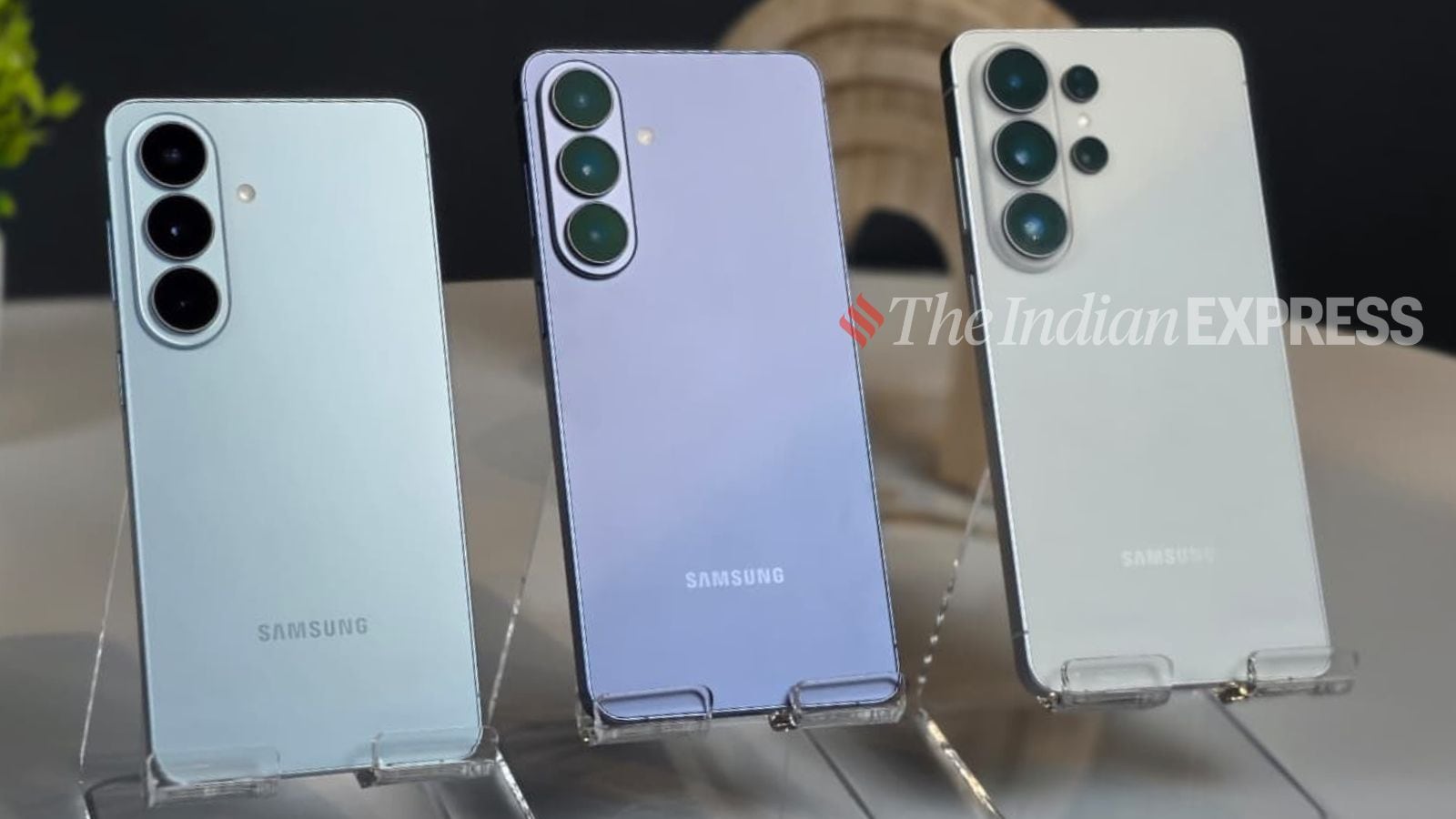
Samsung has become the first major phone brand to increase the price of its Galaxy S26 series, which debuted late last month and will go on sale worldwide this week. The mainline Galaxy S26 starts at Rs 87,999, the S26 Plus at Rs 1,19,999, and the highest-end Galaxy S26 Ultra at Rs 1,39,999. In comparison, the Galaxy S25, launched in India last year, started at Rs 80,999, with the S25 Plus at Rs 99,999 and the S25 Ultra at Rs 1,29,999. That’s a big price jump, with the S26 Plus’ price rising 20 per cent over the S25 Plus. Although Samsung has made 256GB the base storage this time, consumers may still feel the pinch with the higher asking price.
If you think only Samsung’s high-margin Galaxy S26 saw a price hike, you are mistaken. The company has also adjusted prices of several Galaxy smartphones across the M and F series in India, which fall in the mid-range segment. That’s an indication that price hikes are widespread and higher RAM prices are now hitting a company like Samsung, too.
British tech company Nothing has followed a similar path to Samsung by increasing the prices of its smartphones. The newly launched Phone 4a series was unveiled last week in London, with the baseline Phone 4a starting at Rs 31,999 and the 4a Pro at Rs 39,999. Both new phones are more expensive than their predecessors: the Phone 3a and 3a Pro, launched a year ago, were priced at Rs 22,999 and Rs 27,999, respectively.
While Nothing did introduce changes to its new smartphones – the 4a Pro features a major design revamp and improved cameras, consumers’ monthly paychecks have clearly not kept pace with rising smartphone prices. CEO Carl Pei had indicated in January that smartphone prices may rise this year, and that brands in the low-end and mid-range segments could struggle due to the surge in memory costs.
Story continues below this ad
Lenovo-owned Motorola has also increased smartphone prices, with the new Edge 70, a mid-range smartphone, starting at Rs 26,999. Its predecessor, the Edge 60, was launched a year ago at Rs 22,999. In January, a Motorola India executive revealed to indianexpress.com that the company had been delaying price hikes on its smartphones, even as many of its competitors had already passed on the extra costs to consumers.
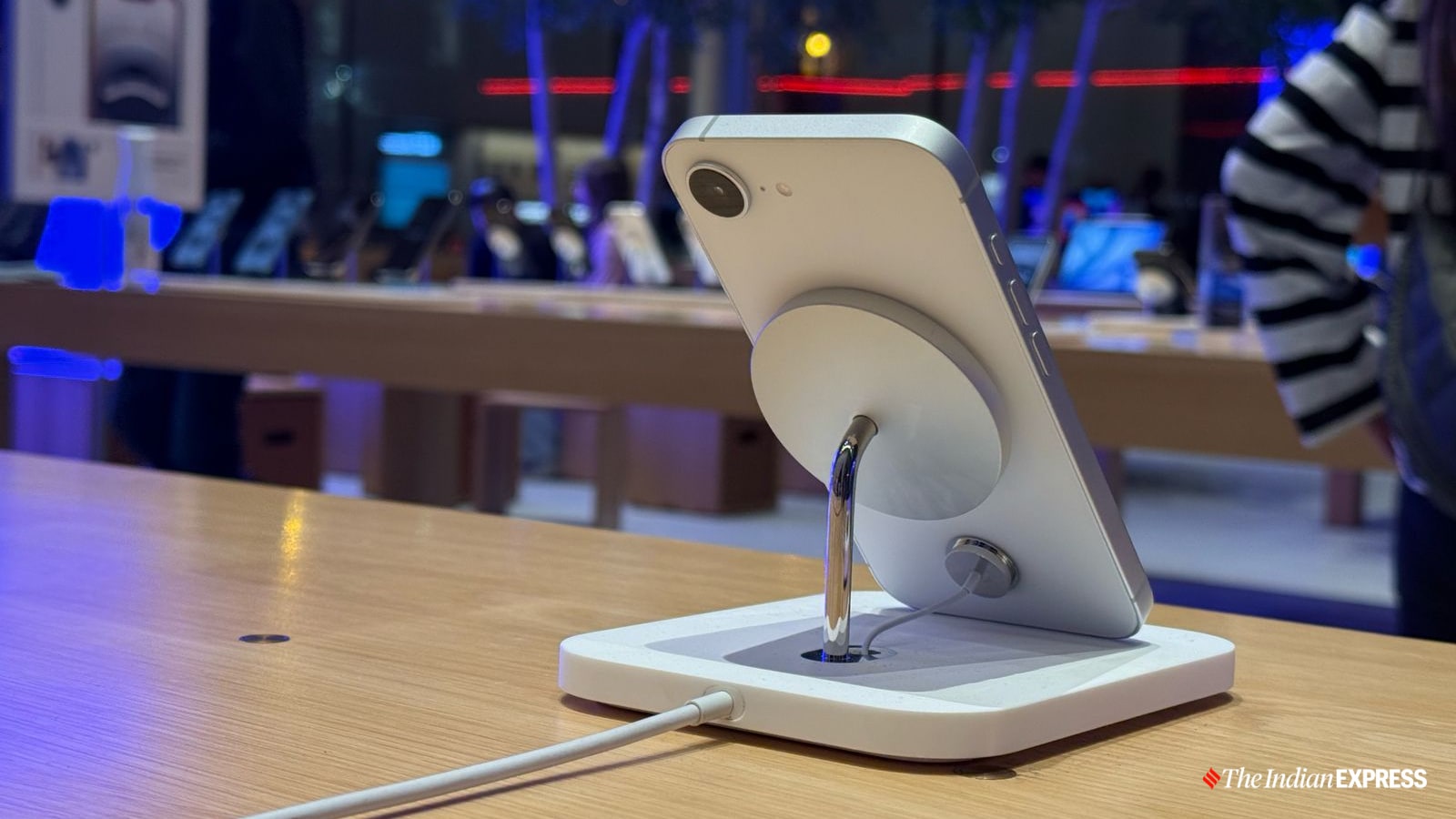
Apple, which is known for absorbing costs and has kept iPhone prices unchanged in recent years, is now charging more for the newly launched iPhone 17e, a premium mid-range smartphone in India. The iPhone 17e retails for Rs 64,900 in India, Rs 5,000 more than the iPhone 16e’s launch price a year ago, although Apple has also increased the storage from 128GB to 256GB.
Why mid-range devices are worst-hit
As explained by Jeronimo, mid-range smartphones, which typically range between Rs 20,000 and Rs 50,000 in India, are clearly becoming a casualty of the memory shortage, a large segment that most phone companies cannot afford to ignore. However, Jeronimo added that the low-end segment has been hit the hardest. Affordable smartphones are widely seen as a way to narrow the digital divide in developing markets like India, where millions of people still use feature phones. But the ongoing RAM crisis may force companies to either stop launching budget phones altogether or increase their prices significantly. At that point, however, it would be difficult to call a budget phone an affordable smartphone.
“The impact will be most severe in the low-end segment, particularly devices priced below $200, which rely on extremely tight margins. With memory prices rising sharply, it becomes economically unviable for vendors to maintain those price points,” Jeronimo agrees, adding that many devices that previously sold for around $100 could move closer to $150–$200.
Story continues below this ad
It doesn’t matter whether the phone is made in India or imported from China, the shortage of RAM supply will impact the entire ecosystem. However, it is still unclear how companies plan to address the issue.
“Most manufacturers secured enough memory supply earlier in the year to support production and channel inventory through the first half of the year. As a result, distributors and retailers are currently stocking up on devices while supply is still available, which is helping sustain sales in the near term,” Jeronimo said, adding that the situation could become worse from the second half of the year onward, when inventories decline and vendors begin producing devices with much more expensive components.

All this is happening at a time when phone companies are marketing their smartphones as “AI phones” and going to great lengths to promote devices built around AI agents, where the phone understands intent, coordinates across apps, and takes action without needing to open individual apps to complete the necessary steps. However, supporting the newest and updated AI features, especially those that run on-device requires phones to have more RAM onboard. As a result, the idea that AI’s future lies on the device rather than in the cloud begins to face challenges.
Up until last year, tech companies promised a shift AI processing from cloud data centers to personal devices like phones and laptops mainly for speed, privacy, and cost savings, while also allowing AI to work without an internet connection. However, this shift requires more powerful hardware to support specialised AI models.
Story continues below this ad
With a memory crisis looming, phone makers and chip companies need to go back to the drawing board and find new ways to make on-device AI work on devices with less RAM. It would not be surprising if phone makers once again start introducing lower-tier 8GB RAM models in smartphones. However, shipping a phone with 8GB RAM in 2026 may not be a good idea.
While an 8GB RAM phone may be sufficient for daily use, the on-device AI experience would be severely impacted. Cloud-based AI does exist, but experts repeatedly point to privacy and security as key advantages of on-device AI.
But beyond the on-device AI push, phones with less RAM are not future-proof, especially as more consumers hold on to their phones for longer. This is why RAM is one of the most important components inside a smartphone.

No wonder phone makers are facing a dual challenge: whether to ship a phone with less RAM when devices are heavily reliant on AI, or to cut down on internal storage or use an older-generation processor. These tough decisions could impact the smartphone experience, even as shoppers pay more out of their pockets for the newest devices.
Story continues below this ad
“Pressure on prices will continue for the next couple of years, at least, not just a few months,” he said. It doesn’t look like the RAM shortage is going to subside anytime soon, as analysts predict that it could “persist well into 2027.”
Jeronimo says expanding memory production capacity takes a lot of time, typically two to three years for new fabrication capacity to come online. At the same time, demand for memory from AI data centers and hyperscale cloud providers is growing rapidly and is often prioritised by suppliers, as these customers purchase large volumes under long-term agreements. He adds that even as supply eventually improves, memory prices are unlikely to return to the levels seen last year.
IDC forecasts the global smartphone market is expected to decline 13 per cent in 2026 – the biggest decline ever, while the PC market is also projected to contract 11 per cent as higher prices reduce affordability.
If smartphone sales slow down worldwide, the big message that has been heavily promoted about the dazzling capabilities of AI may fizzle out. Smartphones and laptops are still the primary gateways for experiencing AI.
Story continues below this ad
‘RAM shortage could kill low-cost laptops but also give an opportunity to rethink the budget segment’
Skyrocketing memory costs mean laptop prices may also go up and force companies to take less risks in the short term. The impact of the worsening memory market is already seen on newly launched laptops.
Laptops are already getting more expensive, as analysts predicted. The newly launched Apple MacBook Air and MacBook Pro with M5 series chips cost more than their predecessors. In fact, it was surprising to see the price of the M5 MacBook Air, perhaps Apple’s most popular Mac in terms of volumes, start at Rs 1,19,900, up from Rs 99,900 for last year’s M4 MacBook Air, a jump of Rs 20,000, although Apple also increased the minimum storage from 256GB to 512GB. The MacBook Pro with M5 chips also saw steep price increases.
Dell, HP, Asus, and other laptop vendors have also increased the prices of their laptops. Lenovo, the largest PC maker by market share, said that it will raise the average selling price of its PCs in 2026.
As evident in the case of smartphones, laptop makers are also following in the footsteps of phone makers by launching more high-end notebooks instead of focusing on reducing cheaper PCs or temporarily halting production of the latter.
However, Apple saw a market opportunity amid the RAM shortage. Take the case of the new MacBook Neo, Apple’s most affordable Mac notebook, priced at Rs 70,000. Although it costs less than the mainline MacBook Air, the Neo runs on the A18 Pro chip and offloads heavy processing to the cloud, with compromises such as a flimsy keyboard, limited storage, and only 8GB of RAM.
A large company like Apple isn’t immune to cost pressures; it did raise the prices of the new iPhone 17e, MacBook Air, and MacBook Pros. But insiders believe that the idea of a low-cost Mac could succeed in the current landscape of shortages: memory prices are high, inflation is rising, and Windows notebooks in the low-end segment are slow and underperform at their tasks. It remains to be seen how consumers react to Apple’s MacBook Neo, which goes on sale from March 11.

So what should consumers do?
With memory shortage to last for a few more months, it is advised to buy laptops with higher RAM and pay upfront more, since most modern laptops have soldered RAM that can’t be upgraded later on. For gaming laptops with upgradeable RAM, it’s much cheaper in the long term to fill all DIMM slots. If you find a good deal on a laptop, buy it now instead of waiting, as prices are rising and brands may take advantage of the situation by raising the prices of older laptops as well.